×

The Standard e-Paper
Kenya’s Boldest Voice
 The Standard Group Plc is a
multi-media organization with investments in media platforms spanning newspaper
print operations, television, radio broadcasting, digital and online services. The
Standard Group is recognized as a leading multi-media house in Kenya with a key
influence in matters of national and international interest.
The Standard Group Plc is a
multi-media organization with investments in media platforms spanning newspaper
print operations, television, radio broadcasting, digital and online services. The
Standard Group is recognized as a leading multi-media house in Kenya with a key
influence in matters of national and international interest.

Audio By Vocalize
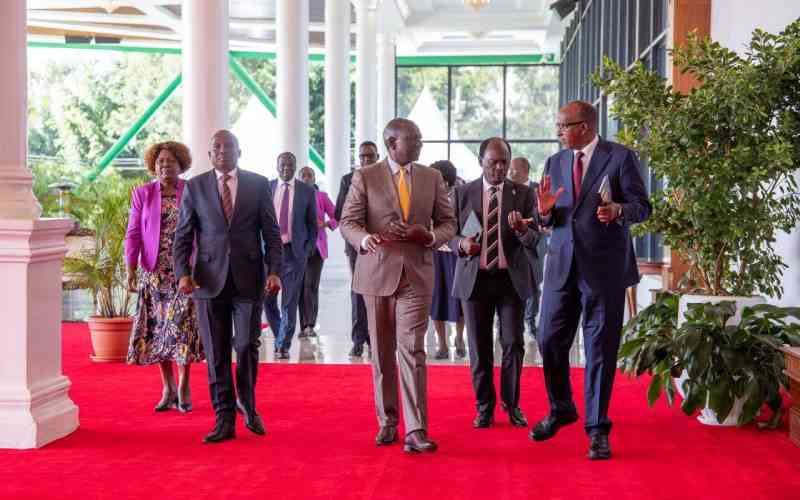
The Cabinet has approved the Sh5 trillion National Infrastructure Fund and the Sovereign Wealth Fund, paving the way for President William Ruto’s dream of a first-world economy status for Kenya.
A communication released following the Monday meeting states that the National Infrastructure Fund will be managed by a board and CEO, while the Sovereign Wealth Fund operates under a yet-to-be-established policy framework.
The government insists that the plan remains its surest way to sustainable infrastructure development, which eases the tax burden on the citizens and helps reduce the huge public debt.
“Through innovative mobilisation of domestic resources, strategic monetisation of mature public assets, democratisation of ownership through capital markets and the deployment of national savings, the Government will unlock large-scale private sector capital to finance priority investments while reducing reliance on borrowing and taxation,” read part of the statement.
The National Infrastructure Fund expects to finance itself from a variety of sources, including collections from pension funds, sovereign partners, private equity funds, and development finance institutions.
On the other hand, the Sovereign Wealth Fund will hold revenues obtained from the sale of minerals and petroleum products. Dividends from public investments and proceeds of the sale of national assets will also be directed to this fund.
The two will be instrumental in financing the extension of the Standard Gauge Railway (SGR) from Naivasha to Malaba.
An estimated 25,000 kilometers of roads have been marked for dualling, and another 28,000 kilometers await tarmacking. Mombasa and Lamu ports, pipelines, and airports will also receive a facelift in the plan.
50 mega dams, 200 mini-dams, and over 1,000 micro-dams will be built mainly for food production.
Further, the energy sector will draw a significant cut from the funds to add more than 10,000 megawatts to the national power grid as the country anticipates increased consumption resulting from manufacturing, new technologies like digital expansion, and e-mobility.
“This financing architecture marks a decisive shift toward a sustainable, investment-led development model that mobilises capital, accelerates delivery, preserves national value and secures lasting prosperity for present and future generations,” read the Cabinet dispatch.
At the same time, the country’s top decision-making organ adopted a new model to mobilise funds for Naivasha-Kisumu SGR extension, Nairobi Railway City Central Station, BRT lanes, and other priority projects.
The government also noted that it has paid all pending bills owed to contractors who offered services to the Ministry of Roads up to the end of 2024 through a disbursement of Sh123 billion.
To strengthen national security, the National Integrated Security Command and Control System was approved for better response to security matters and will be piloted in urban and border counties.
Meanwhile, motorists will transition to the second generation Smart Driving Licences with an instant fines system, mobile licence wallet, merit and demerit points for drivers.
Stay informed. Subscribe to our newsletter
Subscribe to our newsletter and stay updated on the latest developments and special offers!








 join
join