×

The Standard e-Paper
Smart Minds Choose Us
 The Standard Group Plc is a
multi-media organization with investments in media platforms spanning newspaper
print operations, television, radio broadcasting, digital and online services. The
Standard Group is recognized as a leading multi-media house in Kenya with a key
influence in matters of national and international interest.
The Standard Group Plc is a
multi-media organization with investments in media platforms spanning newspaper
print operations, television, radio broadcasting, digital and online services. The
Standard Group is recognized as a leading multi-media house in Kenya with a key
influence in matters of national and international interest.
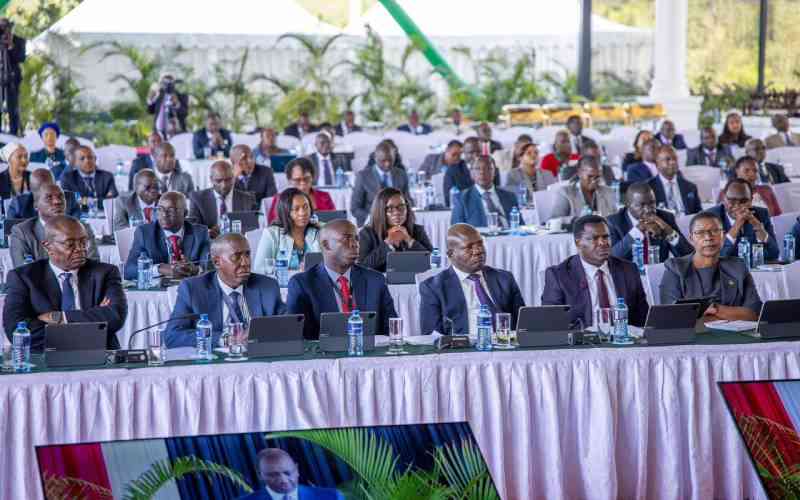
Governors and delegates follow President William Ruto's address during the 12th National and County Co-ordinating Summit at State House, Nairobi on December 10, 2025. [PCS]
President William Ruto on Wednesday directed the Intergovernmental Relations Technical Committee (IGRTC) to clearly define the roles of national and county governments, to pave the way for the transfer of pending devolved functions.
Subscribe to our newsletter and stay updated on the latest developments and special offers!


 Prefer the Standard on Google







 join
join