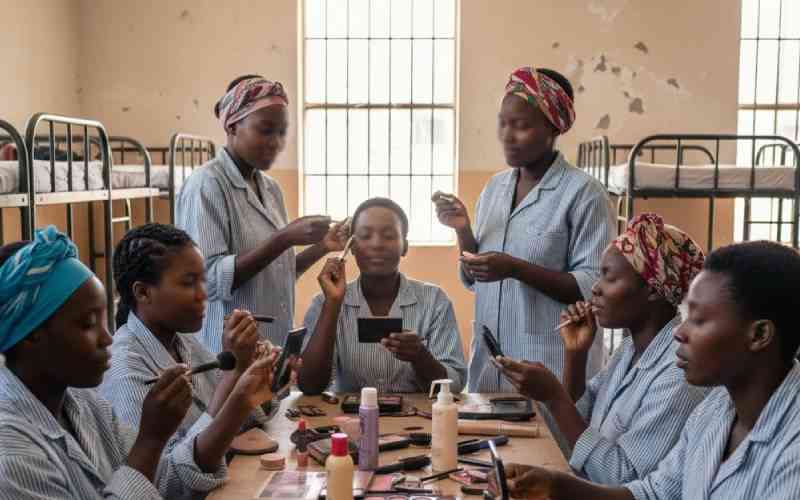
How women in Lang’ata Prison are reclaiming their lives through beauty skills (Photo: iStock)
Inside Lang’ata Women’s Prison, a corner of the facility hums with an unusual energy. Women cluster in small groups, hands twisting hair, brushes sweeping across faces, teaching one another new techniques.
Laughter bubbles up, mingling with the quiet concentration of learning, a rare lightness in a place built to confine.
Recently, Kadri Beauty, a local hair and beauty company, stepped into the prison to provide training in hairdressing, makeup, and styling with a clear goal of equipping inmates with practical skills and the confidence to rebuild their lives once they leave.
“Most of us came here with nothing. No skills, no direction. Now we know that when we leave, we can survive without going back to crime,” said one inmate who has been behind bars for 12 years.
She notes that incarceration strips away more than just freedom.
Behind bars, days are long, routines rigid, and the future uncertain. Beyond the prison gates, the shadow of stigma looms large. Many worry that society will see them forever as prisoners, not people.
“There is a belief that once you go to prison, you never change. That stigma can push you back into the same life you are trying to leave,” she added.
But inside Langa’ata women’s prison’s salon, that narrative is quietly being rewritten through Kadri’s visit. Women here have learnt techniques ranging from natural hair styling to basic makeup artistry.
They practice on one another and even offer services to fellow inmates, particularly those struggling with low self-esteem or who feel doomed.
“These skills we have learnt will go a long way in boosting our personal confidence while here. Having such activities makes us feel remembered and seen,” said another inmate.
She adds, “As for me, I have learnt so many skills in the time I have been here. I can plate here really well, I can do makeup perfectly now and I use these skills to help my mates feel good as well by offering free hair and makeup services. When you help someone feel good about herself, even for one day, you feel human again. You remember that you still matter.”
The inmate said that such skills go a long way in helping them with the reintegration process back into society once they are out of prison.
“We have been taught new hairstyles that we didn’t know existed. We have been given products that will help us keep our hair healthy. When we go out, at least we will not start from zero. Some can open salons, others can be makeup artists. It will make us more independent than when we came in,” she said.
Ashley Murugi, Kadri Beauty’s general manager for sales and marketing, says the programme focuses on building confidence as much as technical skills.
Stay informed. Subscribe to our newsletter
She said that their products are made of organic, locally sourced materials that help strengthen African hair.
“We saw it fit to bring this CSR activity to Langata women’s to just let the girlchild know that they are still valued. Life doesn’t end when they are put behind bars, so boosting their confidence through our products is essential,” she said.
Prison authorities describe such initiatives as integral to rehabilitation. Lang’ata houses both convicted and remand inmates, including foreign nationals, making reintegration a complex challenge.
“When inmates leave with practical skills, they reintegrate better,” said Fairbin Ombeva, a senior prison officer overseeing Lang’ata Women’s Prison.
“Beauty and hairdressing is one of the programmes we support because it gives them a skill they can use immediately once they are back in the community,” Ombeva added.
According to her, involving both inmates and prison officers in training fosters a positive environment and encourages learning.
“A motivated and stable environment changes everything,” she says.
Within the salon, aspirations are already taking shape. Some inmates hope to specialise in natural hair. Others plan to offer makeup services in their communities. A few speak of mentoring younger women who feel they have already lost their way.
One inmate, temporarily dealing with mobility challenges, describes how the training helped her regain a sense of purpose.
“People came to walk with us. They help us see our talents and give us a sense of purpose again,” she said.
Even with limited resources, inmates here often share what they have, pooling knowledge and offering emotional support to one another.
Young inmates struggling with despair are drawn into the salon, finding relief through creativity and connection.
“When someone sits in your chair and leaves smiling, the stress disappears. For that moment, you forget you are in prison,” said another inmate holding the Miss Langata 2025 title.
In a justice system often measured by punishment and statistics, moments like these rarely make headlines. Yet they may determine whether a woman returns to prison or rebuilds her life.
The inmates said that with renewed confidence, beauty becomes more than appearance, and skills become a bridge to life after incarceration.