×
App Icon
The Standard e-Paper
Read Offline Anywhere
★★★★ - on Play Store
Download Now

Wamuchomba's negative sentiment should not undermine aviation sector


Market movements reflect the interplay of sentiment and fundamentals. Sentiment captures the prevailing mood: investors’ collective confidence or anxiety about a stock or asset at a given moment.

Though intangible, it can exert a powerful influence, prompting waves of buying or selling that are only loosely tethered to intrinsic worth. Fundamentals, by contrast, anchor value. They comprise the underlying attributes of a company or asset: its financial strength, operating performance and long-term prospects. These determine what it is worth, regardless of how markets feel about it. 

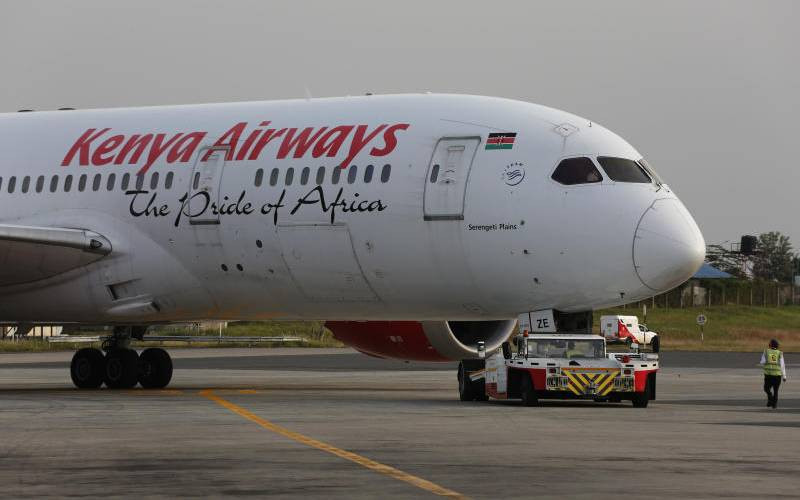
The aviation industry is steadily regaining altitude. Global air travel is expected to continue expanding in 2026, with passenger traffic forecast to grow by about 4.9 per cent and air cargo volumes by 2.6 per cent. Robust demand remains the principal engine of this growth even as the sector grapples with persistent constraints, notably delays in aircraft deliveries and shortages of spare parts and skilled labour. These bottlenecks notwithstanding, airlines have kept capacity tight, sustaining high load factors and broadly stable yields. Kenya Airways (KQ), has been a clear beneficiary of these favourable fundamentals. In 2024, it returned to profitability for the first time in more than a decade. Revenues rose on the back of strong passenger and cargo demand, while tighter cost control and improved operational discipline helped restore the airline’s financial footing. 


This solid performance, however, has been clouded by negative sentiment among a segment of Kenyans who appear unfamiliar with how airlines operate, particularly within the global aviation industry still constrained by supply-chain disruptions. Recent remarks attributed to Gathoni Wamuchomba, MP for Githunguri, circulating on social media are emblematic of this view. 

Wamuchomba allegedly claimed that KQ had grounded 11 aircraft for more than five years and alleged that taxpayers had been forced to shoulder lease payments for the planes that were not flying. She questioned why the airline’s management continued to draw salaries, accusing them of misleading the public over the availability of spare parts. 

Such views betray a distorted grasp of how aviation works. They conflate routine maintenance – during which aircraft are withdrawn for scheduled inspections lasting anywhere from a few hours to several months – with groundings imposed for safety or certification purposes. They also overlook the rise of extended maintenance checks, now commonplace across the global industry as supply-chain bottlenecks persist.

In KQ’s case, prolonged periods out of service have primarily affected its Boeing 787 Dreamliner fleet, reflecting widely acknowledged delays in engine overhauls rather than any failure in management. Those entrusted with public office would do well to weigh in their words carefully.  Ill-informed remarks can inflict real damage on companies, even those resting on sound fundamentals. Wamuchomba’s alleged sweeping suggestion that routine maintenance amounts to problematic “grounding” is therefore misleading. Prolonged maintenance periods for certain aircraft types, not least the Boeing 787 Dreamliner, are well documented and reflect structural constraints. 

Such mischaracterisations risk souring sentiment among investors in the aviation sector, as well as among consumers, suppliers and aircraft lessors. They also diminish efforts of those striving to revive an industry that operates on margins of less than one per cent, where confidence is as vital as capital.

The writer is a public policy analyst