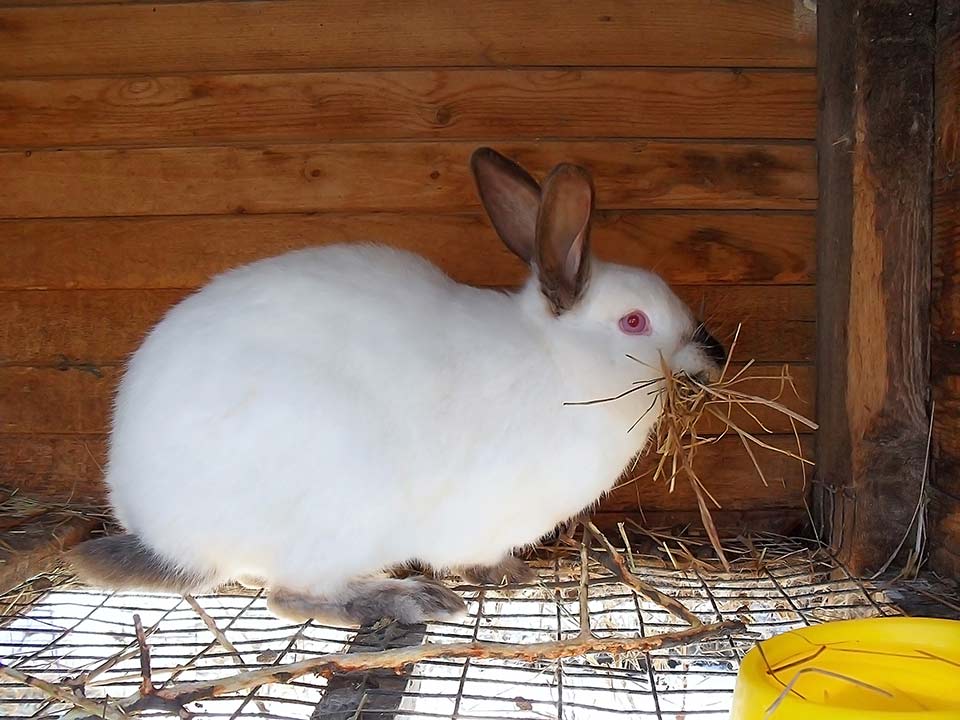
Are you aware that female rabbits, referred to as does, sometimes experience false pregnancies? The first time I experienced a pseudo-pregnancy in a rabbit was so disappointing, the rabbit had to be slaughtered later that afternoon. Anyone who keeps rabbits knows that rabbits are some of the fastest reproducing animals. We had been waiting for the doe to give birth for about two months, as we assumed that we had gotten the dates wrong at the beginning. This was going to be the first litter of kittens. Every two hours someone would check the hutch and return with a report. Usually, the story would be that the doe looked extremely tired and that it was still pulling its fur and eating a lot more than we considered normal.
Days later, the doe began to look and act completely undisturbed and normal. It had also dismantled the little birthing nest it had used to convince us all that it was pregnant. The doubt started creeping in and we knew we had to confirm. And when our neighbour’s son, a thirteen-year-old rabbit enthusiast and ‘expert’ said he could not feel any babies in the belly, and that his eldest rabbit faked pregnancies quite frequently too, the air of disappointment around the homestead was palpable. The rabbit was immediately sentenced to death, and the sword was swung later that afternoon. And what better way to compensate for such amounts of disappointment than by gobbling up a good serving of rabbit meat.
What is a false pregnancy?
According to Dr. P.R.N. Kang’ethe, the resident veterinarian here at The Standard Group, a false pregnancy happens when a rabbit’s body thinks it is pregnant. This then makes the rabbit exhibit signs and symptoms of pregnancy, leading to mood and behavioral changes. You might see a doe pulling fur, being cranky or nesting. This might not always be as a result of true pregnancy. Sometimes, these symptoms may be due to a false pregnancy. Rabbits can feel like they are pregnant despite the fact that they may not be pregnant at all. This phenomenon is also known as phantom pregnancy or pseudopregnancy. False pregnancies in rabbits will last anywhere between 18 to 20 days. Dr. Kang’ethe further explains that adult rabbits may experience false pregnancies throughout their lives. He also adds that this is not harmful to them in anyway.
What are the main causes of false pregnancies in rabbits?
The three main causes of phantom pregnancies in does are fear, sexual stimulation and hormonal changes.
Fear
Usually, rabbits experience stress when separated form their friends of family. The anxiety may cause ovulation, which then makes the rabbit behave in a pregnant manner. Similarly, it is thought that the doe may want to propagate its own kind, and therefore ovulates, leading to a false pregnancy.
Sexual stimulation
“Rabbits ovulate spontaneously,” Dr. Kang’ethe notes. This means that at the slightest sexual stimulation, ovulation occurs, leading the rabbit to believe. To know whether your rabbit is sexually stimulated look out for behaviors such as humping and mounting.
Hormonal Changes
Every time your rabbit’s hormones fluctuate, it can cause stress and aggressiveness. And as earlier mentioned, stress is one of the primary factors that result in ovulation.
How to know if your rabbit is truly pregnant
The only way to rule out whether your rabbit is having a phantom pregnancy is to confirm that it is indeed pregnant. To do this, you will need to look out for a number of signs.
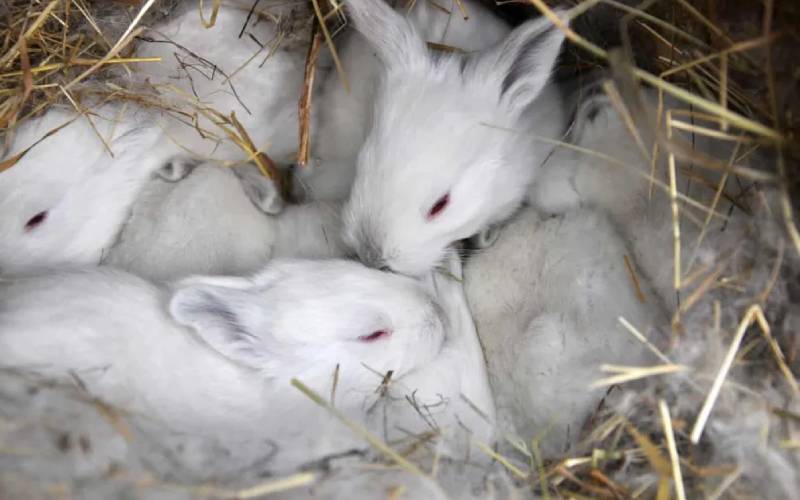
A growing belly is a true indicator of a pregnancy. With an average of 7 kittens growing in a period of 30 days, the belly changes are bound to be very noticeable. Secondly, look out for palpation in the underbelly of the doe. Towards the third week of the pregnancy, you should feel random movement in the doe’s belly. Dr. Kang’ethe explains that your rabbit will also show clear signs of weight gain given that it will be eating enormous amounts of food during the pregnancy.
Had I known then what I know now, no rabbit lives would have been lost. Phantom pregnancies are quite common and normal. They are also quite harmless to your doe and should be over in about 20 days.
Want to get latest farming tips and videos?
Join Us
 The Standard Group Plc is a multi-media organization
with investments in media platforms spanning newspaper print operations,
television, radio broadcasting, digital and online services. The Standard Group
is recognized as a leading multi-media house in Kenya with a key influence in
matters of national and international interest.
The Standard Group Plc is a multi-media organization
with investments in media platforms spanning newspaper print operations,
television, radio broadcasting, digital and online services. The Standard Group
is recognized as a leading multi-media house in Kenya with a key influence in
matters of national and international interest.





 join
join 