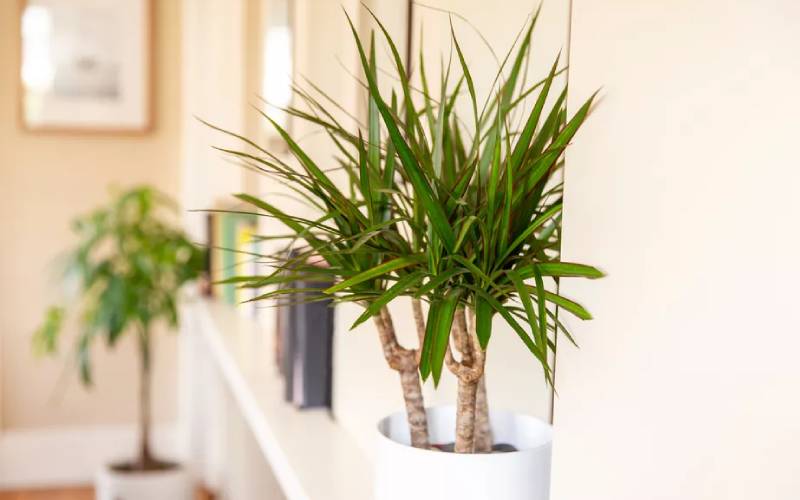
Dracaena with scientific name Dracaena reflexa is a popular houseplant with origins from Madagascar and other Indian Ocean islands.
According to research by Feng Shui, the origin of the plant name comes from the ancient greek word drakaina or “female dragon” due to a red gum like resin in the stems of dracaena that was likened to dragon blood. Centuries ago, the resin was used for toothpaste, dyes and medicines.
These days it is used for varnish and photoengraving. The plant is also known as the song of India and Pleomele.
How to grow Dracaena as a house plant
Light
Filtered indoor light (such as through a sheer curtain in front of a sunny window) or a semi-shade spot is an ideal location. Never place a dracaena plant in direct sun, as the rays will scorch its foliage.
Water
Dracaena require less water than most indoor plants. Keep them hydrated by misting the leaves with water and keeping the soil lightly misted (never soggy) as well with good drainage. Always allow the top soil to dry out before watering. Do not overwater, as it may cause root rot.
Drooping or yellowing leaves could indicate over-watering or poor drainage, but don’t worry if you notice the bottom leaves beginning to turn yellow and fall. It is normal for dracaena to shed leaves in order to grow new ones.
These plants are sensitive to fluoride, which can be found in tap water, so it’s essential to use purified water when caring for this plant. Leaves with dark brown and dead areas with yellow edges may indicate fluoride toxicity.
Temperatures
Dracaena prefers temperatures ranging from 19 degrees to 24 degrees during the day. Night temperatures can drop about ten degrees cooler, but cold drafts and temperatures below 15 degrees will harm the plant. Make sure that you display your dracaena away from any heating or cooling appliances.
Natural room humidity is fine seeing as the dracaena is such a hardy houseplant, but it does prefer the higher humidity of its natural rainforest habitat. You can improve humidity with a commercial humidifier or by placing the plant on a tray of pebbles, with water reaching just below the pebble tops.
Pests and Problems
Dracaena plants are generally free from serious insect or disease problems. However, you should watch out for mealybugs, spider mites, and scale. Mealybugs and scale can both be treated with an insecticide that contains pyrethrin.
Dracaena is an adaptable, easy-to-care for house plant that does well indoors or outdoors in partial shade if you live in a subtropical area.
Propagation
Plant Stems of the houseplant dracaena are called canes and can be pruned at any point to keep plants under control.
Dracaena houseplant varieties D. fragrans and D. deremensis have cultivars that can reach from 6 to 10 feet (2-3 m.), so height control by pruning canes of older plants is useful when growing a dracaena plant. New foliage will sprout just below the cut in a few weeks
Propagate the removed cane for another plant. Dracaena plant care involves keeping the soil of houseplant dracaena moist, but never soggy. Drooping or yellowing leaves indicate over-watering or poor drainage. Learning how to care for a dracaena includes finding well-draining soil in which to grow your houseplant dracaena.
Benefits of Dracaena as a house plant
1. Absorbs Lead
Lead particles can travel through water and air, and dracaena is one of the plants that you can grow indoors and outdoors to reduce the level of lead. While there are not many studies available to claim this, one Indonesian study talks about using Dracaena marginata plants as an absorbent of lead pollutants.
2. Increases Humidity
If dry air is your concern, locate a few dracaena houseplants in that room to increase the humidity levels. Many respiratory problems due to dry air will also remain in control due to this. The use of houseplants found a decrease in the incidents of colds, dry skin, dry cough, and sore throats in office workers in a study conducted by the Agricultural University of Norway.
3. Improves concentration and sharpens focus
If you ever experienced a location that had a lot of plants around, you already know what our point is. Having plants in and around your home and office increases concentration and focus. It is found in a study conducted by The Royal College of Agriculture in Cirencester (England) that students were more attentive in the class (70 percent) with plants around.
Houseplants improve cognitive function and enhance memory, concentration, attention, and overall mental wellness.
Want to get latest farming tips and videos?
Join Us
 The Standard Group Plc is a multi-media organization
with investments in media platforms spanning newspaper print operations,
television, radio broadcasting, digital and online services. The Standard Group
is recognized as a leading multi-media house in Kenya with a key influence in
matters of national and international interest.
The Standard Group Plc is a multi-media organization
with investments in media platforms spanning newspaper print operations,
television, radio broadcasting, digital and online services. The Standard Group
is recognized as a leading multi-media house in Kenya with a key influence in
matters of national and international interest.





 join
join 