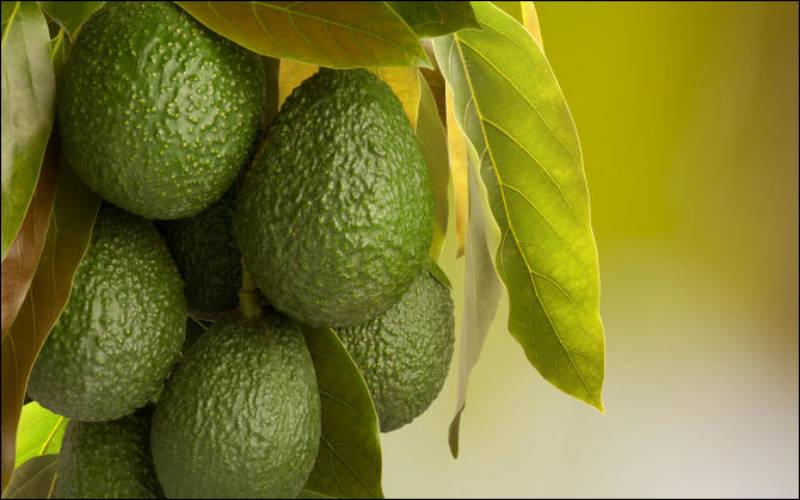
With the coronavirus spreading like wildfire from its epicentre in China, the question that begs is ‘should farmers who export fresh produce like avocado to China be concerned?”
And what is the current state of affairs on the ground with the ban on imports from China?
Kenyan avocado farmers are preparing for a robust harvest season expected to kick off on March 24, when they will start to pluck Hass Avocado fruits for the mass market and export.
Last year, President Uhuru Kenyatta met with his Chinese counterpart Xi Jinping in Beijing to sign an agreement that would have given a green light for export of avocados from Kenya.
The agreement also included access for horticultural products including flowers, mangoes, beans, peanut, vegetables, herbs, macadamia nuts, bixa and meat.
However, stringent sanitary requirements as well as the slow implementation of the deal could be a blessing in disguise for the avocado farmers. The delays have saved Kenyan farmers heavy losses.
Blessing in disguise
With the spread of coronavirus infections causing panic across China and its trade partners, the Kenyan government imposed an advisory with regard to travel to China and importation of goods from China. Though precautionary, the move was expected to hit avocado farmers who were hoping to explore the new door to export their produce to China.
In Nyeri County, TetuHuho-ini Self Help Group chairperson Muthami Tumuti says the avocado farmers were not worried about the advisory or the potential loss of access to the Chinese market with the emergence of the deadly virus.
The group, started in 2016, has more than 400 avocado farmers whose produce is sold directly to exporters.
They produce enough fruits to fill a container for export which is an average of 140,000 fruits and they also have an elaborate system to identify exporters and monitor the harvesting of fruits.
“Our exporters usually sell our produce to Europe and the middle East, which is the main market for our fruits. For that reason, we are not concerned about the coronavirus or its implications on trade with the Asian giant,” Mr Tumuti says.
Last year, the farmers harvested 450,000 fruits and sold them at Sh16 per fruit banking Sh7.2million which was paid to farmers a week after their fruits were harvested.
Farmers were optimistic they would not be affected by the advisory because their fruits were not ready for harvest by the time it was issued.
Currently the farmers are eagerly awaiting the harvesting season that starts in March as per the Agriculture and Food Authority (AFA) directive.
China is a new market
The AFA Horticultural Crops Directorate issued a directive that harvesting of Fuete Avocado variety would start on February 15, while Hass avocado should be harvested from March 24.
AFA Interim Director Antony Mureithi says the authority issued an advisory that was circulated in all the counties banning harvesting of avocado fruits between November and March 15.
“With a growing market for Kenyan avocado, the authority ensures the regulations are followed to the letter by all the players,” says Mureithi.
Ernest Muthomi Avocado Society of Kenya chief executive Ernest Muthomi says majority of farmers were unlikely to be affected by the coronavirus situation because very few of them have explored the Asian market.
“China is a new market, and demands to have the avocados frozen before export made most farmers and exporters to think twice about exporting to China,” he says.
He adds: “Only one exporter in the country had the ability to freeze fresh avocados for export and though they are the lead exporter with vast experience in the sector, they were yet to tap into the Chinese market.”
Muthomi also points out that by the time coronavirus advisory was being issued, farmers in the country had not started harvesting their fruits.
Muthomi says once harvest season begins, attention will shift to Murang’a County which produces 52 per cent of all the avocados produced for export.
Last year, Kakuzi PLC an agricultural firm based in Murang’a County released Sh88 million bonus payment to farmers to deliver their avocado to their processing plant.
Paul Mbugua in-charge of the avocado fruits department at Kakuzi Ltd says majority of their farmers do not export produce to China given that it is still a new market for avocado.
“Our main markets are in Europe, and the Middle East. There was a time China had issued a demand that farmers who export should have technology to freeze the avocados. Because most do not have it, they have not tapped into the market yet,” he says.
According from Kenya Plant Health Inspectorate Service (Kephis), in the 2018-2019 financial year, Kenya exported Sh10 billion worth of avocados.
The main markets are Europe, accounting for 42 per cent of the market share, and the Middle East at 28 per cent.
Fresh Produce Exporters Association of Kenya (FPEAK) chairperson Apollo Owuor says most fresh produce markets for Kenyan market were in Europe, Middle East and Australia, for fresh flowers.
But a few exporters were doing business with some Asian countries like Hong Kong but not on a large scale.
Owour says corona virus had not affected global ties with other countries and a clear indicator is the recent global trade fair in Germany that was attended by a number of Kenyan exporters.
“This is one of the largest fresh produce trade show, held annually in Berlin and Kenyan exporters were among thousands of exhibitors at the festival. Considering the high turnout, it is a positive signal when such events are held despite the corona virus that has potential to cause catastrophic economic impact on many economies,” Owour says.
Sigh of relief
While the avocado farmers can breathe a sigh of relief, macadamia farmers who were hoping to get better prices from selling their produce to the Chinese are a worried lot. Peter Ngige, a Macadamia farmer in Mukurwe Ini, says he had been delaying harvesting his nuts hoping to get a reasonable price from local buyers.
“Last year, I sold my nuts to Chinese brokers for Sh180 per kg, but this year none of them have turned up to buy from me,” he laments.
Ngige says he had at least 1,000 kgs ready for harvest but local brokers were only willing pay Sh90 per kg which he complained was too little. Jane Mugo a macadamia farmer from Kirinyaga says she too was hoping to get better prices but had already started harvesting her nuts.
“I cannot wait any longer, I might have to sell to the local buyers who pay low prices,” she says.
Want to get latest farming tips and videos?
Join Us
 The Standard Group Plc is a multi-media organization
with investments in media platforms spanning newspaper print operations,
television, radio broadcasting, digital and online services. The Standard Group
is recognized as a leading multi-media house in Kenya with a key influence in
matters of national and international interest.
The Standard Group Plc is a multi-media organization
with investments in media platforms spanning newspaper print operations,
television, radio broadcasting, digital and online services. The Standard Group
is recognized as a leading multi-media house in Kenya with a key influence in
matters of national and international interest.





 join
join 