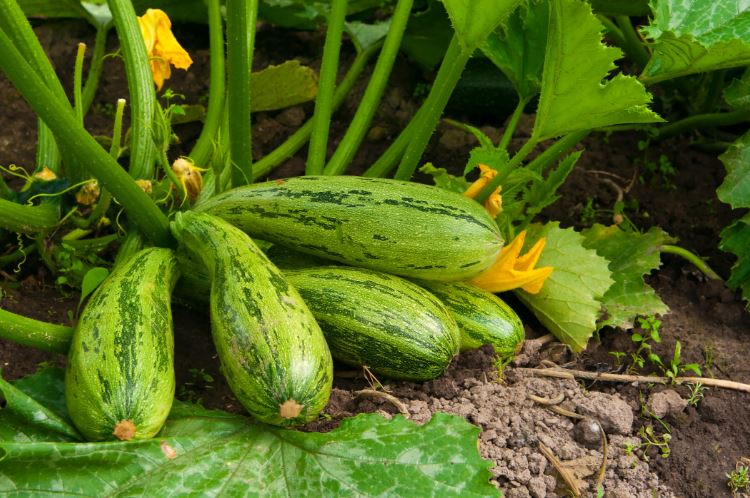
Courgette is a small, dark green firm, fleshy vegetable which can either be eaten raw, steamed, boiled, fried or roasted depending on how one chooses. Its fruits, leaves and flowers are used as vegetables. It has a mild flavour and highly watery and is often harvested while still young.
Courgettes are also known as zucchini and are closely related to cucumber except that they can’t be eaten raw.
Courgettes are warm climate vegetables requiring an optimum temperature of 15-22C. They require an optimum water supply of 800mm during the vegetative growth period, however, with irrigation they can be grown in dry areas with little rainfall.
They can be grown in altitudes of 500-2000 metres above sea level, and on a wide range of well drained light loam, fertile soils, with PH of 5.5-7.5.
Courgettes can be grown all-year round except during periods of heavy rains as they destroy the flowers and promote diseases like mildews.
Before going into courgette farming, you must first make a choice on which seeds you want to grow. Most farmers prefer hybrid varieties as they give better yields.
Some of the varieties grown in Kenya include Ambassador F1, Simba F1, Black beauty, Cera F1 and Green Zucchini, among others.
How to grow them
Courgettes are easy to grow and are best picked small for best flavour. Courgettes can be grown in a seedbed and transplanted at 3-4 leaf stage, but direct sowing in the main field works well. Land preparation should be done early to allow for weeds to dry and decompose before planting. Courgettes develop very rapidly and unless grown for seed, the mature fruits are not marketable. Before planting, plough and level the land, ensuring a fine tilth.
Mix soil with manure and DAP. Plant 2-3 seeds in hills or rows, 2cm deep at a spacing of 60-100cm by 60cm. After emergence, thin to one plant per hill. Always cover seeds with loose soil.
Weeding should be done regularly during growth as weeds can significantly lower the productivity potential of the crop as they compete with crop for nutrients, water and light and they could also harbour diseases and pests.
Mulching the crop is encouraged to retain soil moisture and to keep the fruits clean. When decomposed, the mulch releases nutrients into the soil which are absorbed by the crop. To grow courgettes successfully, the soil should be kept moderately moist throughout, and more when the plants are in flowering and fruiting stages.
Growing vines need to be supported regularly to avoid breakage or touching the ground. Most varieties, however form big, sturdy non-climbing plants. During planting, apply 50kg of DAP in one acre before sowing or alternatively, place a teaspoonful of fertiliser into each planting hole, mix it thoroughly with the soil to make sure that the fertiliser doesn’t burn the seeds. Keep the soil around the plants moist, water heavily around the plants (not over them) in dry weather.
Keep the soil around the plants moist, water heavily around the plants (not over them) in dry weather. It is important to mention that zucchinis are not tolerant to humidity, which causes mildew. Therefore, plant them in full sun.
Pests and diseases
The crops are attacked by pests and diseases similar to those that affect cucurbits (cucumber, melon and pumpkin) although zucchini is the toughest of them all.
They include fruit flies, epilachna beetle, spider mite, white fly, powdery and downy mildew and wet rot (if vines are grown on the ground), mosaic virus and wilt.
Harvesting
Harvesting starts about 2 months when the fruits are 10-20cm long and continues for 2-3 months. It is done by cutting the fruits off the stem, leaving a short peduncle on the fruit, rather than pulling fruits off to avoid damaging the plant. Regular picking (about three times a week) should be done to encourage production of new fruits.