The Standard Group Plc is a multi-media organization
with investments in media platforms spanning newspaper print operations,
television, radio broadcasting, digital and online services. The Standard Group
is recognized as a leading multi-media house in Kenya with a key influence in
matters of national and international interest.
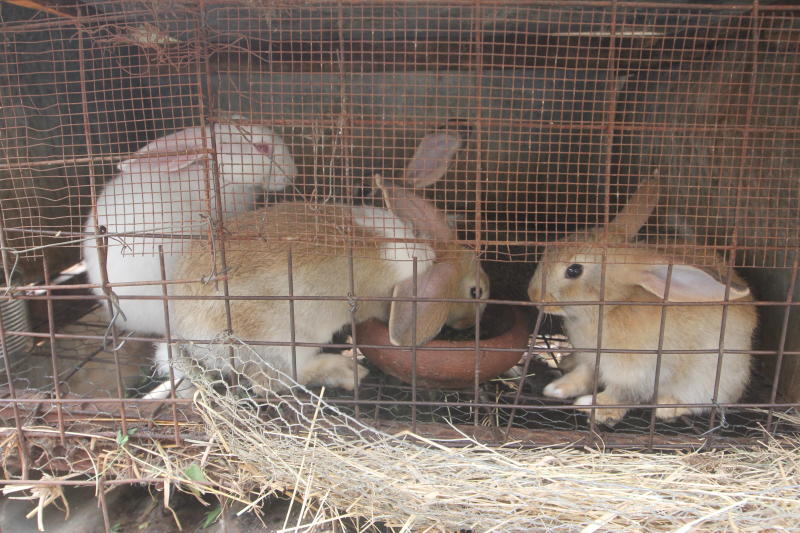
Some of the rabbits owned by the owners of Mji Mzuri Farm in Watamu Pauline Nyagah and St. John Kelliher in their 12 hectare farm in Maekani village within Watamu in Kilifi County, August 22, 2017. [PHOTO BY GIDEON MAUNDU/STANDARD].
Last week I tackled how to start a rabbit farm with focus on housing. Today, we set the ball rolling. By now, you should have birth nests in all cages meant for females, equipment for feeding and water, toys in long rooms and rubber bands for all cages including long rooms to hung grass and weeds. A good breeder should prepare you in advance with these equipment.
Experienced and caring rabbit breeders willingly share such info. The breeder sells you rabbits in various conditions. There are those who serve adult rabbits (dams and sires) before they sell them to you and others who just sell rabbits to you and you serve for yourself or grow them to adult stage. There several methods of serving including introducing the female to a male. Resistance may mean its pregnant.
Most breeders sell to you rabbits that are more than two months old.
Once you have the rabbits, draw up their records either manual or with available software applications including Microsoft excel application.
The records should correspond to the identified cages on your farm. You can choose to name the rabbits according to gender or using names you fancy. Better still name them using their temperament, as this way, you will remember them better. Records help to monitor sicknesses, births, pregnancy and even death.
Keep dogs far away!
Make your records simple. Your can have columns on births, sicknesses, males, sisters, brothers, weights and even sales.
If you have other domestic animals like dogs or cats, keep them a good distance away from the rabbit farm. Dog barks and presence near rabbits make the rabbits fear and this could lead to still births and infertility in males. The dogs can also feast on your rabbits. Rats are also dangerous in your farm.
How to store the feeds
Keep them in a cool and dry place to ensure they do not get contaminated and lead to moulds that can cause aflatoxin poisoning. Hay should be kept above the ground to avoid moulds and pests.
You need to have grasped key aspects of feeding during your training especially the nutrients and quantities. Adult rabbits feed on 300 grammes of feed and 150 grammes for the less than three months’ bunnies. Water should be available at all times. For adult males, the quantities are adequate but any female pregnant and any sick animal should access feeds and water at all times.
You need to know each rabbit’s needs at each stage of development.
At embryo stage, the mother should be fed adequately with feeds that contain most nutrients. This will ensure the embryo develops well awaiting birth in 29 to 35 days since conception. The mother should access water added with multivitamins and minerals at all times. Newly born rabbits should be kept warm and in a birth box that has four inches high.
This is a very delicate stage of development due to the sensitivity of the digestive system. Most young rabbits perish at this stage and the success of the farmer at this stage is very crucial.
Ensure the rabbit accesses leafy grass or broken down pellets to harden the digestive system. That is why a bunny requires a feed that is high in vitamins compared to a lactating dam that requires a lot of phosphorus feed.
Ensure you wash and wilt the right weeds for your rabbits to avoid bloating and indigestion.
Above, all rabbits require supplements to improve their intake of the minerals in their body.
Keep the males away from the served females to avoid irritation of the males on seeing the females all the time which could lead to still births, resistance to breast feed new born among other problems.
Environmental changes also play a significant role in rabbit farming. While adult rabbits may survive all seasons, young rabbits are susceptible to pneumonia and other ailments during extreme cold weather.
 The Standard Group Plc is a multi-media organization
with investments in media platforms spanning newspaper print operations,
television, radio broadcasting, digital and online services. The Standard Group
is recognized as a leading multi-media house in Kenya with a key influence in
matters of national and international interest.
The Standard Group Plc is a multi-media organization
with investments in media platforms spanning newspaper print operations,
television, radio broadcasting, digital and online services. The Standard Group
is recognized as a leading multi-media house in Kenya with a key influence in
matters of national and international interest.





 join
join 