×

The Standard e-Paper
Join Thousands Daily
 The Standard Group Plc is a
multi-media organization with investments in media platforms spanning newspaper
print operations, television, radio broadcasting, digital and online services. The
Standard Group is recognized as a leading multi-media house in Kenya with a key
influence in matters of national and international interest.

Audio By Vocalize
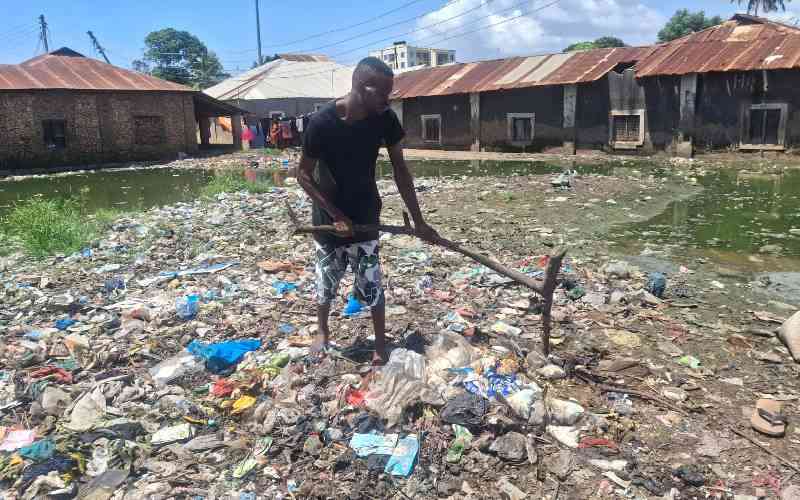
A resident of Ziwa La Ngombe in Mombasa clears plastic waste which blocks water ways leading to flooding during heavy trains. [Kelvin Karani, Standard]
El Niño preparedness has been intensified in Mombasa with community-based organisations working alongside local leaders to ensure households in of informal settlements receive timely weather information and take precautionary measures to minimise the impact of flooding.
The preparations come amid growing concerns over the potential effects of El Niño and a strong positive Indian Ocean Dipole, raising the risk of extreme rainfall, flooding and other weather-related hazards along the Kenyan coast.
For residents of Mombasa's informal settlements, where poor drainage, overcrowding and settlements along vulnerable slopes expose households to flooding, the rainy season brings painful memories of previous disasters.
However, some residents say they feel better prepared this time around, thanks to improved access to early warning information and community awareness initiatives under the DARAJA project.
The initiative, which is being implemented in six informal settlements in Mombasa, seeks to bridge the gap between receiving weather forecasts and translating them into practical actions that protect lives and livelihoods.
Lindah Indimuli, Project Coordinator at Dream Achievers Youth Organisation (DAYO), which leads the implementation of DARAJA in Mombasa, said the organisation works closely with the Kenya Meteorological Department to ensure weather information reaches residents in a language and format they can easily understand.
"We receive information from the Kenya Meteorological Department and translate it into a language that can be understood by the community. We also work with climate champions who help us communicate the information and ensure residents understand what is expected and what they need to do," said Indimuli.
She said the project goes beyond disseminating weather forecasts by working with communities to translate warnings into action.
This is achieved through regular awareness campaigns, including community barazas, neighbourhood clean-up exercises and door-to-door engagements.
DAYO also collaborates with local leaders, including village elders and chiefs, to identify potential risks and develop practical solutions that can help communities prepare for impending weather events.
Pascal Mukanga, DARAJA Kenya Project Manager, said the initiative brings together meteorological agencies, local authorities, community organisations and residents to ensure weather forecasts become trusted, accessible and actionable warnings.
Mukanga said the programme has been supporting communities, cities and countries to strengthen their resilience to climate change.
"We seek to improve understanding of climate change and help communities access weather information so that they can take appropriate action based on forecasts. This helps reduce the loss and damage associated with hazards such as strong winds, flooding, extreme heat and landslides," he said.
Stay informed. Subscribe to our newsletter
For residents, the impact of the initiative is increasingly being felt at household level.
Ramadhan Kadenge, a resident of Ziwa La Ng'ombe, said flooding has repeatedly caused havoc in the neighbourhood, leaving families worried whenever heavy rains are forecast.
"Floods have been causing real havoc here. Whenever we hear that heavy rains are coming, we become afraid. Our houses are on a slope, and we fear that the water could sweep them away and cause loss of lives," he said.
Kadenge, however, said residents now have greater confidence because of the advance information they receive from DAYO and other partners.
"We trust the information we receive because we are informed in advance about expected heavy rains and what we should do. The last time we received a warning, we unclogged drainage channels and prepared ourselves to relocate if necessary," he added.
Rose Matunda, a resident of Mkomani, recalled the devastating flooding experienced during previous rainy seasons, saying the memories still cause anxiety whenever heavy rainfall is predicted.
"The last flooding was terrible. When I hear that heavy rains are coming, I remember what happened the previous time. But right now, we are a bit prepared for the situation," she said.
Matunda attributed the improved preparedness to early information and guidance on the necessary precautions residents should take.
"I thank God that we now receive early information and are told what we can do. We get the alerts and know how to prepare," she said.
DARAJA, a community-led early warning service implemented by Resurgence since 2018, operates across East Africa, Southeast Asia and the Americas
Its approach recognises that early warnings only become effective when communities understand them and have the capacity to act.
The importance of such interventions is particularly evident in Mombasa, where more than 400,000 passengers and 6,000 vehicles use the Likoni ferry crossing daily, highlighting the city's dependence on its coastal environment and the vulnerability of its transport and economic activities to extreme weather.
The 2026 Lloyd's Register Foundation World Risk Poll, released on October 13, underscores the importance of strengthening preparedness. It found that four in five adults who experienced a disaster in the previous five years received at least one advance warning. However, 36 per cent of those warned were unable to take protective action.
Subscribe to our newsletter and stay updated on the latest developments and special offers!

 Prefer the Standard on Google