×

The Standard e-Paper
Smart Minds Choose Us
 The Standard Group Plc is a
multi-media organization with investments in media platforms spanning newspaper
print operations, television, radio broadcasting, digital and online services. The
Standard Group is recognized as a leading multi-media house in Kenya with a key
influence in matters of national and international interest.
The Standard Group Plc is a
multi-media organization with investments in media platforms spanning newspaper
print operations, television, radio broadcasting, digital and online services. The
Standard Group is recognized as a leading multi-media house in Kenya with a key
influence in matters of national and international interest.

Audio By Vocalize

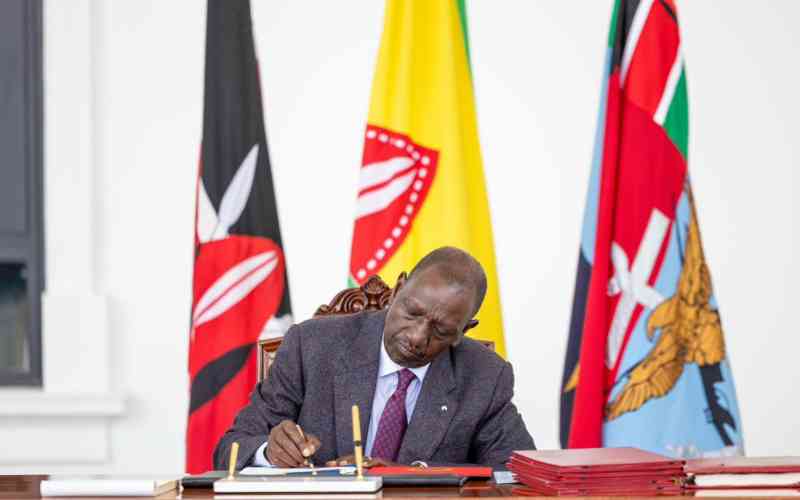
Taita Taveta County will not receive revenue collected by the Kenya Wildlife Service (KWS) from the Tsavo National Park as earlier promised by President William Ruto.
President Ruto said, according to experts' opinion, the 50:50 sharing formula between the county and KWS was not sustainable due to the meagre revenue collected from the park.
In July 2023, the President promised to implement the plan by December 2023. But the pledge has been postponed several times.
Governor Andrew Mwadime and other leaders in the county have been piling pressure on the government to keep its promise. The county assembly recently presented its petition to the National Assembly to push for the implementation of the directive.
Local leaders say the county deserves a share of the revenue since the park occupies the biggest landmass in the area.
They have accused the national government of discrimination, saying Kajiado was already enjoying the benefits from the Amboseli National Park.
But now, the President says the proposal was not sustainable.
"The experts have told me that Tsavo does not make any profit, and it will be impossible for the KWS to sustain itself, let alone share the revenue proceeds with the county," said Ruto during the launch of the Tsavo West Rhino Sanctuary in Ngulia on Tuesday.
He, however, said KWS and the government would continue to support the communities around the Tsavo Ecosystem.
President Ruto said the government was committed to the conservation and protection of wildlife, citing the endangered rhino.
He noted that the government has expanded the sanctuary, strengthened security with advanced surveillance systems and upgraded key infrastructure.
He added that the country has invested in Sh606 million rhino monitoring and tagging exercise and more than 250km of upgraded fencing to secure the future of the national herd.
The sanctuary is about 3,200 square kilometre, and expansion from 92 square kilometre, with about 150 black rhinos.
"Tsavo East and West national parks will be a zone to sell carbon credits, and these resources that will be generated will be ploughed back to the local community for rural development," said the Head of State.
Other measures to boost revenue include the construction of 1,000 dams to benefit the wildlife and locals.
Stay informed. Subscribe to our newsletter
Historically, the greater Tsavo ecosystem was one of the largest black rhino strongholds anywhere in Africa, supporting over 8,000 rhinos in the early 1970s.
By 1989, that population had dropped to fewer than 20 due to the combined effects of poaching, drought, and land pressure.
The government has deployed advanced AI-enabled camera systems, drones and aerial surveillance to protect the rhinos.
"With increased space, upgraded security, improved genetics, and reduced density. Kenya is now positioned to raise the national black rhino population growth rate from 5 per cent to 8 per cent annually. This will directly advance our national targets of 1,450 rhinos by 2030 and 2,000 rhinos by 2037," said President Ruto.

Subscribe to our newsletter and stay updated on the latest developments and special offers!







 join
join