×

The Standard e-Paper
Stay Informed, Even Offline
 The Standard Group Plc is a
multi-media organization with investments in media platforms spanning newspaper
print operations, television, radio broadcasting, digital and online services. The
Standard Group is recognized as a leading multi-media house in Kenya with a key
influence in matters of national and international interest.
The Standard Group Plc is a
multi-media organization with investments in media platforms spanning newspaper
print operations, television, radio broadcasting, digital and online services. The
Standard Group is recognized as a leading multi-media house in Kenya with a key
influence in matters of national and international interest.

Audio By Vocalize
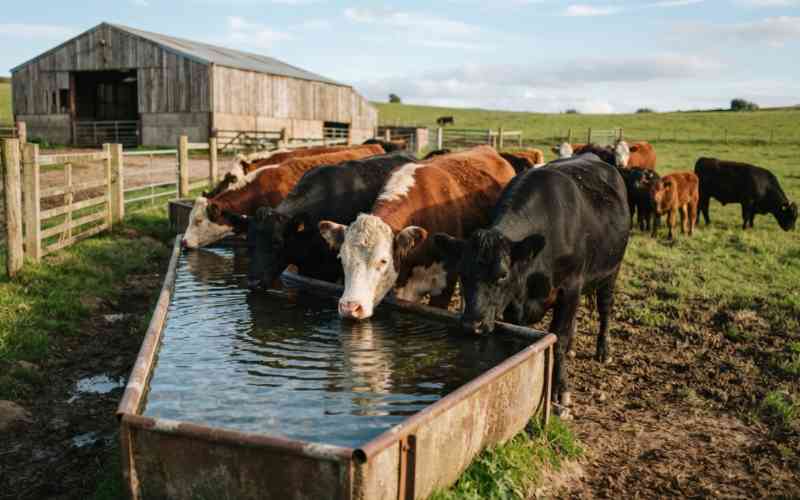
Many farmers may not be aware that water is the most important nutrient in livestock production and health.
Water supports life, promotes growth, improves feed utilisation, enhances reproduction, protects animal health, and boosts farm profitability.
No feed supplement, medication, or management practice can compensate for inadequate water intake.
Water accounts for between 50 and 80 per cent of an animal's body weight, depending on age and species.
Young animals generally have a higher water content than adults. One of the most important roles of water is helping animals digest and utilise feed efficiently.
Feed nutrients cannot be properly digested, transported, or absorbed without sufficient water intake. Animals that have unrestricted access to clean water consume more feed and convert it more efficiently into growth, milk, meat, eggs, or wool.
When animals are not given enough water, their feed intake will reduce. Reduced feed intake leads to slower growth rates, lower milk production, poor body condition, and reduced profitability.
Water helps soften feed in the digestive system, supports microbial activities in the rumen of cattle, sheep, and goats, and enables nutrients to be absorbed by the body.
Dairy cows require large amounts of water because milk is approximately 87 per cent water. Water should be made available to livestock at all times.
A decrease in water consumption often results in an immediate decline in milk production. Similarly, beef cattle, goats, sheep, pigs, and poultry cannot achieve optimal production and growth when water intake is restricted.
Lactating animals have even greater water requirements because of milk production.
Providing clean water is essential for maintaining animal health.
Water supports the circulation of blood throughout the body, allowing oxygen and nutrients to reach tissues and organs. It also plays a critical role in removing toxins and waste products through urine, faeces, and sweat.
Animals that drink dirty or contaminated water are at risk of numerous diseases caused by bacteria, viruses, parasites, and harmful chemicals.
Water contaminated with manure, industrial waste, pesticides, or stagnant organic matter can become a source of infection and poisoning.
Stay informed. Subscribe to our newsletter
Common health problems associated with poor-quality water include diarrhoea and digestive disorders, urinary tract infections, parasitic infections, poor reproductive performance, and mortality, particularly among young animals.
Pregnant animals require additional water to support the development of the fetus. Insufficient water intake during pregnancy can negatively affect fetal growth and may increase the risk of complications during gestation and birth.
In the tropics, livestock are exposed to high environmental temperatures, especially during dry seasons.
Water plays a vital role in helping animals regulate body temperature.
Through sweating, panting, and other cooling mechanisms, animals use water to regulate body temperature.
Heat stress is a major challenge in livestock production; it reduces appetite and growth rate, reduces milk production, causes reproductive problems, and increases disease susceptibility.
Adequate access to drinking water helps reduce the effects of heat stress and improves animal welfare.
Farmers should increase water availability during hot weather and ensure that watering points are located conveniently near feeding and grazing areas.
Providing shade alongside adequate water access further enhances animal comfort and productivity.
The amount of water required varies according to species, age, body weight, production stage, feed type, and environmental conditions. Generally, larger animals consume more water than smaller animals.
Dairy cows producing high volumes of milk may drink between 60 and 150 litres of water per day, depending on the ambient temperatures.
While Beef cattle require 30 to 70 litres daily. Sheep and goats may require 4 to 15 litres depending on weather and production levels. Pigs require regular access to clean water for growth and reproductive performance, while poultry need constant availability because even short periods without water can significantly reduce egg production and growth.
Water needs increase during hot weather, lactation, pregnancy, periods of rapid growth, and high-protein or high-salt diets.
Providing enough water is important, but water quality is equally critical. Even when water is abundant, animals may refuse to drink if it tastes bad, smells unpleasant, or contains contaminants.
Quality livestock water should be clean and clear, free from excessive mud and organic matter, free from disease-causing organisms, and free from toxic chemicals and pollutants.
Regular cleaning of water troughs helps prevent algae growth and bacterial contamination. Water storage tanks should also be maintained and protected from animal waste and environmental pollutants.
When using ponds, dams, or boreholes, farmers should periodically test water quality to ensure it is safe for livestock consumption.
[Dr Othieno is a veterinary surgeon and currently the head of communications at the Food and Agriculture Organisation of the United Nations (FAO) Kenya. The views expressed here are his own]








Subscribe to our newsletter and stay updated on the latest developments and special offers!