×

The Standard e-Paper
Home To Bold Columnists
 The Standard Group Plc is a
multi-media organization with investments in media platforms spanning newspaper
print operations, television, radio broadcasting, digital and online services. The
Standard Group is recognized as a leading multi-media house in Kenya with a key
influence in matters of national and international interest.
The Standard Group Plc is a
multi-media organization with investments in media platforms spanning newspaper
print operations, television, radio broadcasting, digital and online services. The
Standard Group is recognized as a leading multi-media house in Kenya with a key
influence in matters of national and international interest.

Audio By Vocalize
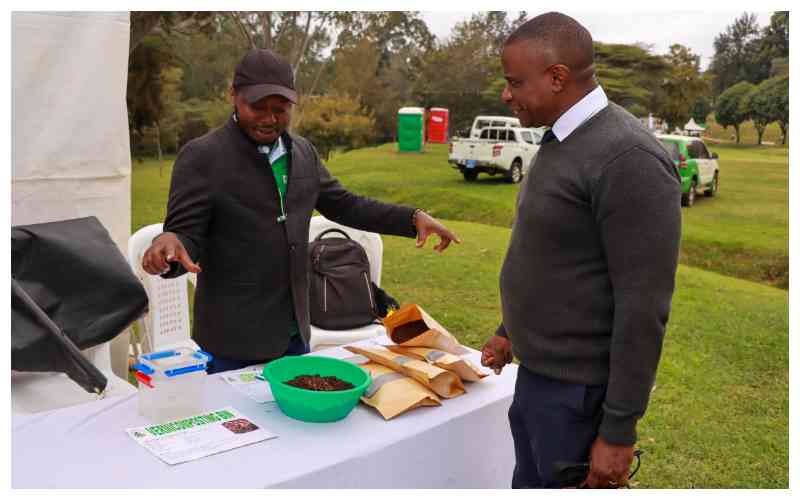
As climate change and its effects tighten their grip on Africa's agriculture, soils continue to degrade, and food insecurity remains a persistent challenge.
Experts say the continent already possesses many of the solutions needed to transform its food systems. The real challenge is scaling them.
This message dominated discussions during a side event held alongside the second Kenya Agricultural and Livestock Research Organisation (Kalro) Scientific Conference and Innovation Expo in Nairobi, where researchers, development organisations, policymakers and private sector actors gathered to explore pathways toward sustainable food production, trade and consumption.
Under the theme ‘“Accelerating Sustainable Production, Market Trade and Consumption", the side event was hosted by The Alliance of Bioversity International and CIAT (The Alliance).
In her pre-recorded speech, the Alliance MD for Africa, Dr Wanjiru Kamau-Rutenberg, emphasised that Africa's future food security depends on stronger partnerships that are capable of moving proven innovations from research stations into farmers' fields and ultimately onto consumers' plates.
"Africa already has the innovation, talent and partnerships needed to transform its food systems," she said, adding, "What we need now is to scale what works and accelerate adoption."
Her remarks come at a time when African food systems are facing unprecedented pressure. Rising temperatures, erratic rainfall, declining soil fertility and growing populations are increasing demands on agricultural systems already under strain.
Throughout the discussions, one theme repeatedly emerged, that no single institution can solve these challenges alone.
The long-standing partnership between Kalro and The Alliance, for example, has contributed to advances in crop breeding, soil health management, climate-smart agriculture, digital innovations and market development.
The event also coincided with the 30th anniversary of the Pan-Africa Bean Research Alliance (PABRA), a programme that has been working towards improving bean productivity, nutrition and farmer incomes across Africa.

One of the key innovations is a new generation of bean varieties designed to address changing climate conditions and evolving consumer preferences.
Researchers explained that traditional varieties often take longer to mature and cook, making them less suitable for today's farmers and consumers.
Scientists are now developing bean varieties that mature in as little as 65 to 75 days, produce higher yields, tolerate climate-related stresses and require significantly shorter cooking times.
According to researchers, some of the improved varieties can yield up to two tonnes per hectare while offering better market opportunities for farmers.
Among the varieties highlighted was "Waithera", a small, high-yielding bean that also cooks faster, is more nutritious, and performs better under climate stress.
Stay informed. Subscribe to our newsletter
The variety is also being used in innovative ready-to-eat bean products targeting urban consumers seeking convenient, nutritious foods.
According to Kalro, Kenya currently produces about 650,000 metric tonnes of beans annually against an annual consumption of 750,000 metric tonnes for the same period. This means the country imports between 150,000 and 250,000 metric tonnes per year.
“These new varieties are supposed to fit in the process for farmers to grow and bridge the gap. Currently, the average ratio of seeds to harvest is 1:10; however, for farmers to realise food security and profits, this ratio should rise to 1:30. Some areas even achieve a ratio of 1:60," said David Karanja, a researcher on bean seed systems at Kalro.
Beyond their nutritional value, beans are increasingly being recognised as important tools for restoring soil health. As legumes, beans naturally fix nitrogen from the atmosphere, reducing dependence on synthetic fertilisers while improving soil fertility.

According to soil scientists at the forum, integrating legumes into farming systems through crop rotation and intercropping can improve soil structure, enhance biodiversity and contribute to regenerative agriculture efforts.
"Healthy soils are the foundation of food production. Degraded soils threaten productivity and resilience, making soil restoration an urgent priority for farmers and policymakers alike," said Dr Boaz Waswa, a soil scientist.
While much attention in agriculture focuses on production, nutrition experts cautioned against overlooking consumers.
Senior scientist Dr Christine Chege emphasised that food systems transformation cannot be achieved solely through improved production.
“Consumers must also be aware of the foods available to them, understand their nutritional value and know how to prepare them in ways that preserve nutrients,” said Dr Christine.
She emphasised the importance of dietary diversity, encouraging consumers to combine nutritious staples such as beans with fruits, vegetables and other nutrient-rich foods to achieve balanced diets.




Subscribe to our newsletter and stay updated on the latest developments and special offers!







 join
join