×
App Icon
The Standard e-Paper
Stay Informed, Even Offline
★★★★ - on Play Store
Read on the App

West Pokot residents push for stake in Turkana oil proceeds

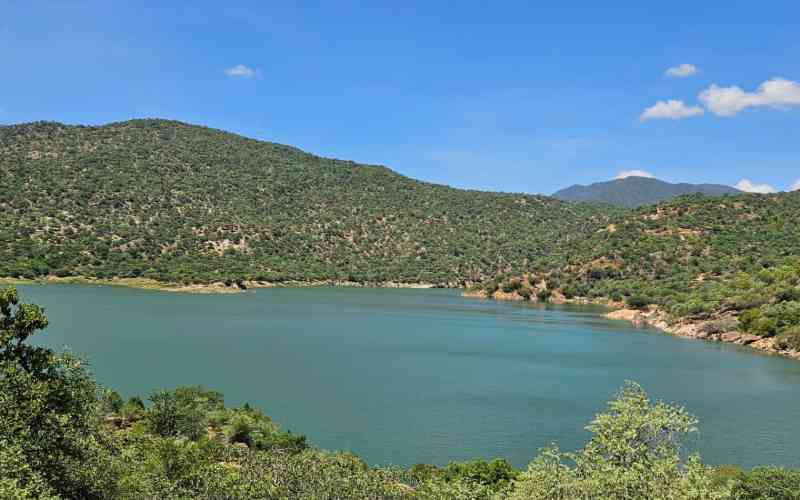
Turkwel Dam in West Pokot County, whose water will be used in Turkana’s South Lokichar oil fields, prompting leaders and residents to demand a share of oil benefits during a parliamentary public hearing. [Irissheel Shanzu, Standard]

Leaders and residents of West Pokot have renewed demands for a share of benefits from Turkana’s oil project.

They argue that the multibillion-shilling South Lokichar oil development heavily depends on water drawn from their county.
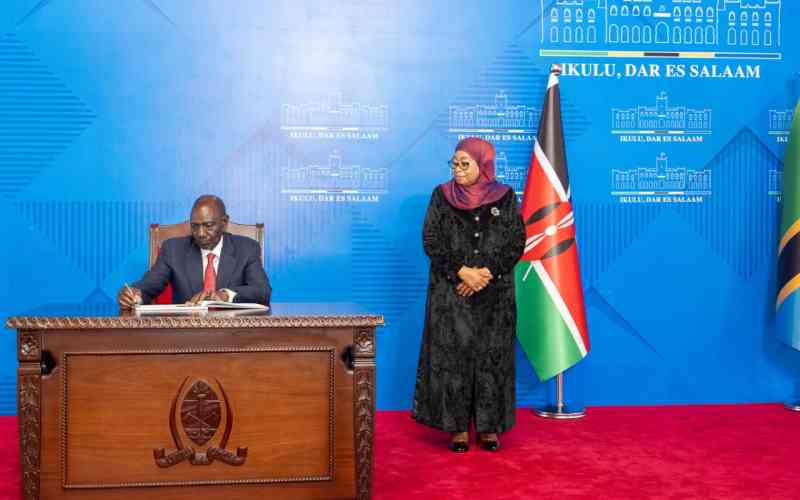
The demands were made on Thursday during a public hearing held in Turkwel by a joint committee of the National Assembly Departmental Committee on Energy and the Senate Standing Committee on Energy on the South Lokichar Field Development Plan.


Residents told the committee that while Turkana will host the oil wells, West Pokot is providing a critical resource — water from Turkwel Dam — and must therefore benefit directly from the project.

Julius Mawathe, the MP for Embakasi South, said it would be unfair to exclude West Pokot from the benefits.

“West Pokot residents must benefit from their natural resource. The water that will be used in South Lokichar oil production is coming from this county, and that contribution cannot be ignored,” he said.

The Resident Engineer at the National Irrigation Authority, Felix Shiundu, said  the government plans to roll out large-scale irrigation projects in West Pokot to enhance food security.

“We have provision for 60,000 acres of irrigation projects in West Pokot. Currently, irrigation along river banks has caused conflicts because livestock and farmers compete for the same water,” said Eng. Shiundu.

He added that the government will shift to sprinkler irrigation systems to reduce conflicts and improve efficiency.

“With 60,000 acres under irrigation, food security in West Pokot will be guaranteed,” he said.

Shiundu further revealed that six water supply points will be established to support irrigation, covering 2,000 acres — 1,000 acres in Turkana County and another 1,000 acres in West Pokot County.

Former West Pokot Governor Prof. John Lonyangapuo welcomed the oil project but insisted that communities beyond Turkana must also benefit.

“We thank the Government of Kenya for advancing oil exploration in Turkana County, but West Pokot residents should also benefit through electricity and water projects. With irrigation, hunger in West Pokot will be a thing of the past,” he said.

Leaders cited the Energy Act of 2019, which provides for revenue sharing from natural resources, arguing that West Pokot qualifies for a share of oil proceeds because its water is essential to production.

Kapenguria MP Hon. Samuel Moroto recalled broken promises made during the construction of Turkwel Dam.

“When Turkwel Dam was built, we were promised irrigation projects, but they never came. We want the water from this dam to finally benefit the local community,” he said.

Elgeyo Marakwet Senator and joint committee co-chair Sen. Kisang said the hearing was part of constitutional public participation.

“We are here in Turkwel for public participation as required by the 2010 Constitution,” he said.

Gulf Energy Social Performance Lead Bethwell Sang said Lake Turkana had been ruled out as a water source because it is protected by UNESCO.

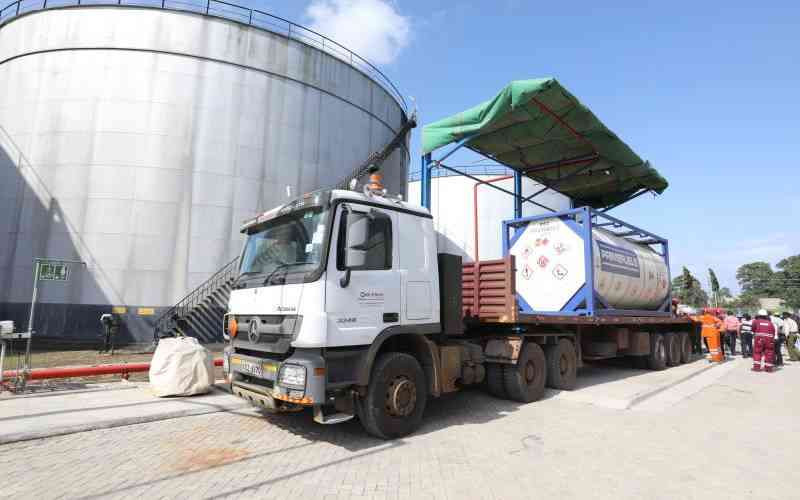
“The project will have two pipelines — one supplying water to the oilfields and another that will be treated for domestic use and irrigation for West Pokot residents,” he said.

Community leaders demanded concrete social benefits. Paul Lolem called for scholarships and a share of revenue.

“West Pokot should get at least 20 per cent of the oil proceeds. We are providing the water while Turkana provides the oil,” he said.

Village elder Lolemtwan Locholiamoi urged the government to upgrade Turkwel Health Centre, warning that oil production could bring new health challenges.

Opinion leader Elijah Kinshasa called for equal employment opportunities for both communities.

“We want jobs shared on a fifty-fifty basis between Turkana and Pokot,” he said.