×

The Standard e-Paper
Smart Minds Choose Us
 The Standard Group Plc is a
multi-media organization with investments in media platforms spanning newspaper
print operations, television, radio broadcasting, digital and online services. The
Standard Group is recognized as a leading multi-media house in Kenya with a key
influence in matters of national and international interest.
The Standard Group Plc is a
multi-media organization with investments in media platforms spanning newspaper
print operations, television, radio broadcasting, digital and online services. The
Standard Group is recognized as a leading multi-media house in Kenya with a key
influence in matters of national and international interest.

Audio By Vocalize
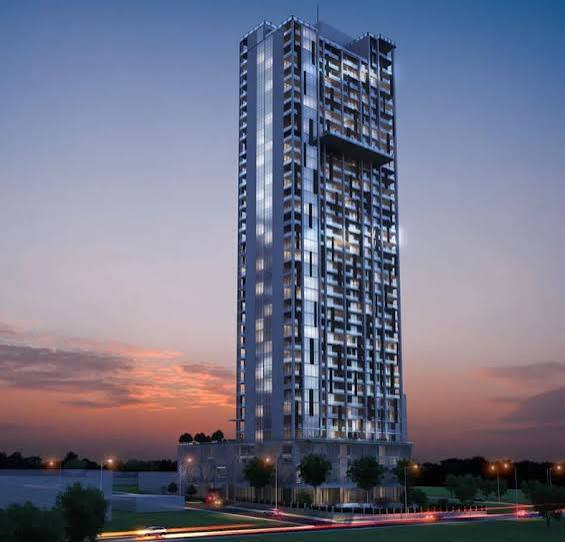
Think of it. You live in a place where you no longer drive or commute to work. Your office is on the fifth floor of a 55th-floor building. Your apartment is on the 20th floor of the same building.
Need shopping? Retail stores are stacked on the third floor with a semblance of traditional markets, cutting your time looking for those commodities outside.
A franchise of a renowned global hotel had taken an entire floor where, when it comes to eating out, you simply take an elevator or stairs to its floor. Need exercise? There are tennis courts, gyms, a swimming pool, and other indoor sporting facilities on a different floor. Worried about parking fees?
The basement floor and tenth floor are dedicated parking zones for live-in residents. Want that panoramic view of the city and surrounding areas? A lift to the top-floor viewing deck gives you a 360-degree view of the city and the countryside.
And the building itself? Shaped like a rocket capsule sitting on a launcher ready to lift off. And the building is visible with the naked eye from a distance of fifty kilometres away.
This is Mohammed VI Tower in Rabat, Morocco. It's the second tallest building in Africa after the Iconic Tower in Egypt and a unique building in itself as a live-in mini city or a vertical district.
It hosts the franchise of the renowned Waldorf Astoria Hotel with 55 rooms, five restaurants and a spa. To cut on energy needs, the tower has 70,000 square meters of photovoltaic solar panels and harvests rainwater for use, making it a "green" building.
As artificial intelligence disrupts the future of workplaces, it seems urban buildings integrating business spaces and residential apartments will be the future of urban planning.
According to Maina Muthaita, an architect, such building models would serve well for workers working far from their families, cutting down their transport costs and saving on rent if the landlords have the incentive of affordable rents rather than renting in a posh estate.
"Such buildings are likely to attract high-value clients and businesses and not the ordinary mama mboga or the everyday hustler," he says.
And where the anchor client is a multinational, it gives the impression the office spaces and residential units are costly, and target tenants would be business executives or moguls and their families.
"But where our urban planning designates residential areas to be in peripheries after industrial zones, would it convince one to settle in the middle of a central business district characterised by noise, disorder and petty crimes given how our urban areas are disorganised and congested?" he poses.
Unlike the Kenyan situation, Morocco has more urban population concentration as its vast land is a desert. Kenya, on the other hand, is witnessing a different shift in urban areas. The rich are moving out and settling in rural places as the poor flock to town in search of green pastures.
Another disadvantage he notes is that the country is not attracting global investments owing to the high cost of doing business and policies of the day that have seen investors relocating to neighbouring nations.
Stay informed. Subscribe to our newsletter
"If such buildings are State-owned, Kenyans would be very sceptical about occupying them as tenants. They're deducted from salaries to put up those skyscrapers. Who provides such services as building maintenance, garbage collection, among others? It won't surprise one if it's a government-contracted company belonging to a politically connected individual, if not a front for an individual in government."
For Eliud Mathu, a businessman in Nakuru, he'd prefer the quietness of his rural residence to the din and humdrum of urban spaces.
"How would you work peacefully in a commercial cum residential tower where kids are noisily chasing each other along corridors or accidentally bump into your office?" he poses.
Changing urban codes where you see an office block serving dual purposes would invite a bad precedent, he notes. Think of KICC where the first ten floors are assigned as office complexes and the rest as residential units.
"Politicians would take advantage to allocate themselves floors, or the government of the day would be assigning politically correct individuals a whole floor as a reward for sponsoring party activities like funding campaigns or as a consolation for an election loss."
To him, it would make sense if a whole skyscraper is designated either as a business block or a residential block, rather than serving both purposes.
"If the government invested in putting supporting infrastructure like markets within the affordable housing project, that would make more sense than having a building serve as an affordable house right in the middle of a town," he says.
He reminisces about the days Kenya had an orderly urban planning blueprint where, in some zones, no one could put up a building above two floors. But that seems to have gone to the dogs.
"You see a building approved to be five floors, but that's on the paper. Midway, money changes hands, and the building goes up to eight floors; no wonder some collapse under structural weaknesses, as it happened recently in Nairobi.
Recently, Kenya Civil Aviation was proposing a different approach to planes landing at Wilson Airport, citing tall buildings around the airport. No such structures are allowed for the safety of both residents and aircraft.
Similarly, President William Ruto once okayed the construction of high-rise buildings around Eastleigh Airport, before walking back the talk after Kenyans and experts made noise.
But will Kenya witness a futuristic Mohammed VI Tower building soon?








Subscribe to our newsletter and stay updated on the latest developments and special offers!








 join
join