×

The Standard e-Paper
Smart Minds Choose Us
 The Standard Group Plc is a
multi-media organization with investments in media platforms spanning newspaper
print operations, television, radio broadcasting, digital and online services. The
Standard Group is recognized as a leading multi-media house in Kenya with a key
influence in matters of national and international interest.

Audio By Vocalize
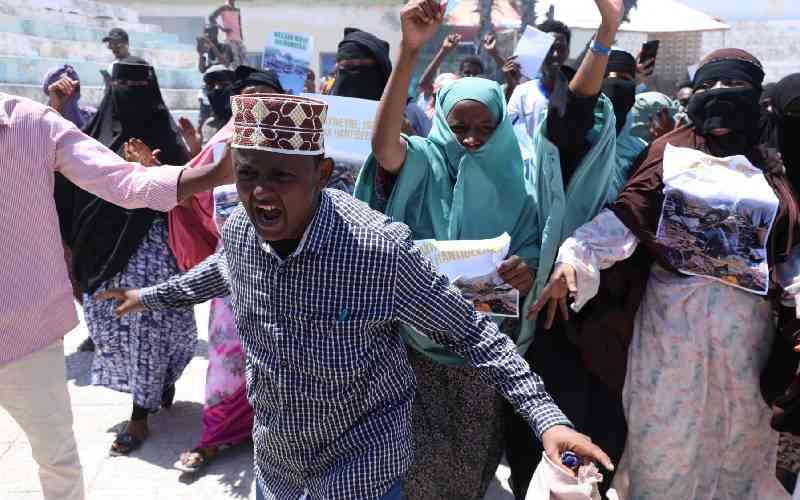
Mogadishu is back to what it knows best-talking about talks as the year comes to an end, without any sign that the country is about to agree on the electoral roadmap.
From today, Saturday, November 14, and for the next four days, the government on one side and the opposition on the other side will be engaged in talks aimed at agreeing on an election date, adopting an electoral process to be used and addressing the constitutional issues facing Somalia.
Tomorrow’s sitting was called by President Hassan Sheikh Mohamud, who invited opposition leaders and civil society to a broad-based dialogue to resolve the issues facing the country.
It was the umpteenth time for Mohamud to call for talks between his government, the opposition and federal member states as the country literally hurtles towards a political abyss.
A few weeks ago, Mohamud caused a stir when, through the country’s electoral body unilaterally announced April and May next year as the months when Somalis will go to elections to pick their Members of Parliament and president, respectively.
The announcement was met with protests and dismissal from his opponents through the opposition group, Somali Future Council (SFC) and two federal member states, namely Puntland and Jubba Land. They asked the president to engage in dialogue instead of issuing orders from Villa Somalia.
The government and opposition politicians have been in talks since February, but nothing concrete has come from any of their previous meetings. The common agenda for all the meetings has been the electoral process, constitutional issues and the country’s security.
Somalia has been haggling over whether to adopt the one-person, one-vote (universal suffrage) system or continue with the clan-based indirect election in which a delegate system is used to pick Members of Parliament who consequently elect the president.
The meeting, which kicks off tomorrow, is also expected to tackle this issue that has become a thorn in the flesh for opposition leaders under the SFC banner.
While Mohamud and his government have fervently been pushing for elections through universal suffrage, SFC leaders want Somalia to continue using the indirect clan-based delegates system due to what they call insecurity.
The leaders note that terror group Al Shabaab controls large swathes of land, making the push for one-person, one-vote impossible to achieve.
While the politicians posture over the electoral system to adopt for next year’s parliamentary and presidential election, some progress has been achieved behind the scenes.
Sources in Mogadishu reveal that quiet negotiations between the government and the opposition are reported to have made a breakthrough in regard to Somalia’s electoral process, security and political negotiations between the two groups.
Stay informed. Subscribe to our newsletter
Among the issues reported to have been resolved include the need to hold elections as soon as possible, strengthen the fight against terror group Al Shabaab and keep the door of dialogue between the government and the opposition open.
Those at the talks from the government were mainly technocrats, including the intelligence chief Mahad Mohamed Salad, police chief Asad Abdullahi, military boss Gen Ibrahim Mohamed and the chair of the armed forces court, Hassan Ali Nur Shuute.
On the opposition benches were former president Sharif Sheikh Ahmed and two former Prime ministers, Mohamed Hussein Roble and Hassan Ali Khayre, among others.
As the politicians and technocrats gather in Mogadishu for the next four days, the country will be waiting to see what deal will be hammered out to stabilise Somalia.
It will also not be lost on observers that Somalia heads into the next phase of its state-building with the United Nations winding up its operations in the country by December 31, 2027.
In calling for the consultations, President Mohamud set the ball rolling by going public that the country would adopt the one-person, one-vote system in picking its leaders in the next polls.
Will his competitors swallow the bait and go along with his position, or will they hold their ground and stick with the tried indirect clan-based electoral process?
Meanwhile, the exit of the United Nations and the withdrawal of the African Union Support and Stabilisation Mission in Somalia (AUSSOM) by the end of 2027 has heightened negotiations in Mogadishu.
This week has seen the country’s defence minister engage with United States and Chinese ambassadors in Somalia to discuss the strengthening of defence cooperation, counter-terrorism operations and the future of the peacekeeping mission.
Also roped in was Amb. El Hadji Ibrahima Diene, the special representative of the African Union Commission Chairperson (SRCC) and Head of AUSSOM, who met Swedish Ambassador Hans Lundquist in Mogadishu.
The two officials reviewed recent developments in Somalia and discussed cooperation between AUSSOM, the Federal Government and international partners.
The discussions between the Somali defence minister and the ambassadors focused on the ongoing transition as Somalia prepares to assume greater responsibility for operations currently supported by the African Union forces.
Last week, Uganda withdrew 2500 soldiers from Somalia as the country announced that it planned to have all its forces out of the war-torn country in accordance with the international timelines.
Mogadishu had attempted to enter into a bilateral deal with Uganda to have UPDF soldiers provide security for the Aden Abdulle International Airport and Villa Somalia. However, this seems to have flopped as the 2,500 soldiers who had come under the bilateral arrangement departed.
Somalia is said to be in negotiations with Kenya, Ethiopia and Egypt to have their soldiers continue to serve in their respective sectors after the AUSSOM transition comes to an end on December 31, 2027. The challenge is, of course, raising funds to compensate the nations that agree to come under this fresh arrangement.
Also leaving Somalia were American forces, which were based in Baledogle, about 100km from the capital, Mogadishu.
The reasons Americans gave for their departure from Somalia were the deterioration of the runway at the airfield, making it unsafe for military aircraft to land and take off.
The US soldiers had used Baledogle as their base to run the fight against terrorism in Somalia using planes and drones. Are we likely to see the resurgence of Al Shabaab, or does the Somali National Army have enough firepower to deal with them? Time will tell.




Subscribe to our newsletter and stay updated on the latest developments and special offers!