×

The Standard e-Paper
Kenya’s Boldest Voice
 The Standard Group Plc is a
multi-media organization with investments in media platforms spanning newspaper
print operations, television, radio broadcasting, digital and online services. The
Standard Group is recognized as a leading multi-media house in Kenya with a key
influence in matters of national and international interest.

Audio By Vocalize
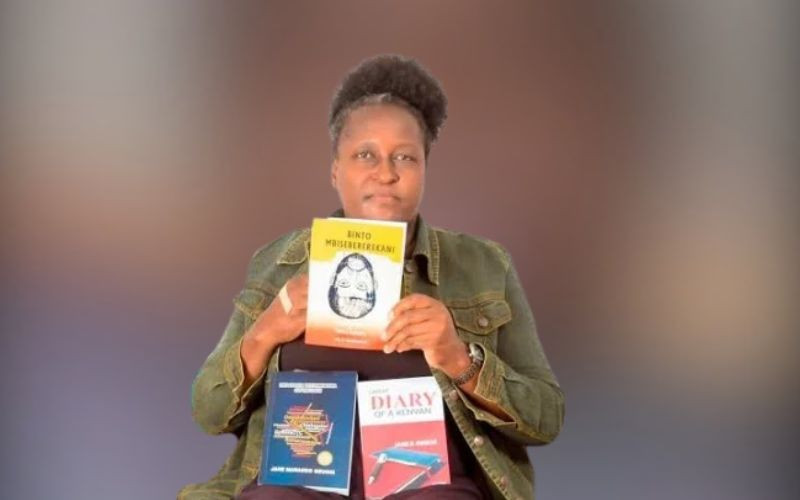
I read Prof Egara Kabaji’s article, “Translation and the Unsung Heroes Preserving Languages” (The Saturday Standard, October 24, 2025), with great interest for three reasons.
First, topics on language and translation excite me because I have handled a lot of translation work over the years. I began my career as a news editor (translation) at the Kenya Broadcasting Corporation in the mid-2000s before transitioning to Nation Media Group in 2007, where I worked as a reporter, writer and news translator for Taifa Leo, the only Kiswahili newspaper in the country.
My training as a Kiswahili teacher at Moi University, where I studied a unit on Translation and Interpretation, gave me a solid background in translation theories. I have since put this knowledge into practice whenever I undertake complex translation tasks.
Perhaps one of the most ambitious literary translation projects I have ever undertaken was rendering Barbara Kimenye’s Moses series into Kiswahili. The Kiswahili versions of all 11 titles have since been published by Oxford University Press, Nairobi.
Second, Kabaji’s article focused on Jane Obuchi and her significant contribution to creative writing in general and translation in particular. Those who have read her works, written in English, Kiswahili and Ekegusii, can attest to the fact that Obuchi is highly gifted in spinning yarns, partly because of her unquestionable command of the three languages.
It is therefore not surprising that she has employed this ability in the art and craft of translation. If one does not have a good command of the languages involved in a translation, the task can be particularly challenging.
When Obuchi’s translation of Chinua Achebe’s novel, Things Fall Apart (1958), into Ekegusii, under the title Binto Mbisebererekani (A Frame Publishers, 2020), was published, I was the first person to review it for the Saturday Nation.
In my review, I saw Obuchi’s achievement not only as an effort to enrich African literature by making works available in our local languages through translation, but also as a courageous and deliberate effort to reinforce Ngũgĩ wa Thiong’o’s crusade to defend African languages and, in particular, decolonise the African mind.
Third, Kabaji made interesting observations about language and cultural policies, as well as the Constitution of Kenya promulgated in 2010, pointing to gaps in their implementation.
He observed: “ Article 7 of the Constitution recognizes Kiswahili as the national language, Kiswahili and English as official languages and requires the State to protect linguistic diversity and promote indigenous languages.
Yet Kenya lacks an officially recognized Kiswahili version of the 2010 Constitution. In a country that embraces Kiswahili, this omission is shameful. Its an abomination that our supreme law is unavailable in our national language.”
However, Kabaji contradicts himself on the question of Kiswahili and the Constitution of Kenya. Here is why. While he may be right in saying that the existing Kiswahili version of the 2010 Constitution has not been ‘officially recognised,’ he is utterly wrong when he claims that “our supreme law is unavailable in our national language.”
The truth is that a Kiswahili version of the Constitution of Kenya exists under the title Katiba Inayopendekezwa ya Kenya. It was published on May 6, 2010, by the Attorney-General in accordance with Section 34 of the Constitution of Kenya Review Act (No. 9 of 2008).
Although the document is titled Katiba Inayopendekezwa (The Proposed Constitution of Kenya), it is, in substance, a Kiswahili version of the Constitution that was promulgated in 2010. It was translated by a team of competent Swahili scholars led by Prof Kimani Njogu.
Stay informed. Subscribe to our newsletter
Kabaji further went on to pass a very harsh judgement on Swahili scholars. He charged: “It is easy to blame the government, but we must also question ourselves. Where are our Kiswahili scholars? What are university Kiswahili departments doing? Why have we not made developing our national language an urgent intellectual civic priority? Our languages will not earn the stature they deserve through declarations alone.”
I may not have ready and comprehensive answers to the questions posed by Kabaji. However, I would implore him to be a little more attentive and follow what specific Kiswahili scholars are doing to advance the language.
I have in mind scholars such as professors Iribe Mwangi, Kyallo Wadi Wamitila, Kimani Njogu, Alamin Mazrui, Mwenda Mbatiah, Rayya Timammy, Zaja Omboga, Nathan Ogechi, Miriam Kenyani Osore, Kineene wa Mutiso, Pamella Ngugi, Makhanu Wafula, Clara Momanyi, Tom Olali and Inyani Simala, among others.
Apart from these scholars, we also have journalists and other language and cultural enthusiasts who have done commendable work in championing Kiswahili through the media and other platforms.
It is therefore dangerous and unfair to cast aspersions on the role Kiswahili scholars in Kenya have played in championing the language. Most of them have arguably given their all to initiatives that have contributed to shaping and influencing language policies in general and those targeting Kiswahili in particular.
Enock Matundura is the translator of Barbara Kimenye’s Moses series (OUP) and teaches Kiswahili literature at Chuka University.







Subscribe to our newsletter and stay updated on the latest developments and special offers!