×

The Standard e-Paper
Kenya’s Boldest Voice
 The Standard Group Plc is a
multi-media organization with investments in media platforms spanning newspaper
print operations, television, radio broadcasting, digital and online services. The
Standard Group is recognized as a leading multi-media house in Kenya with a key
influence in matters of national and international interest.
The Standard Group Plc is a
multi-media organization with investments in media platforms spanning newspaper
print operations, television, radio broadcasting, digital and online services. The
Standard Group is recognized as a leading multi-media house in Kenya with a key
influence in matters of national and international interest.

Audio By Vocalize
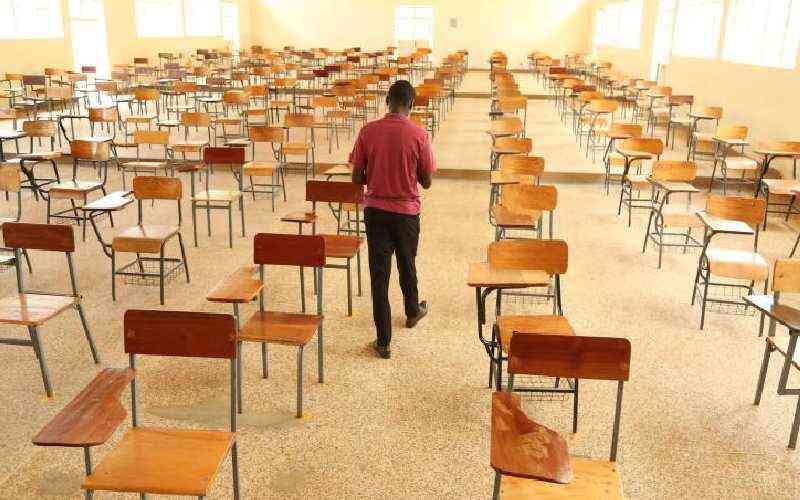
The University of Eldoret lecturer who was recently captured making controversial political remarks in class has provoked a conversation that goes beyond him or the politics involved.
I am less interested in the lecturer's political views than in the professional question raised by what happened in that lecture hall. Specifically, who teaches our university students and what preparation does that person receive for the task of teaching?
In Kenya, just like in many countries, the traditional route towards becoming a lecturer is often through academic and disciplinary qualifications. One becomes a lecturer because he has acquired the requisite degree (preferably a doctorate), demonstrated scholarship, published research and accumulated experience required by the institution. In most cases, the requirements are not that stringent.
The big question is, where in that journey does one learn how to teach or espouse professional ethics in the process of disseminating scholarly knowledge? Being an accomplished economist, lawyer, historian, scientist, or political scientist does not automatically make one a good teacher in content delivery or ethical conduct.
A lecturer must know how to manage a classroom, facilitate discussion, distinguish teaching from advocacy, handle disagreement, respect diversity among the students, set appropriate boundaries, deal with sensitive subjects and recognise the power relationship between him/her and students.
Therefore, a lecturer needs much more than a mastery of a subject. He or she needs more grounding in ethics and practice of teaching. Universities should require new academic staff to undergo structured training in higher education teaching before, or within a defined period after appointment.
In England, higher education lecturers are recruited based on their academic qualifications. However, they are expected to undertake a teaching qualification after joining the profession.
The UK's Advance Higher Education has also developed the Professional Standards Framework, which provides professional standards for teaching and supporting learning in higher education, covering professional values, core knowledge and areas of teaching activity.
Australia provides an even more interesting example. The Australian Universities Accord recognised that the normal route into university teaching has traditionally been through a PhD, whose principal emphasis is research rather than pedagogy.
It recommended that higher education teaching should become more professionalised and that accredited teaching qualifications should eventually become the norm. It specifically proposed high-quality professional development for existing academic staff and accredited teaching training for PhD candidates who intend to pursue academic careers.
The Commission for University Education's current framework places considerable emphasis on academic qualifications and experience in determining the appointment and promotion of university academic staff.
There is nothing wrong with this model. Universities need scholars who possess deep knowledge of their disciplines. A lecturer teaching constitutional law, medicine, economics, engineering or literature must know the subject. But knowing something and knowing how to make another person understand it are not the same thing.
As a student, many of the lecturers who left the greatest impression on me were those with an educational background. They approached teaching differently. Their lectures were organised, their objectives were clearer and they appeared conscious of the need to take students from what they already knew to what they were expected to learn. There was structure in the way they introduced a subject, developed it and brought it to a conclusion.
I saw this particularly in Prof Christopher Wekesa Mukwa, whom I encountered as a student at Moi University. He understood that teaching was not merely standing before a lecture hall and transferring information from the lecturer's head to the students' notebooks.
He used humour, illustrations and teaching aids to make ideas understandable and memorable. Decades later, I can still remember his famous joke about not having to bring a whole crocodile into class to teach students what a crocodile is.
Stay informed. Subscribe to our newsletter
I hold a Bachelor of Education degree, and although much of my professional life has taken me into journalism, publishing and other areas, the training I received in education has never completely left me. Whenever I have taught part-time, I have found myself drawing upon things that seemed ordinary when I was a student teacher: Lesson planning, sequencing content, understanding learners, varying methods of presentation, asking questions, checking whether students have understood and assessing whether the intended learning has actually taken place.
A specialist who enters university teaching directly from a PhD may possess much greater knowledge of a subject than I do. But unless that person has been exposed to teaching methodology, there is no reason to assume that he or she automatically knows how to organise that knowledge for a room full of learners.
Lecturers’ training need not necessarily come before appointment. Universities should appoint academically qualified people and require them to undergo a short, properly designed professional teaching programme within their first year. Existing lecturers should equally undertake such training as part of continuing professional development.
The University of Eldoret episode is, therefore, bigger than one lecturer and one unfortunate classroom exchange. It raises the question of whether our universities are sufficiently deliberate about preparing the people entrusted with educating young Kenyans.
There are many things that happen in lecture rooms that the public never hears about. A lecturer can humiliate a student, turn a classroom into a platform for personal political, religious or ideological views and confuse authority with intimidation.
A lecturer can be brilliant in research but incapable of explaining a concept to a class or set examinations that test memory rather than understanding, or simply understand the diversity of students and an appropriate approach. We should revisit the balance between scholarly knowledge and pedagogy.








Subscribe to our newsletter and stay updated on the latest developments and special offers!