×

The Standard e-Paper
Stay Informed, Even Offline
 The Standard Group Plc is a
multi-media organization with investments in media platforms spanning newspaper
print operations, television, radio broadcasting, digital and online services. The
Standard Group is recognized as a leading multi-media house in Kenya with a key
influence in matters of national and international interest.
The Standard Group Plc is a
multi-media organization with investments in media platforms spanning newspaper
print operations, television, radio broadcasting, digital and online services. The
Standard Group is recognized as a leading multi-media house in Kenya with a key
influence in matters of national and international interest.

Audio By Vocalize
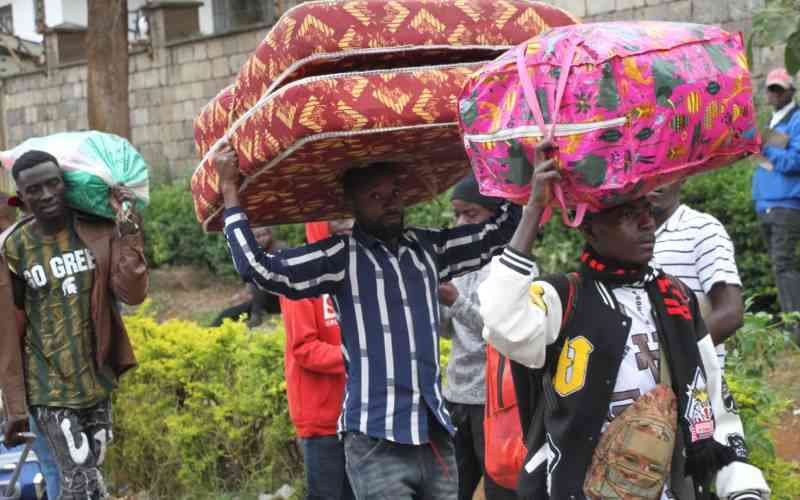
My timeline has been filled with reports of xenophobic attacks against foreign nationals in South Africa these past months. Countless people have been harassed, violently attacked or even killed in a senseless wave of violence that has cast its shadow across the continent since May.
Africans are today asking whether the migrants are just a convenient scapegoat for the structural problems that bedevil South Africa. Many others are asking what role Pan-Africanism can play in helping to resolve this wave of violence that is anchored on a lack of historical consciousness. The initial question is, who benefits the most from xenophobia?
But first, what is Pan-Africanism? Pan-Africanism is the belief that African people share a common history and a common destiny in the political, economic and social dimensions; and has historically been a process in motion rather than a series of isolated events. This process in motion began in 1900 when Henry Sylvester Williams convened the Pan-African Conference which was soon-after followed by a series of six Pan-African Congresses held between 1919 and 1974.
Of these congresses, the 5th Pan-African Congress, held in Manchester, England, in 1945, is considered to be the most significant because it was able to clarify the African struggle in multiple dimensions. It was able to identify the primary oppressor of African people as the colonial state and the economic system behind colonialism. It was additionally able to identify the oppressed – the masses of African people both home and abroad – and to anchor struggles for decolonisation within the mass-based parties as vehicles for national liberation.
In 1963, the heads of 33 independent African states met in Addis Ababa to form the Organisation of African Unity (OAU). Toward the end of that year, the OAU established an organ called the African Liberation Committee that was headquartered in Dar-es-Salaam, Tanzania, to coordinate and provide financial, diplomatic and military support to liberation movements still engaged in struggles against classical colonialism – especially in Southern Africa. Mozambique and Angola achieved independence in 1975, followed by Zimbabwe in 1980, and Namibia in 1990. The struggle to end apartheid in South Africa doubled its strength with each additional state that achieved independence in Southern Africa during this tumultuous period.
Many other African states also extended unconditional solidarity and contributed to the anti-apartheid struggle in the spirit of Pan-Africanism. Nigeria, for instance, played a pivotal role in isolating the apartheid regime one year after its independence in 1960 by leading efforts to expel South Africa from the Commonwealth. In 1976, the Nigerian government again set up the Southern Africa Relief Fund which included a programme of two per cent monthly tax deductions from the salaries of civil servants to support the struggle against apartheid. It is because of such monumental contributions that Nelson Mandela travelled to Lagos three months after his release from prison in February 1990 to express the gratitude of South African people to Nigeria.
South Africa has, quite disappointingly, in recent months been on the news following another outburst of xenophobia. The UNESCO website defines xenophobia as the irrational fear or dislike of people from different countries or cultures, often resulting in discrimination and social exclusion. Some South Africans claim that undocumented migrants are taking their jobs, while others claim that the migrants are behind a rise in crime within the country. Groups such as ‘March for March’, which represent a tiny fragment of the South African population, have today moved beyond simple xenophobia. Their members have held huge marches, physically assaulted Africans from other countries, destroyed their businesses, and in extreme cases even killed fellow Africans.
It is always tragic when the oppressed adapt the image of their oppressor. South Africans, who were brutalised by the apartheid system just over three decades ago, and who sought refuge in other African countries in the tens of thousands are today harassing, violating, and arguing for the expulsion of African people from their country.
Memory can indeed be short, or maybe history simply is not taught correctly in some places. In ‘The Book of Laugher and Forgetting’, Milan Kundera reminds us that “the struggle of people against power is the struggle of memory against forgetting”. African people, and South Africans in particular, must neither forget the history of Pan-Africanism with regard to African liberation, nor lose sight of its over-arching objectives today.
One of the simplest ways of conducting concrete analysis around any situation is to look at who stands to benefit the most from an act or series of events. The key question in this instance then becomes, who stands to benefit the most from xenophobia?
Xenophobia serves to increase the vulnerability and precarity of migrants, whether documented or undocumented, and additionally has the potential to force a majority of them to accept lower wages to survive such uncertain times.
This can potentially distort the labour market - disenfranchising not only migrant labour but also cause a deterioration of the wages of local (South African) labourers, whilst benefitting the few who control monopoly capital.
The blame of high unemployment rates in South Africa falls squarely on the shoulders of the ANC-led government. Common sense, if put to use, can be used to investigate the correlation between unemployment and crime – an exercise that would most likely reveal the uncomfortable fact that immigrants from other countries are a convenient scapegoat for the structural problems that bedevil South Africa.
Stay informed. Subscribe to our newsletter







Subscribe to our newsletter and stay updated on the latest developments and special offers!