×

The Standard e-Paper
Kenya’s Boldest Voice
 The Standard Group Plc is a
multi-media organization with investments in media platforms spanning newspaper
print operations, television, radio broadcasting, digital and online services. The
Standard Group is recognized as a leading multi-media house in Kenya with a key
influence in matters of national and international interest.
The Standard Group Plc is a
multi-media organization with investments in media platforms spanning newspaper
print operations, television, radio broadcasting, digital and online services. The
Standard Group is recognized as a leading multi-media house in Kenya with a key
influence in matters of national and international interest.

Audio By Vocalize
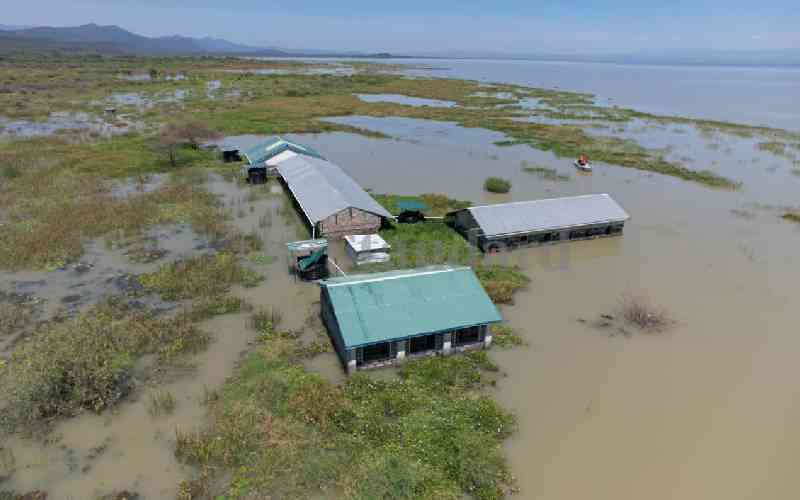
For farmers, climate change is no longer a distant environmental threat or confined to global conferences. It is increasingly a question of whether there will be a harvest at the end of the season.
Across the world, extreme heat, prolonged droughts, excessive rainfall and flooding are disrupting agricultural systems built around increasingly unpredictable weather patterns. From Europe to Latin America, farmers are confronting the same uncomfortable reality: less dependable climate.
Africa is particularly vulnerable. In Kenya, the conversation around the anticipated El Niño rains has focused on preparedness for flooding and other potential disasters. The Kenya Meteorological Department has warned that the evolving El Nino conditions could enhance rainfall during the October-November-December season, increasing the risk of flooding in vulnerable areas.
But for farmers, the problem is bigger. Too little rain can destroy a crop. Too much rain can also destroy it. That is the cruel reality of farming in an increasingly volatile climate. The consequences are already being felt. President William Ruto recently acknowledged the impact of below-average rainfall on crop production in food-producing regions, highlighting how unpredictable agricultural conditions have become.
If farmers cannot depend on the weather, what can they depend on? The answer cannot simply be to put more land under cultivation. Africa’s agricultural challenge is often framed as requiring another agricultural revolution. But perhaps the continent does not need to reinvent farming. What it urgently needs is to produce more from the land it is already cultivating while making every unit of water, nutrient and input count for more.
In other words, we need to increase yields per acre. That becomes particularly important in an era of climate uncertainty.
This is where science and agricultural technology have an important role. One emerging area is mineral-based plant biology and regenerative soil technology. Plantos Verde, for instance, is designed around the principle that improving plant performance is not simply about adding more conventional fertiliser. The technology supports photosynthetic efficiency, nutrient utilisation, plant metabolism and resilience to environmental stress.
Africa does not need miracle products. It needs evidence-based innovations that demonstrate measurable value to farmers. The significance of technologies such as Plantos Verde is therefore not that they can stop droughts or prevent floods.
No agricultural product can do that. Their potential lies in helping farmers improve efficiency and resilience of the crop-soil system. If we cannot completely control the weather, we must improve the ability of the crop and soil system to cope with the weather we get. That is a much more realistic approach to climate adaptation.
There is also a strong economic argument for this. Climate resilience is ultimately about protecting the farmer’s investment. It means getting a meaningful harvest after spending money on seed, labour, fertiliser, land and water. It means making every drop of water count, improving nutrient efficiency and ensuring that an acre remains productive even when conditions become difficult. This is why Africa’s agricultural transformation should not be measured only by how much additional land we cultivate. We should also ask how much more food we can sustainably produce from every acre.
Of course, no single technology will solve Africa’s agricultural challenges. Farmers need better seed varieties, irrigation, water harvesting, climate information, extension services, soil management and access to markets. Governments must continue investing in infrastructure, early warning systems and policies that make innovation accessible and affordable.
But innovation must become part of that equation. The introduction of technologies such as Plantos Verde into Kenya by Agrimedic East Africa is therefore part of a larger conversation about how African agriculture can become more productive and resilient in the face of climate change. The El Nino cycle will pass. The larger climate challenge will not. Africa must therefore look beyond the next season and ask a more fundamental question: how do we continue producing enough food when the conditions for producing it are becoming less predictable?
-The writer is Executive Chairperson, Agrimedic East Africa.



Subscribe to our newsletter and stay updated on the latest developments and special offers!






 join
join