×

The Standard e-Paper
Home To Bold Columnists
 The Standard Group Plc is a
multi-media organization with investments in media platforms spanning newspaper
print operations, television, radio broadcasting, digital and online services. The
Standard Group is recognized as a leading multi-media house in Kenya with a key
influence in matters of national and international interest.
The Standard Group Plc is a
multi-media organization with investments in media platforms spanning newspaper
print operations, television, radio broadcasting, digital and online services. The
Standard Group is recognized as a leading multi-media house in Kenya with a key
influence in matters of national and international interest.

Audio By Vocalize
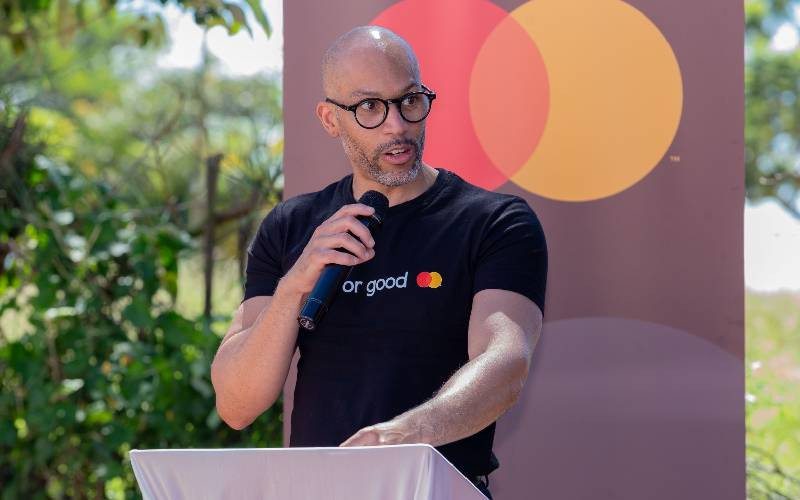
Randall Tucker, executive vice president and chief community and belonging officer at Mastercard. [Courtesy]
I have spent more than twenty years working on inclusion inside large companies, and I have learned that the work only holds up if you measure it the same way you measure everything else in the business. Not as a value statement, but a profit and loss statement.
For years, companies have treated inclusion and belonging as questions of workplace culture. But the next phase of business competition will increasingly test whether organisations can turn inclusion into measurable value: attracting talent, improving products, expanding markets and building trust.
The more interesting test is not whether a company says the right things about inclusion. It is whether inclusion shows up in what the company actually builds. My favorite example is a physical feature: the Mastercard Touch Card™. We worked with blind and low sighted people to design a card identifiable by touch alone, using a different notch for credit, debit and prepaid.
The standard works at point-of-sale terminals and ATMs, so it can scale. A prime example of this impact is in the UK, where Mastercard’s Touch Card design has played a key role in shaping UK Finance’s new Accessible Cards Code of Practice. By sharing our design specifications for tactile notches, we are helping establish the standard that is expected to see an industry wide adoption of roughly 80 per cent of all personal banking cards across the UK, making payments more inclusive for people with vision needs
Partnering with communities is key to how we do this. We built with blind and partially sighted users in the room from the start, ensuring that the solutions we built addressed their pain points.
The result was not a niche product for a narrow population. It became a mainstream design improvement, the kind of fix that, once you see it, looks like it should have been obvious all along. That is usually what inclusive design looks like when it works — ensuring that everyone has equal access, not just after the fact.
This pattern, designing for the people most often excluded and finding that everyone benefits, is not new in disability advocacy circles, but it remains underused as a business argument. The most recent Accenture research, done in partnership with Disability:IN and the American Association of People with Disabilities, found that companies leading on disability inclusion saw 1.6 times the revenue, 2.6 times the net income and twice the economic profit of their peers, along with a meaningfully higher chance of outperforming their industry overall.
Correlation is not proof of mechanism, and companies serious about this work should treat findings like these as a reason to keep testing, not a reason to stop asking hard questions. But they suggest that accessibility, treated as a design constraint rather than a postscript, can function as a forcing mechanism for better products generally.
Where this gets harder is at the question of scale. Mastercard operates in more than 200 countries and territories, and an inclusion strategy that means something in New York will not automatically mean the same thing in Nairobi. Our answer has been to resist a single global script and build regional plans with local leaders treated as the authority on their own markets.
Some of our strongest ideas start in the regions and scale outward, rather than the other way around. In our most recent annual employee survey, 86 per cent of employees agreed that their leaders value and respect them and that they feel comfortable voicing ideas that differ from others. That tells us the approach is landing, though it is something we have to keep earning every year, not claim once and move past.
This matters specifically for the conversation happening across Africa, where the workforce is younger and growing faster than almost anywhere else in the world, and where the infrastructure for disability access and the social norms around inclusion can look different from what shapes corporate culture in London or New York. You cannot assume a single solution travels everywhere. But certain principles do: designing inclusively from the start, building flexibility into systems, creating accessible entry points into hiring and development.
Our Kids4Tech initiative, which runs in Kenya and across the continent and has reached more than 12 million students in 68 countries and territories since it began, exists. When you build access for the people most often left out, the benefits usually reach far more people than you expected.
It also aligns with where our growth is heading. In 2025, we reached a decade-long goal of connecting 1 billion people and more than 90 million small businesses to the digital economy. When people are connected to the digital economy, it opens doors to more social and economic opportunities. That’s why, looking forward, we are committing to connect and protect 500 million people and small businesses on their pathways to financial health by 2030, shifting focus from access toward sustained and secure participation. For us, driving that kind of growth in a market like Kenya, which is critical to the continent’s digital transformation, means we have a commercial reason, not just a moral one, to ensure no one is left out of our design process
The honest version of this story is not that Mastercard has solved inclusion. It is that we know that our business thrives when more people in more places can fully participate in the digital economy. That is the difference between treating ‘inclusion’ as just another buzzword in a mission statement and treating it as a measurable business imperative.
Stay informed. Subscribe to our newsletter
Mr Tucker is executive vice president and chief community & belonging officer at Mastercard





Subscribe to our newsletter and stay updated on the latest developments and special offers!





 join
join