×

The Standard e-Paper
Stay Informed, Even Offline
 The Standard Group Plc is a
multi-media organization with investments in media platforms spanning newspaper
print operations, television, radio broadcasting, digital and online services. The
Standard Group is recognized as a leading multi-media house in Kenya with a key
influence in matters of national and international interest.
The Standard Group Plc is a
multi-media organization with investments in media platforms spanning newspaper
print operations, television, radio broadcasting, digital and online services. The
Standard Group is recognized as a leading multi-media house in Kenya with a key
influence in matters of national and international interest.

Audio By Vocalize
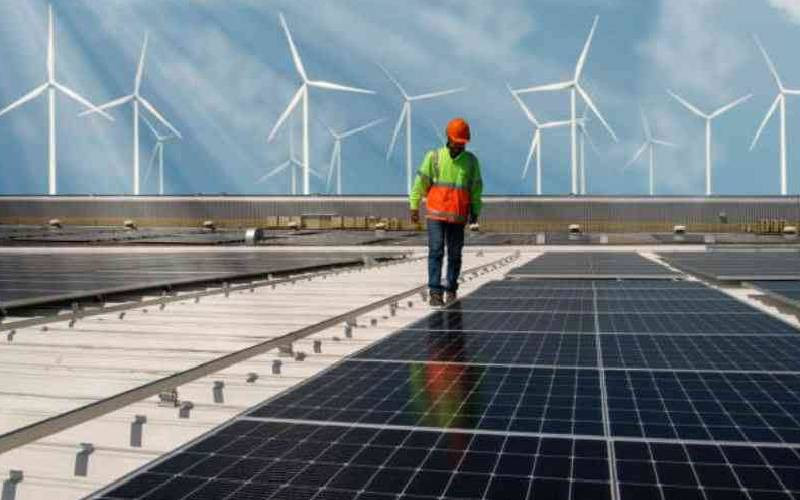
Kenya is often hailed as one of Africa’s clean energy success stories.
With more than 90 per cent of its electricity generated from renewable sources such as geothermal, hydropower, wind and solar, the country has earned international recognition for reducing dependence on fossil fuels while expanding access to electricity.
The achievement has made Kenya Africa's leading producer of geothermal energy and the world's seventh-largest producer, placing the country among global leaders in renewable energy.
However, the production of clean electricity is only one part of the journey in the quest for a carbon-free nation. As climate change intensifies and countries race to reduce carbon emissions, the bigger question is whether Kenya can extend its renewable energy success into various sectors of the economy that rely heavily on fossil fuels.
Achieving a truly carbon-free economy requires coordinated action that goes far beyond the energy sector itself.
It is against this backdrop that researchers at Strathmore University have examined Kenya’s requirements to accelerate its transition towards a carbon-free future. Their study argues that while the country has built an impressive foundation, achieving net-zero emissions will depend on stronger policies, greater investment, technological innovation and closer collaboration between stakeholders.
The researchers argue that decarbonisation is not only an environmental obligation but also an opportunity to strengthen economic growth, create jobs and improve the country’s long-term resilience.
The Strathmore University study comes at a time when governments are under increasing pressure to honour commitments made under the Paris Agreement while balancing economic growth with environmental sustainability.
Although Kenya contributes only a small fraction of global greenhouse gas emissions, it is among the countries most vulnerable to climate change through prolonged droughts, floods, food insecurity and changing weather patterns.
The Strathmore study, led by renowned renewable energy scholar Prof Izael Da Silva, observes that Kenya already possesses several advantages that many developing countries still lack. Abundant geothermal resources, expanding wind farms, growing investments in solar energy and an established renewable electricity system provide a strong platform for further transformation.
Kenya has installed about 949 megawatts of geothermal capacity, yet this represents only a fraction of the country’s estimated geothermal potential of about 10,000 megawatts concentrated along the Rift Valley. The same untapped opportunities exist in wind, hydro and solar energy.
However, success in electricity generation does not automatically translate into a carbon-free economy. The study points out that while Kenya has invested heavily in expanding renewable power generation, the infrastructure needed to transmit and distribute that electricity has not always kept pace.
Large sections of the country remain inadequately connected to the national grid. This limits access to reliable clean energy for households, businesses and industries.
Transport is one of the country’s fastest-growing sources of emissions. Manufacturing depends significantly on fossil fuels, while many households still rely on charcoal, firewood and other traditional fuels for cooking. This is quite evident that the transition requires a much broader national strategy than expanding renewable power generation alone.
According to the report, policy coherence will play a decisive role. Clean energy investments require predictable regulatory frameworks that encourage both public and private sector participation.
Stay informed. Subscribe to our newsletter
Investors need confidence that supportive policies will remain consistent over time, while government institutions require stronger coordination to avoid fragmented implementation of climate and energy programmes.
The study, conducted through Strathmore Energy Research Centre (SERC), also argues that removing unnecessary barriers to private investment and strengthening accountability in implementing existing energy policies would accelerate the country’s transition.
The researchers also highlight the importance of financing. Although renewable technologies have become more affordable globally, the initial investment required for large-scale infrastructure, clean transport systems and industrial transformation is significant.
Innovative financing mechanisms, strategic public investment and partnerships with development agencies will, therefore, be essential to accelerate the transition, observes the study entitled, “Toward a Carbon-Free Future: Kenya’s Leadership in Renewable Energy Transition.”
At the same time, the Strathmore team argue that investment should not focus solely on generating more electricity. Equal attention should be given to modernising transmission networks, expanding electricity access and deploying technologies capable of making renewable energy systems more reliable and efficient.
Emerging technologies such as Battery Energy Storage Systems (BESS), electric mobility, smart electricity grids and energy-efficient manufacturing have the potential to reduce emissions and improve productivity.
Battery storage offers an opportunity to store excess renewable energy and release it during periods of high demand. This reduces dependence on expensive fossil-fuel-powered backup generation and improves the stability of the national grid.
Universities and research institutions have an increasingly important role in generating locally relevant solutions that respond to Kenya’s unique development context. The study suggests that stronger collaboration between researchers, policymakers and industry will enable scientific knowledge to inform practical decision-making more effectively.
Equally important is the public awareness factor. A successful transition to a carbon-free economy will depend not only on government policy but also on decisions made by households, businesses and communities.
Citizens can make an important contribution alongside institutional reforms. They can play key roles by adopting cleaner cooking technologies, embracing electric mobility and improving energy efficiency.
The researchers argue that behavioural change should complement technological and policy interventions. They also recommend intensified public awareness campaigns to encourage wider adoption of renewable energy technologies and promote the productive use of electricity to improve livelihoods and economic opportunities.
The study also views the transition not as a threat to economic growth but as an opportunity to create new industries and employment.
Global demand for renewable energy technologies, green manufacturing, sustainable construction, and environmental services continues to grow rapidly. Kenya’s existing strengths in renewable energy position it well to benefit from these emerging markets, provided investments in skills, research and innovation keep pace with changing technologies.
The researchers also note that making electricity more affordable will be critical to accelerating the transition. Reducing transmission losses, improving grid efficiency, and lowering dependence on costly thermal power generation would encourage greater uptake of clean energy, enhance industrial competitiveness, and support broader economic growth.
The study challenges the perception that climate action inevitably slows economic development. Instead, it suggests that environmental sustainability and economic competitiveness can reinforce one another when supported by sound public policy, strategic investment, and continuous innovation.
The research also illustrates the increasingly important contribution universities are making to national policy conversations. By examining practical pathways towards decarbonisation, Strathmore University joins a growing body of evidence that seeks to inform evidence-based policymaking on climate resilience, sustainable development and green economic transformation.
Kenya has already demonstrated that renewable energy can power national development. However, the challenge now is to extend that success beyond electricity generation into every sector of the economy.
If supported by sound policy, sustained investment and continued innovation, the country's renewable energy leadership could become the foundation of one of Africa's first truly carbon-free economies.








Subscribe to our newsletter and stay updated on the latest developments and special offers!








 join
join