×

The Standard e-Paper
Kenya’s Boldest Voice
 The Standard Group Plc is a
multi-media organization with investments in media platforms spanning newspaper
print operations, television, radio broadcasting, digital and online services. The
Standard Group is recognized as a leading multi-media house in Kenya with a key
influence in matters of national and international interest.
The Standard Group Plc is a
multi-media organization with investments in media platforms spanning newspaper
print operations, television, radio broadcasting, digital and online services. The
Standard Group is recognized as a leading multi-media house in Kenya with a key
influence in matters of national and international interest.

Audio By Vocalize
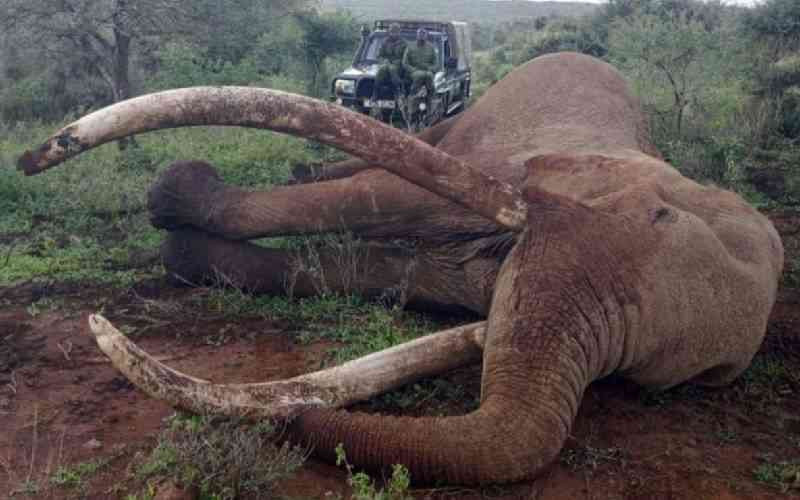
Fifteen elephants recently died in the Amboseli ecosystem. Preliminary reports suggest that the animals consumed tomatoes containing high levels of cyanide, possibly linked to pesticide contamination on nearby farms. While officials say the toxin poses no immediate threat to human life, they have warned local herders to keep their livestock away from the contaminated fields.
Perhaps there is no immediate danger to people. But history suggests we should pay close attention anyway.
Wildlife does not simply die. Sometimes it warns. The tragedy is that we, humans, often understand the warning only after it becomes our own.
History has taught us this lesson before. In the 1950s, residents around Japan’s Minamata Bay noticed animals behaving strangely. Cats staggered, convulsed and even threw themselves into the sea. Birds fell from the sky. Fish floated lifeless on the water. Much later, experts discovered mercury poisoning in the bay. By the time the contamination was fully understood, thousands of people had developed devastating neurological disease after consuming contaminated seafood.
Here in Kenya, 12 years ago, residents of Owino Uhuru were exposed to severe lead poisoning before the contaminant’s presence in the human environment was fully recognised. This followed reports of unexplained deaths among livestock and pets exposed to contaminated grass and soil.
From these tragedies, it is evident that environmental failures rarely remain environmental. They eventually become public health failures. Animals recognise the danger first, while people recognise it too late. What initially appears to be a wildlife conservation crisis often turns out to be something much bigger.
As such, we should pay close attention to the deaths of the Amboseli elephants.
In recent years, concerns over food safety have increasingly focused on what reaches our tables. Yet we continue to witness a disturbing trend. In mid-2025, research by Egerton University found residues of banned pesticides , including: chlorpyrifos and fenitrothion , in potatoes from Nyandarua.
More recently, testing of 45 fresh produce samples, including : onions, tomatoes, kale and spinach, purchased from Muthurwa, Githurai, Kangemi and Nakuru markets found pesticide residues in more than 76 per cent of the samples.
Toxic substances continue to find their way into our environment, our farms and our food systems despite regulations intended to prevent exactly that.
This is not merely an agricultural issue. It is a governance issue. When banned chemicals find their way into farms, when contaminated produce reaches our markets and when dangerous substances enter our ecosystems, these are not simply environmental failures. They are failures of regulation, inspection, enforcement, and public health surveillance.
Strong environmental governance is not measured by how quickly we respond after animals are found dead. It is measured by whether we prevent dangerous substances from entering ecosystems in the first place. It is measured by effective regulation of agricultural chemicals, routine testing of food and water, robust environmental surveillance, timely public communication, and enforcement that deters negligence before disaster strikes.
When ecosystems, and ultimately our food systems, begin to fail, animals are often the first casualties and, therefore, the first messengers.
That is why every unexplained wildlife death deserves attention not only from conservationists, but also from public health officials, agriculturalists, and every mwananchi. Such incidents should trigger more than investigations into the immediate cause. They should prompt deeper questions about oversight, compliance, monitoring, and the state of our public health system.
Are hazardous substances adequately regulated? Are we ignoring or missing warning signs? Are our food and water surveillance systems robust enough to detect contamination before it spreads?
Stay informed. Subscribe to our newsletter
The greatest mistake would be to dismiss the Amboseli incident as an isolated wildlife tragedy or merely a conservation issue.
Environmental crises are often precursors to something far more serious: heavy metal contamination, industrial chemical leaks and by-products, and the misuse of agricultural pesticides, all of which pose significant threats to human health.
The animals have sent us a message. The question is whether we will finally listen.







Subscribe to our newsletter and stay updated on the latest developments and special offers!








 join
join