×

The Standard e-Paper
Fearless, Trusted News
 The Standard Group Plc is a
multi-media organization with investments in media platforms spanning newspaper
print operations, television, radio broadcasting, digital and online services. The
Standard Group is recognized as a leading multi-media house in Kenya with a key
influence in matters of national and international interest.
The Standard Group Plc is a
multi-media organization with investments in media platforms spanning newspaper
print operations, television, radio broadcasting, digital and online services. The
Standard Group is recognized as a leading multi-media house in Kenya with a key
influence in matters of national and international interest.

Audio By Vocalize
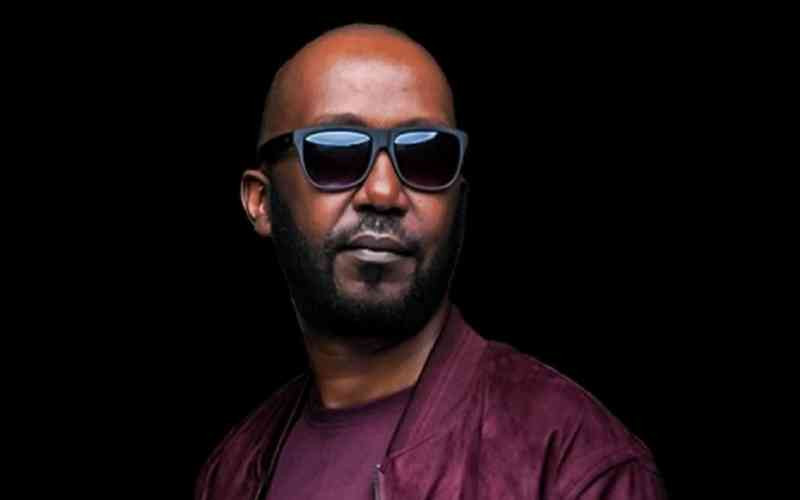
I have lived long enough to know that every influential voice answers a question society has failed to answer. Andrew Kibe is one such voice of our time. For those who do not know Kibe, he is a fiercely outspoken and unapologetically provocative social commentator. Kibe has built his brand on challenging conventional views about relationships and masculinity. This has earned him both devoted followers and equally passionate critics.
Whether you admire him as a champion of men or dismiss him as a misogynist, for now, that is beside the point. I am less interested in judging the man than in understanding the phenomenon. Literary criticism has taught me that before I judge a text, I must first understand the conditions that produced it.
The question is not who Andrew Kibe is. No. The question is why millions of young men have chosen to listen to him. The answer begins in our homes. He is providing what is missing at home.
In my previous article, I argued that fathers have gone missing and consequently the boy child is endangered. The responses I received were overwhelming.
Many men have admitted to being physically absent fathers. Women have described fathers who sit in the living room every evening yet remain strangers to their sons. Some men have whispered that they are not sure whether the children they are raising are their biological offspring and have even wished for DNA tests.
Other men have admitted they crossed into adulthood without ever having a meaningful conversation with the men they call father. These responses have confirmed to me that Kenya is facing a crisis of fatherhood. It is also confronting a crisis of masculine mentorship. Allow me to explain.
Long ago, societies transmitted their values through stories. In ancient Greece, young people learned courage, loyalty and honour from the Odyssey and the Iliad. I have for many years been drawn to one story embedded in the Odyssey about a young man named Telemachus. He comes of age without his father's presence. His greatest struggle is not simply the absence of a parent. It is the absence of a guide. Before he can become his own man, he must first discover the man his father was. He moves from one elder to another, gathering stories about Odysseus until he pieces together an image of the father he can scarcely remember. Homer understood a timeless truth that a man's search for identity often begins with the search for his father.
Africa understood this truth too. Around the evening fire, the griot, the grandmother and the father narrated stories whose purpose extended far beyond entertainment. The Hare, forever clever, taught the value and limits of intelligence. The Hyena warned against greed. The Lion embodied courage tempered by responsibility. The Tortoise reminded the boys that patience often triumphs over strength. Every tale was a classroom and an initiation into adulthood.
A father occupied the centre of that classroom. He interpreted the stories, answered difficult questions and corrected youthful excesses. Through example and gentle rebuke, he translated the mysteries of manhood into lessons a boy could understand. That classroom has gradually disappeared. Families rarely linger in conversation after supper.
Fathers prioritise anything else except their sons. Others are physically present but emotionally absent. The family lives under one roof, yet each member inhabits a different world.
My good people, nature, however, abhors a vacuum. So does culture. Whenever one generation falls silent, another voice rises to occupy the empty space. In fact, whenever the old storytellers lose their audience, new storytellers emerge. In our case, fathers have ceased to interpret life for their sons and someone else has assumed that responsibility. And that is Andrew Kibe. Is this substitute wise or flawed?
Andrew Kibe's popularity did not emerge from nowhere. It emerged from a silence. Listen carefully to the questions many young men are asking that Kibe is answering. What does it mean to be a man? How should a man navigate love, sex, rejection and disappointment? How does he balance strength with compassion? How does he remain honourable in a rapidly changing world? We should not blame him.
For centuries, fathers answered these questions but today many young men seek their answers elsewhere. Increasingly, many turn to social media, where Kibe's confident voice offers certainty in an uncertain age. Whether we agree with that voice is not the immediate issue. The deeper issue is why so many young men feel compelled to seek guidance from a stranger.
This is why debates about Andrew Kibe often produce more emotion than understanding. His admirers see a man willing to discuss subjects fathers avoid. His critics see a voice that sometimes oversimplifies complex relationships and unfairly generalises about women. Both may be correct in part. However, they both risk overlooking the larger cultural question.
Andrew Kibe is not merely a media personality. He is a cultural text. His popularity tells us that thousands of young men are searching for an interpreter of manhood. Kibe's influence tells us that many young men are asking questions they feel unable to ask at home. Ultimately, his success tells us that the marketplace of ideas rewards those who answer neglected questions.
Stay informed. Subscribe to our newsletter
Look here. The tragedy is not that Andrew Kibe has become young people's father. No. Let us get it clear. Every age produces influential voices. Fathers have surrendered the ancient privilege of becoming their sons' first storytellers and heroes. Andrew Kibe did not create the father vacuum. He discovered it. That is why millions of young men walked into his classroom. In fact, he has released 28 Commandments: A Journey into Manhood, a book that youngsters are treating as their Bible!
Let us not waste time asking whether Andrew Kibe is right or wrong. The big question is why so many young men believe they must go to him to learn lessons that previous generations learned from their fathers. Andrew Kibe has just filled the vacuum. He is answering questions that nobody else is answering. Even if Andrew Kibe did not emerge, another voice would. Let us get it honest. Fathers stopped telling their children their stories. Every silence must find a voice. For now, it is Andrew Kibe's voice and perhaps that of his friend Scar Mkadinali.
Prof. Egara Kabaji is a writer, educationist and researcher based at Masinde Muliro University. He is also the Vice President of the Pan African Writers Association (PAWA) and the Chancellor of Mt. Kigali University, Rwanda.







Subscribe to our newsletter and stay updated on the latest developments and special offers!








 join
join