×

The Standard e-Paper
Stay Informed, Even Offline
 The Standard Group Plc is a
multi-media organization with investments in media platforms spanning newspaper
print operations, television, radio broadcasting, digital and online services. The
Standard Group is recognized as a leading multi-media house in Kenya with a key
influence in matters of national and international interest.
The Standard Group Plc is a
multi-media organization with investments in media platforms spanning newspaper
print operations, television, radio broadcasting, digital and online services. The
Standard Group is recognized as a leading multi-media house in Kenya with a key
influence in matters of national and international interest.

Audio By Vocalize
Yesterday, during one of our regular young men's mentorship sessions, my family, close friends, and I discussed relationships, leadership, entrepreneurship, purpose, and mental health. Their questions were sincere, and one thought stayed with me.
Kenya's young people are not short on talent. They are often short on a vision big enough to inspire them, because inspiration is a requisite of life. After the session, I found myself thinking like a chess player, where weak players see the next move and strong players see the whole board. Suddenly, I began to see Kenya differently.
Indeed, every nation is built twice, first in the mind and then on the land. Perhaps nowhere have we underestimated ourselves more than in agriculture.
For decades, we have treated agriculture as a sector, a campaign promise, or a food security discussion. Yet it is far bigger than that. It is the board on which food, employment, manufacturing, exports, health, education, climate resilience, and national prosperity all meet.
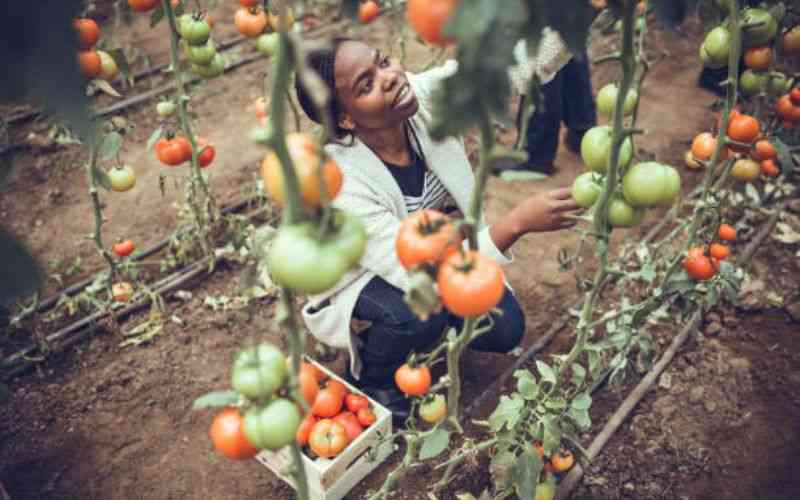
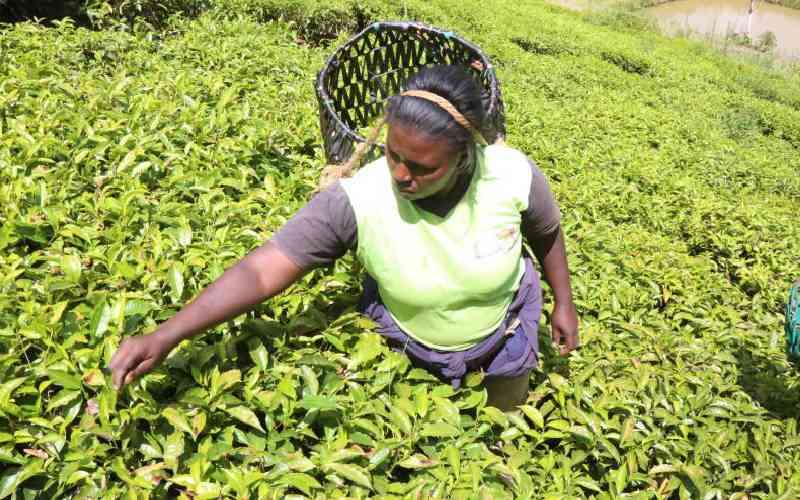
Then a question quietly crossed my mind. Kenya's largest factory has no roof. Its production floor spans our farms, valleys, ranches, and fishing communities. Its machinery is soil, water, sunlight, knowledge, technology, and the determined hands of millions of Kenyans. Every day, it produces food, creates jobs, earns foreign exchange, supplies industries, and sustains our economy.
Perhaps our greatest mistake has not been in how we support this factory, but in how we describe the people who work in it. When we call someone a subsistence or smallholder farmer, we describe survival. When we call them a food manufacturer, we recognise production, innovation, enterprise, and national value. The words we choose shape the respect we show, the policies we design, and the investments we make.
Nations rise or fall by the language they use to value the people who feed them. This is not merely a change in vocabulary. It is a change in economic thinking. Agriculture contributes about one fifth of Kenya's economy, employs about 40 percent of the workforce, and supports nearly 70 percent of rural livelihoods. Yet we continue to separate agriculture from manufacturing, education, finance, and technology, even though they all operate within the same production system.
Food manufacturing begins the moment a seed is planted in the soil. Once we understand that, every institution must reassess its role. Universities should no longer view farms as places only for agricultural students. Kenya's largest factory should become its largest classroom. Engineers should design irrigation, mechanization, and cold chains. Business schools should build competitive producer enterprises.
Scientists should reduce post-harvest losses and improve value addition. Law schools should strengthen contracts that protect food manufacturers. Without realising it, we have divided Kenya's largest factory into separate university faculties. It is time to bring them back together.
The government has committed more than one trillion shillings to transform agriculture. That investment must be matched by equally bold thinking. Every public policy should answer one question. Does it strengthen Kenya's largest factory?
Business associations should recognize that manufacturing begins the moment a seed enters the soil. Banks should finance production, not just borrowers. Counties should treat markets, roads, water, and storage as industrial infrastructure. Development partners should help Kenya build a single integrated production system from seed to supermarket.
Kenya has committed to halving post-harvest losses. Yet no manufacturer accepts losing its products before they reach the customer. Why should Kenya's largest factory accept what no other factory would tolerate?
Yesterday's young men reminded me that one day Kenya's chessboard will be theirs. Our greatest responsibility is not to leave them with more problems to solve, but to give them a better way to see the board.
The moment we begin to see farms as factories and farmers as food manufacturers, we will not simply change agriculture. We will change how Kenya thinks, invests, and prospers.
Think green. Act green!
Stay informed. Subscribe to our newsletter






Subscribe to our newsletter and stay updated on the latest developments and special offers!








 join
join