×

The Standard e-Paper
Fearless, Trusted News
 The Standard Group Plc is a
multi-media organization with investments in media platforms spanning newspaper
print operations, television, radio broadcasting, digital and online services. The
Standard Group is recognized as a leading multi-media house in Kenya with a key
influence in matters of national and international interest.
The Standard Group Plc is a
multi-media organization with investments in media platforms spanning newspaper
print operations, television, radio broadcasting, digital and online services. The
Standard Group is recognized as a leading multi-media house in Kenya with a key
influence in matters of national and international interest.

Audio By Vocalize
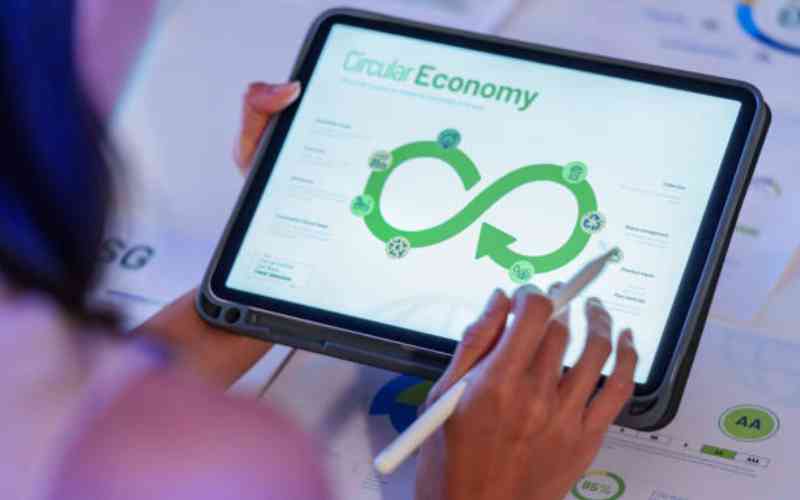
“Circularity” is the new buzzword in town. If you work within the African entrepreneurship ecosystem, as an investor, policymaker, or support organisation, chances are you have heard the term repeatedly over the past few years.
To some, it sounds like development jargon. But the truth is, circularity is not new to us. Africa practised circularity long before it became a global trend, a sustainability framework, or a boardroom conversation.
At its core, circularity refers to practices that optimise resource use and minimise waste across the entire production and consumption cycle. In simple terms, it is about maximising the value and lifespan of materials. For many African households, this is not a foreign concept; it is daily life.
Across the continent, people have always found ways to extend the life of what they own. We mend clothes and shoes when they tear. We repair electronics instead of discarding them. We reuse cooking oil containers for storage, turn ice cream tubs into food containers, and repaint old furniture. This hand-me-down culture is deeply embedded in our homes.
What the world now calls “circularity” has long existed in African communities through necessity, creativity, and resourcefulness. This mindset is equally visible in our business landscape.
Across cities and towns, entrepreneurs are building ventures that naturally embody circular principles: transforming discarded glass into decor, converting organic waste into compost, or using every part of a coconut or avocado to create skincare, charcoal briquettes, and cosmetics.
Fashion brands are upcycling second-hand textiles into high-end garments. These businesses do more than reduce waste; they create jobs, generate income, and prove that circularity is a viable economic opportunity.
Yet, while Africa understands the spirit of circularity, there is room to scale its execution. Much of what we currently celebrate focuses on downstream recycling; managing waste after it has already entered the environment.
While important, the next frontier lies in upstream circularity, which is preventing waste from being created in the first place. Upstream circularity challenges businesses to rethink packaging, production, sourcing, and consumption patterns before waste is generated.
Instead of asking, “How do we recycle this packaging?” the question becomes, “How do we design this product to avoid packaging altogether?”
This shift is critical. According to the World Bank, Sub-Saharan Africa’s waste generation is projected to grow significantly due to rapid urbanisation and population growth. Without intentional action, our cities and ecosystems will face mounting pressure. Simultaneously, Africa is home to the world’s youngest population, with millions of youth entering the labour market annually. Supporting circular enterprises offers a rare double-win: addressing unemployment and environmental degradation at the same time.
This is where investors, ecosystem builders, and policymakers must step in. We must stop treating circularity as a Western import or a luxury corporate social responsibility (CSR) trend. Africa already possesses the cultural mindset; what we need now is the capital, policy framework, and infrastructure to scale it.
The first step for entrepreneur support organisations and investors is to help founders integrate upstream circular principles into their business models from day one. This means funding and supporting innovation in sustainable packaging, regenerative agriculture, and product redesign.
Africa does not need to start from scratch. We have always been circular. Our task is to fund it, refine and build the systems that allow it to scale.
-The writer is managing director, GrowthAfrica
Stay informed. Subscribe to our newsletter







Subscribe to our newsletter and stay updated on the latest developments and special offers!







 join
join