×

The Standard e-Paper
Fearless, Trusted News
 The Standard Group Plc is a
multi-media organization with investments in media platforms spanning newspaper
print operations, television, radio broadcasting, digital and online services. The
Standard Group is recognized as a leading multi-media house in Kenya with a key
influence in matters of national and international interest.
The Standard Group Plc is a
multi-media organization with investments in media platforms spanning newspaper
print operations, television, radio broadcasting, digital and online services. The
Standard Group is recognized as a leading multi-media house in Kenya with a key
influence in matters of national and international interest.

Audio By Vocalize
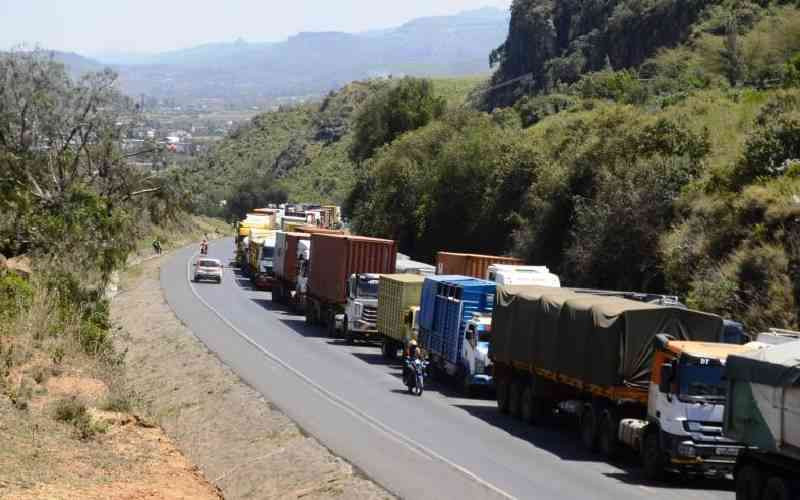
The 411-kilometre trip from Nairobi to Mumias takes about eight hours by road. That trip took me 40 years to cover. Sit, relax and find out why.
It all started when I was in a technical school on the outskirts of Nairobi opposite Veterinary Laboratories, next to N, the only town with a one-lettered name, may be in the in the world.
Technical schools were the best recruiting ground for technicians to work at Mumias Sugar Company (MSC) and many other companies.
One would become a paid apprentice and grow in the job. I got an application form, which, after reflection, I gave to David Ndibo from Kakamega. He later joined Mumias.
Unfortunately, he passed away before we met. Joblessness was not always part of our lives.
Four decades later, I finally visited the place where I could have started working.
The town is only 37 kilometres from Kakamega. To feel like that time decades ago, I took a matatu and paid Sh150.
In less than an hour, I was in Mumias through Eshishiru, Shibuli, Shianda, and Ekero.
I also got a chance to see how policemen stealthily pick the bribes from matatu drivers and touts.
EM Kungu, who worked for Mumias from 1988 to 1991, remembers paying less than Sh5 for the same trip. His starting salary was Sh1,290. He paid Sh50 as bus fare from Nairobi to Kakamega.
He now runs Kenwan Services Ltd, focused on emergency power generation, water and sanitation. Unlike some of us, he did not defect from the technical field. Is grass not always greener on the other side of the fence?
The matatu paused by Mumias town modern bus park (some letters are missing in the name!) to pick up more passengers. I listened to an interesting conversation among the men who “fill” the matatus. That police dogs have ranks? Any policemen reading this?
In the same matatus, a young man was trying to convince a schoolgirl not to attend university, a waste of time. His argument was that a certificate or diploma takes a shorter time, and you start earning early.
When I asked him about the earning power and upward mobility, he went silent. I did not discuss my credentials. But that’s the beauty of matatus, you meet the ordinary people and their beliefs.
Stay informed. Subscribe to our newsletter
I was dropped off at Bungoma Road. A signboard for Mumias Sugar was small compared to the eight-foot barrier signboard. A Sh40 motorbike took me to the factory gate about two kilometres away.
Next destination
Cows were grazing by, a school, a post office, a guest house and several houses.
At the gate, I was told by the security guard that I could not get in.
I was informed that this is a new company, Mumias Sugar 2021.
I could not be allowed to see what could have been my workplace unless I came the next day and started from the legal office. Why? My curiosity was finally satisfied after 40 years!
My next destination, still on a motorbike, was Mumias town. Walked around and admired the neatness. I visited the burial place of Bishop Hannington, next to an open field. In the town, Wanga and Nabongo were popular business names.
I asked my “chauffeur” where King Mumias is buried. “Mimi ni mjaluo sijui” (literally, I’m a Luo, I don’t know the place). He stopped an elderly man, “Omwami”, he called out.
After shaking our hands, I asked him where Nabongo Mumia was buried. Matungu, he told me.
Twende, I told my chauffeur. We headed to the Nabongo Cultural Centre, about ten minutes away. We passed by the MSC on the right again!
The centre is a museum celebrating the life and times of the Wanga Kings.
The genealogy charts show the kingdom was founded in 1050 AD by Nabongo Mwanga, who died in 1140.
Maybe due to their diet, Wanga Kings enjoyed long lives.
Nabongo Mumia lived to be 100 years, like former United States Federal Reserve Chairman Allan Greenspan.
What of the ordinary citizens of the kingdom? Raila Odinga is descended from that kingdom, the chart shows.
Three things caught my attention at the centre; one was a flag of Kenya before uhuru. My guide thought it was the Union Jack. The other was Wanga has reigning king, Mumias II.
Third was that I almost met this king; he was a guest at the inauguration of the king of Toro in 2010.
I was a guest there, don’t ask me as a prince or king of which kingdom! The king seems to have a good rapport with the government, going by several photos with our presidents.
The cultural centre has artefacts like King Mumia’s clothes, said to be 140 years old, and a leopard skin, 300 years old. Tools and other regalia, including the king’s stool, which has four legs. Others had three. My mum owns such a three-legged stool.
Cane plantations
A traditional homestead is near the cultural centre with busaa available. I will return for a sip. On the way back to Mumias, I stopped to admire the mighty River Nzoia and took a scenic view of the sugar factory across the river.
It was a view that reminded me of sugar cane plantations around Durban in South Africa.
As I took another matatu back to Kakamega. I reflected on my trip to Western Kenya and the Wanga Kingdom.
Western Kenya seems more culturally homey than other regions of Kenya. The men and women are friendly. Remember Omwami’ s handshake? They ask for the bus fare almost at the end of the trip. They seem to have more in common with Uganda than Kenya, culturally.
As I watched Messi score his magical goals that evening, awaiting musenye (a mixture of sweet potatoes with beans), I wondered how my life could have turned out if I had joined Mumias. Maybe I could have married Nekesa and become Baba Matendechere?
Would I be an Omwami by now? Maybe I should have taken the road less travelled, to quote poet T.S Eliot, by joining Mumias Sugar Company when I was younger and more innocent.
Next week, it will be the letter from Webuye.


Subscribe to our newsletter and stay updated on the latest developments and special offers!






 join
join