×

The Standard e-Paper
Fearless, Trusted News
 The Standard Group Plc is a
multi-media organization with investments in media platforms spanning newspaper
print operations, television, radio broadcasting, digital and online services. The
Standard Group is recognized as a leading multi-media house in Kenya with a key
influence in matters of national and international interest.
The Standard Group Plc is a
multi-media organization with investments in media platforms spanning newspaper
print operations, television, radio broadcasting, digital and online services. The
Standard Group is recognized as a leading multi-media house in Kenya with a key
influence in matters of national and international interest.

Audio By Vocalize
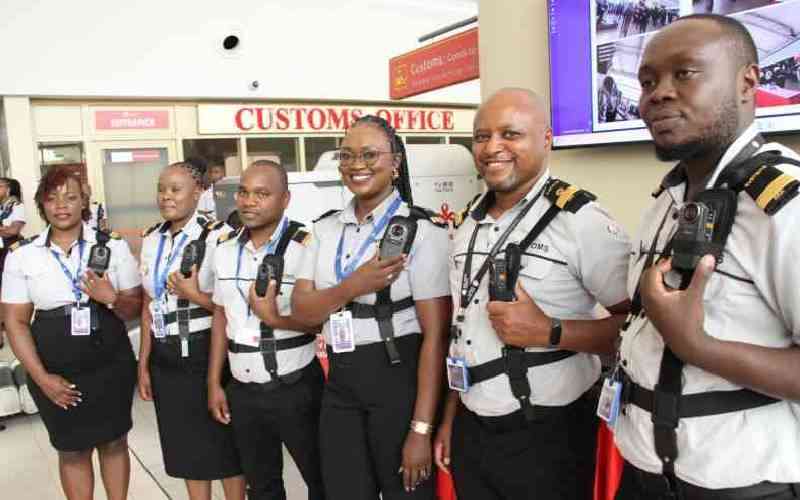
KRA customs Officers during the launch of the body-worn cameras at JKIA Terminal 1 in Nairobi on March 10, 2026. [File, Standard]
Customs administrations across the world are under increasing pressure to strike a delicate balance between facilitating trade, safeguarding revenue, and protecting society. In Kenya, this responsibility rests with the Kenya Revenue Authority’s (KRA) Customs and Border Control Department. As global trade expands and the risks associated with illicit flows grow more sophisticated, the need for transparency, accountability, and operational efficiency has never been greater.
It is within this context that KRA recently launched the Body-Worn Camera system. This initiative marks a critical milestone in KRA’s ongoing journey to modernise customs administration and reinforce integrity in its operations. The initiative is not simply a technological enhancement, but a deliberate and strategic response to the evolving demands of border management.
At the core of customs operations are daily interactions between officers and the public, travellers, traders, clearing agents, and other stakeholders. These engagements are pivotal in shaping perceptions of fairness, professionalism, and trust in government institutions. However, they also present potential points of friction, particularly in high-pressure environments such as passenger clearance, cargo verification, and enforcement operations.
Historically, disputes arising from such interactions have often relied on competing narratives, making it difficult to establish the facts. The introduction of body-worn cameras fundamentally changes this dynamic. By providing real-time and recorded visual evidence of engagements, the system ensures that decisions can be verified objectively and disputes resolved fairly and efficiently. This is a significant step toward strengthening procedural justice within customs operations.
Equally important is the role of this technology in promoting ethical conduct. Integrity challenges, whether real or perceived, undermine public confidence, distort markets, and result in revenue leakages. The presence of body-worn cameras introduces a powerful deterrent effect. When officers and members of the public are aware that their actions are being recorded, adherence to established procedures and professional standards improves markedly. In this way, the technology supports a culture of accountability while protecting both officers and citizens.
From an operational perspective, body-worn cameras also enhance efficiency and effectiveness. The recorded footage provides valuable insights into frontline processes, enabling supervisors to identify bottlenecks, refine procedures, and strengthen training programmes. It allows the Customs officers to move from account assessments to evidence-based decision-making, thereby improving service delivery across the points of entry. The deployment of this system has therefore been carefully designed to support KRA’s core mandate. The cameras are being utilised across a wide range of operational environments, including passenger clearance at international airports, cargo inspections at seaports and inland container depots, and enforcement activities at land borders. Equipped with capabilities such as GPS tracking, live streaming, and secure data storage, the system enables real-time monitoring and centralised oversight, enhancing both situational awareness and operational control.
The adoption of body-worn cameras is also aligned with KRA’s digital transformation agenda. Over the years, KRA has invested in advanced technologies such as non-intrusive inspection equipment, integrated customs management systems, and data-driven risk analysis tools. The Body-Worn Camera system complements these investments, creating a more integrated, responsive, and technology-enabled customs environment.
Importantly, this initiative represents more than the deployment of devices, it signals a shift in institutional culture. It reinforces our commitment to professionalism, transparency, and service excellence. It affirms that accountability is not optional but integral to effective public service. And it demonstrates the Authority’s resolve to continuously innovate in order to meet the expectations of a dynamic and interconnected global economy.
The introduction of body-worn cameras in Kenya’s customs operations is a strategic intervention that will yield far-reaching benefits.






Subscribe to our newsletter and stay updated on the latest developments and special offers!








 join
join