×

The Standard e-Paper
Join Thousands Daily
 The Standard Group Plc is a
multi-media organization with investments in media platforms spanning newspaper
print operations, television, radio broadcasting, digital and online services. The
Standard Group is recognized as a leading multi-media house in Kenya with a key
influence in matters of national and international interest.
The Standard Group Plc is a
multi-media organization with investments in media platforms spanning newspaper
print operations, television, radio broadcasting, digital and online services. The
Standard Group is recognized as a leading multi-media house in Kenya with a key
influence in matters of national and international interest.

Audio By Vocalize

Spend enough time around Kenya’s financial and corporate sector, and a pattern begins to emerge.
We have professionals who run banks, manage regional portfolios, build complex institutions, and restructure and resuscitate. Yet very few own the companies they operate. Eventually, the question becomes difficult to ignore. If we have the expertise, why does ownership remain out of reach?
The constraint is not capability. It is access to capital at scale and structures that allow professionals to convert expertise into ownership. This is where Special Purpose Acquisition Companies, or SPACs, enter the conversation.
As Kenya continues to deepen its capital markets through the Nairobi Securities Exchange (NSE), the focus is shifting from simply attracting capital to structuring it in ways that support local ownership.
SPACs offer one such structure.
A SPAC brings together a group of experienced professionals who raise capital through the stock market with a clear mandate to acquire or merge with an existing business.
In this case, investors are not just backing an abstract idea. They are backing a team with a track record and a defined strategy. For Kenya, the implications are practical.
We have mid-sized companies with strong fundamentals but limited access to growth capital. Others face succession challenges or lack the strategic direction needed to scale. I don’t see these as failing businesses. They have just stalled. And they represent a significant opportunity for structured capital and experienced leadership to unlock value.
Regional platform
SPACs were envisioned to create a pathway to do this. Allowing seasoned practitioners to move from managing institutions to owning and growing them.
For instance, a group of bankers could acquire and reposition a mid-tier financial institution. Hospitality leaders could consolidate hotel assets into a regional platform.
Infrastructure experts could build scale across fragmented sectors such as energy or logistics.
This expertise already exists in our country. What has been previously missing is a mechanism to align it with capital.
Broadly, there would be another shift at play. Large-scale acquisitions across Africa are still largely driven by external capital. While this has supported growth, it has also meant that ownership and value creation often sit outside the markets where that growth happens. Local participation at the highest levels remains limited.
SPACs, in this case, then offer a way to rebalance this.
Stay informed. Subscribe to our newsletter
They provide a structured and transparent mechanism for Kenyan and regional investors to back local expertise. Through the NSE, these vehicles are meant to operate within a framework of disclosure, governance, and regulatory oversight, helping to build investor confidence. This is signalling that Kenya can originate, structure, and lead its own investment stories.
That said, SPACs are not without risk. Their global track record has been mixed, and their success depends heavily on execution. For the Kenyan model to work, three principles will be critical.
First, the credibility of the sponsor team must be beyond question. Investors are backing people, and therefore, trust in their experience and integrity is fundamental.
Second, governance must be strong from the outset. Clear structures, transparent reporting, and aligned incentives will determine long-term performance.
Third, the focus must remain on building sustainable businesses. Short-term gains may attract attention, but long-term value creation is what will define success.
Kenya has a growing pool of skilled professionals, a maturing capital market, and an increasing appetite for new investment structures. Such an important point in our economic journey. What remains underdeveloped is the connection between expertise and ownership.
While SPACs are not a complete solution, they offer a credible step forward.
They are the pathway for professionals to move from operators to owners, for investors to back proven expertise, and for more value to be created and retained within the local economy. Kenya has lacked a clear pathway from talent to ownership.
The opportunity is now here for the taking, and the country is waiting eagerly for its first SPAC. Let us bridge the gap between Kenya’s intellect and the capital.
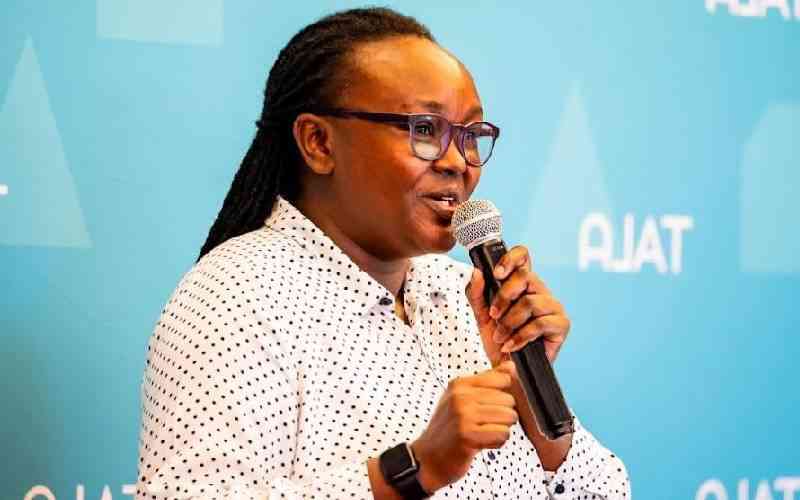
- The writer is the manager for Listings and Capital Raising at the Nairobi Securities Exchange.







Subscribe to our newsletter and stay updated on the latest developments and special offers!







 join
join