×

The Standard e-Paper
Fearless, Trusted News
 The Standard Group Plc is a
multi-media organization with investments in media platforms spanning newspaper
print operations, television, radio broadcasting, digital and online services. The
Standard Group is recognized as a leading multi-media house in Kenya with a key
influence in matters of national and international interest.
The Standard Group Plc is a
multi-media organization with investments in media platforms spanning newspaper
print operations, television, radio broadcasting, digital and online services. The
Standard Group is recognized as a leading multi-media house in Kenya with a key
influence in matters of national and international interest.

Audio By Vocalize
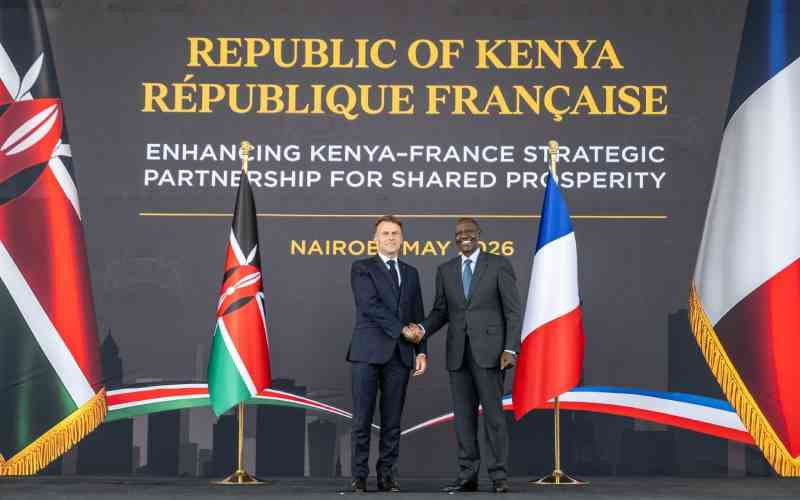
For quite some time now, President William Ruto has consistently pushed one message on the international stage: Africa does not need more aid; it needs fair access to capital. It is a simple argument, but one with potentially radical implications for the continent’s economic future.
That message took centre-stage in Nairobi during high-level discussions involving African leaders and French President Emmanuel Macron ahead of the upcoming G7 Summit in Evian, France. Behind speeches and diplomatic symbolism lies a serious financial proposal that could significantly alter how African countries borrow money: the New African Financial Architecture for Development (NAFAD). Unlike traditional development institutions, NAFAD is not designed to become another African bank. It seeks to function as a coordination mechanism aimed at reducing the cost of borrowing for African nations by tackling what many economists now describe as the “Africa Premium.”
Countries like Kenya often borrow on international markets at interest rates close to 10 per cent, while developed economies access financing at rates near 3 per cent. Advocates of the new framework argue that this disparity is not entirely based on actual default risk, but on perceptions and historical biases associated with African economies.
The proposed solution revolves around the Nairobi-based insurer, African Trade and Investment Development Insurance (ATIDI). The idea is to recapitalise ATIDI with support from Western partners so that African sovereign bonds can receive stronger guarantees and higher credit credibility. In practical terms, such guarantees could dramatically lower borrowing costs, potentially reducing interest rates from double digits to below 5 per cent almost overnight.
France appears increasingly willing to support this strategy. With Britain having exited the European Union and the United States increasingly focused on domestic priorities, Paris is positioning itself as Europe’s key diplomatic and financial bridge to Africa. By co-hosting the Nairobi summit with Kenya, President Emmanuel Macron signaled that French interests in Africa are no longer confined to former French colonies. Instead, France is now pursuing a broader continental engagement strategy. President William Ruto is expected to take the NAFAD proposal to the G7 Summit in Evian on June 15, 2026, following an invitation by Macron. The objective will be to convince the world’s largest economies that Africa’s cost of capital has been unfairly inflated for decades and that correcting this imbalance would unlock enormous economic potential.
Supporters of the initiative argue that France is uniquely positioned to play this role because it has extensive experience backing the CFA Franc system in West and Central Africa. However, Ruto’s proposal differs in one important respect. Rather than guaranteeing African currencies, which critics have often associated with neo-colonial control, the new model focuses on sovereign debt guarantees designed purely to reduce financing costs.
The implications for ordinary citizens could be significant. Governments currently spend massive portions of their revenue servicing expensive debt. If borrowing costs fall substantially, more public money could be redirected toward infrastructure, healthcare, energy, and economic development.
Lower debt servicing costs could also ease pressure on governments to introduce aggressive taxation measures, including taxes on mobile money transactions and fuel consumption. State corporations would also be able to finance infrastructure projects more cheaply, potentially lowering electricity and fuel prices for consumers.







Subscribe to our newsletter and stay updated on the latest developments and special offers!







 join
join