×
App Icon
The Standard e-Paper
Informed Minds Prefer The Standard
★★★★ - on Play Store
Download Now

Why local brands must seize the front seat in entertainment sector's gold rush

Kenya’s entertainment economy has entered a new season of growth.

Mobile data use has expanded, streaming habits continue shifting and live events now draw larger and more diverse audiences.

Yet, the local businesses that stand to benefit the most from this momentum are not the ones shaping the sector.


While some local brands sit close to the culture, many have not taken up the space that their consumers expect. Kenya’s entertainment sector growth really needs homegrown leadership. The kind that understands our tastes, our spending patterns and our lived experiences.

I reckon many people don’t fully realise the impact of how far Kenya’s digital influence has risen. The recent PricewaterhouseCoopers (PwC) Entertainment and Media Outlook and Communications Authority of Kenya statistics shows that Kenyans access more than 80 per cent of all internet content through mobile devices, and internet advertising market has been growing at about 16 per cent a year. Streaming on demand is becoming a routine for younger audiences.

These shifts are not random. They reflect a population that is young, urbanising and deeply social. Kenya’s strength lies with how the entertainment blends with our daily life: Whether through music, food, nightlife, sport or digital communities.

Adequate venues

Despite this strong outlook, our indoor and outdoor live entertainment ecosystem is still lagging from a ‘purpose-built venues’ perspective.

We still have a strong “build up–pull down” culture due to lack of adequate venues.

Event managers have to put up large and small tents, hire toilets, set up stages, hire sound and lights, and even set up bars and kitchens.

However, great acoustics are a hit or miss affair. Queues for food, drinks or toilets can be a frustration and customers are cautious as to what they will find. As a result, exceptional experiences are not guaranteed as they should be.

This is where local brands matter.

No international company truly understands the rhythm of Nairobi, the electric energies displayed on Friday nights in areas like Westlands and along Thika Road, or the unique social flow of cities like Mombasa, Diani, Kisumu, Nakuru and Eldoret. They don’t grasp the crowd behaviour at a sold-out concert in Kasarani or the distinct consumer habits in other major entertainment hubs the way a Kenyan business does.

A local brand sees how dining culture is changing. How restaurants are becoming social venues. A local brand sees how our Gen Z now treat entertainment as a lifestyle choice.

These insights shape loyalty. And we all know that loyalty is the real currency of entertainment.

I have spent my entire career in hospitality and the link between dining, nightlife and the broader entertainment economy has become quite apparent.

The modern Kenyan consumer is engaging in new ways: They eat out more often, attend more live events and spend more time online. Their choices are emotional and expressive as they seek places that feel authentic, social and safe. This necessitates the development of quality indoor and outdoor multifunctional live entertainment venues that can serve as cultural hubs.

This shift could create a significant opportunity for Kenyan businesses that can seamlessly align hospitality with music, culture, sport and digital storytelling. Several African countries are already moving in this direction.

Nigeria’s entertainment sector has grown quickly because local brands have built structures around local culture.

Homegrown companies

South Africa’s festival economy thrives because homegrown companies invested in venues, production quality and youth-focused events.

Kenya has the same potential but needs stronger local leadership to connect all the moving parts.

When local businesses lead, the money stays in the country, the talent pipeline grows and the culture develops in a way that reflects who we are.

For Kenyan brands, the question is simple.

Are we shaping the sector or watching others shape it for us?

Global platforms may offer scale, but scale does not replace cultural insight.

It does not replace trust. It does not replace the way Kenyans share music, celebrate food, follow football or discover new restaurants.

There is a leadership role here for corporate Kenya as well. Entertainment is now a generator of foot traffic, brand relevance and consumer stickiness. A business lunch today is more likely to take place in a restaurant with a strong ambience. A product launch is more likely to include a performance or a content creator. The companies that understand this shift will gain an edge in talent, customers and reputation.

Across the world, countries that lead in entertainment treat it as an investment in national identity. Kenya has that same opportunity. The culture is rich. The youth are creative.

The spending power exists. The missing piece is a coordinated local leadership from brands that know the market and trust their own ability to shape it, as well as investors that are willing to put their money behind it.

As Wole Soyinka once asserted, “People must define themselves, and they must be seen and recognised for their own worth and on their own terms.” In Kenya’s case, entertainment is culture made visible. It reflects what we value, how we connect and what we aspire to be.

If local brands take the lead, Kenya will not only grow its entertainment sector; it will define it. The question now is whether our own brands will step forward and shape it with confidence or not.

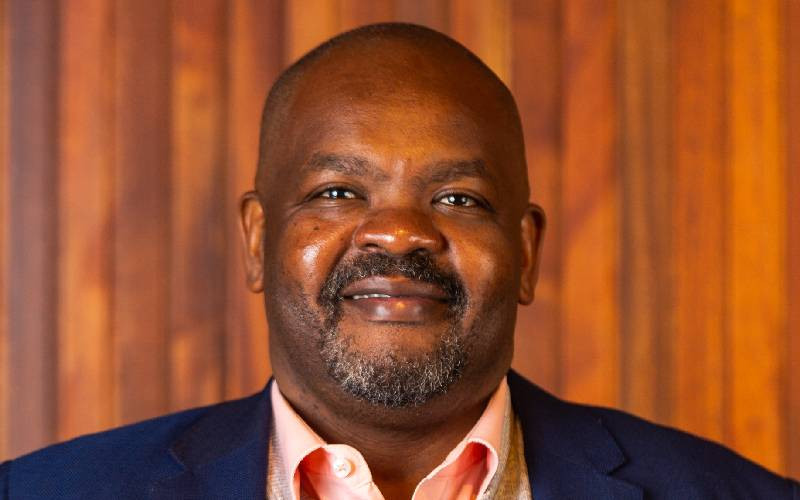
The writer is the Chief Vision and Growth Officer at Branded Restaurants and Retail Africa Ltd