×

The Standard e-Paper
Home To Bold Columnists
 The Standard Group Plc is a
multi-media organization with investments in media platforms spanning newspaper
print operations, television, radio broadcasting, digital and online services. The
Standard Group is recognized as a leading multi-media house in Kenya with a key
influence in matters of national and international interest.
The Standard Group Plc is a
multi-media organization with investments in media platforms spanning newspaper
print operations, television, radio broadcasting, digital and online services. The
Standard Group is recognized as a leading multi-media house in Kenya with a key
influence in matters of national and international interest.

Audio By Vocalize
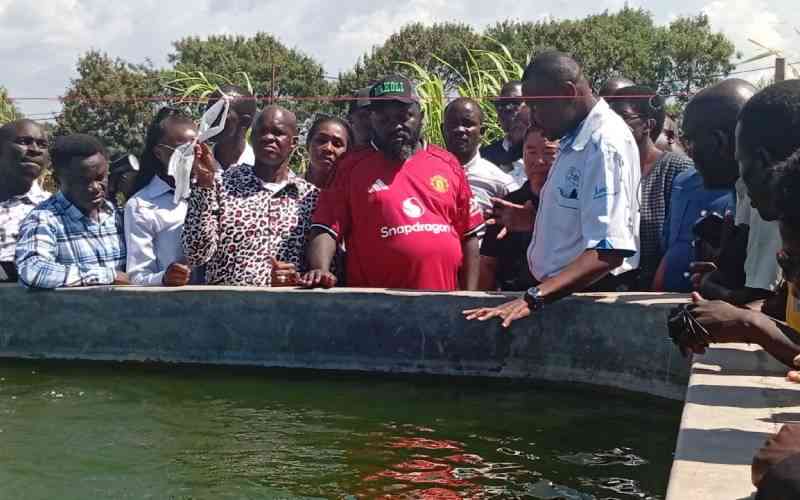
A serious conflict has ensued in Homa Bay County over cage fish farming in Lake Victoria.
Residents of Rusinga Island in Mbita Sub-county have raised a complaint that they were being denied their source of livelihood.
The residents are agitating against three investors who have taken more than 110 acres of water at Ngodhe Bay in Lake Victoria. The investors are using the water for fish cage farming.
What is worrying residents is that they are not allowed to undertake any economic activities in the areas occupied by the investors.
Local fishermen used to rely on those sites to fish wild fish for their livelihoods, but they can no longer fish in the occupied area.
Hoteliers also have issues with the investors. They argued that the feed used for feeding fish in the cages are polluting the lake.
They raised issues with fish ponds and hatcheries owned by the investors. Their concern is that the waste from the ponds and hatcheries are discharged into the lake without any treatment.
All these activities pollute the lake, which affects the hotel industry in the area.
Speaking during a fact-finding mission by the Senate Committee on Agriculture and Blue Economy in the area, the proprietor of White Stone Hotel, Barack Ooro said they became suspicious after seeing a lot of algae in the lake at Ngodhe Bay.
This prompted the hotel owners and residents to take the water samples to the Government Chemistry for tests. The findings revealed pollution in the lake.
“We took samples of the lake water to the Government Chemistry at two intervals, and the tests revealed the water is polluted,” Ooro said.
Ooro said the pollution is affecting their hotels adversely.
“This pollution harms the people who depend on this water and the entire hospitality industry besides,” Ooro said.
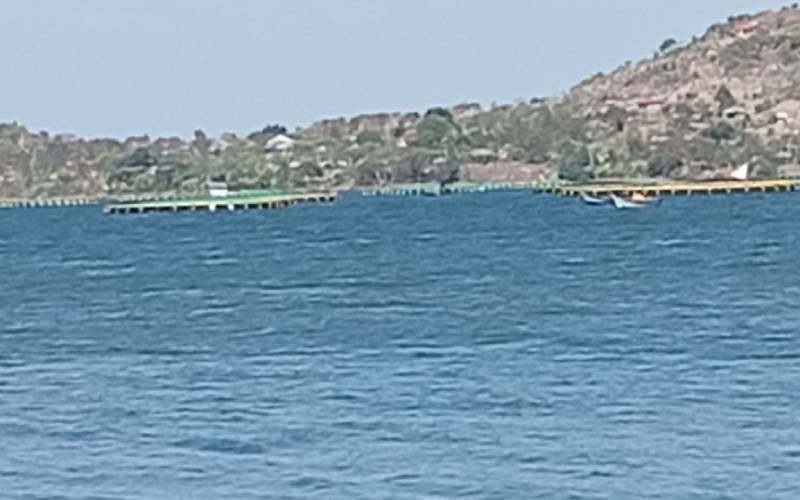
He accused the investor of releasing chemicals which castrates male wild tilapia, leading to inability to breed. This leads to a decline in wild tilapia population in the lake.
Stay informed. Subscribe to our newsletter
“Wild tilapia feed on the chemicals which they discharge into the lake in the form of feeds. This causes depletion of the wild tilapia in our lake,” Ooro said.
Maurice Miregi, a resident, said the chemicals discharged in the lake will deny residents of their livelihood.
“The serious concern we have with these investors is the chemicals they are discharging into the lake. This is reducing the fish population and this adversely affects us as locals,” Miregi said.
He expressed concerns that the over 110 acres of water occupied by the investors were depriving residents of their livelihoods.
“These investors don’t allow our fishermen to fish in the areas they have occupied with their cages. This is denying us our source of livelihoods as locals,” Miregi said.
Homa Bay County Beach Management Network Chairman Edward Oremo said the livelihoods of fishermen in Lake Victoria should not be interfered with.
Oremo said any investment done in the lake should consider the interest of the fishermen.
“This controversy should be solved in a manner that also caters for the interest of fishermen who have been depending on this lake since time immemorial,” Oremo said.
The controversy forced residents to petition the Senate through Homa Bay Senator Moses Kajwang’.
In response to Kajwang’s petition, the Senate Committee on Agriculture and Blue Economy Chairman Wafula Wakoli led a team of his committee members on a fact-finding mission in the area.
“We have walked in various parts of Lake Victoria in Homa Bay and listened to residents’ grievances and the investors’ positions too. We are going to discuss this matter to resolve this conflict,” Wakoli said.





Subscribe to our newsletter and stay updated on the latest developments and special offers!