×

The Standard e-Paper
Kenya’s Boldest Voice
 The Standard Group Plc is a
multi-media organization with investments in media platforms spanning newspaper
print operations, television, radio broadcasting, digital and online services. The
Standard Group is recognized as a leading multi-media house in Kenya with a key
influence in matters of national and international interest.

Audio By Vocalize
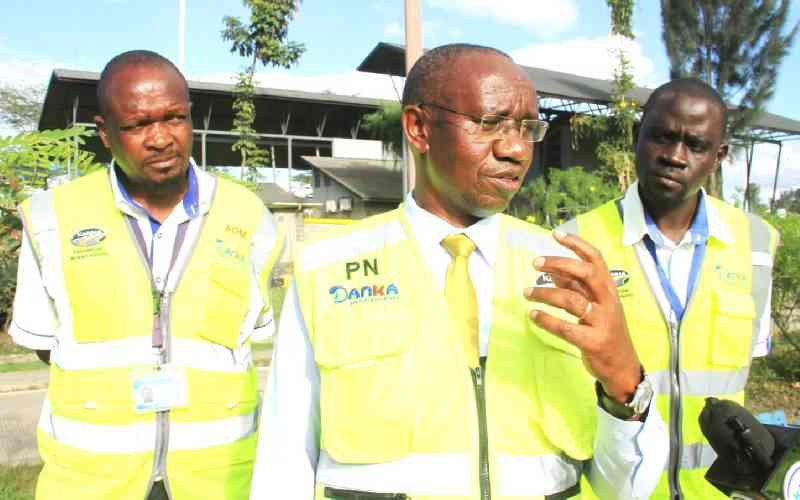
The Kenya National Highways Authority (KeNHA) has warned motorists and transport operators against overloading vehicles.
The Authority said that overloading vehicles poses a serious threat to road safety and contributes significantly to the destruction of road infrastructure.
With the Christmas festive season approaching, the authority has called on motorists, particularly truck and bus drivers, to strictly observe legally permitted vehicle weight limits to minimise road accidents, protect passengers and other road users, and safeguard public infrastructure.
Through its operations agency, DANKA, KeNHA has appealed to transporters to embrace responsible loading practices and comply with established road safety regulations.
Speaking during a tour of the Mlolongo Weighbridge in Athi River, Machakos County, Operations Manager Peter Njoroge said overloading remained a major concern, warning that vehicles carrying excessive weight were dangerous and could cause devastating accidents.
Njoroge said the authority was particularly concerned about the expected increase in traffic during the Christmas holidays, when thousands of Kenyans travel across the country to celebrate with their families.
"As we approach the Christmas festive season, we want to make a special appeal to all road users, especially truck and bus drivers. Let us carry only the weight permitted by law. We must remember that road safety is everyone's responsibility," said Njoroge.
He warned that overloading not only compromises vehicle stability and braking efficiency but also increases the likelihood of mechanical failures, tyre bursts and loss of control, particularly when drivers encounter emergencies on busy highways.
The operations manager said KeNHA was taking enforcement measures against transporters who deliberately overloaded their vehicles, adding that substantial financial penalties were being imposed at various weighbridge stations across the country.
He cited the situation at the Mlolongo Weighbridge, where more than 20 trucks had reportedly been detained over overloading offences, with some accumulating penalties running into millions of shillings.
"As you can see here at Mlolongo Weighbridge, there are more than 20 trucks that have been detained for overloading. Some of them have accumulated fines of up to Sh16 million. These are the repercussions of overloading, and transporters must understand that the law will catch up with them," he said.
Njoroge regretted that some transport operators continued to prioritise profits at the expense of road safety and infrastructure protection, despite repeated warnings and enforcement measures by the authority.
He said the cost of repairing roads damaged by overloaded trucks was enormous, ultimately placing an unnecessary financial burden on taxpayers.
According to Njoroge, KeNHA was also pursuing a stakeholder-driven approach to address the problem, with plans to hold sensitisation meetings involving transporters, truck owners, drivers and other players in the transport industry.
Stay informed. Subscribe to our newsletter
He said the authority had set aside funds for public awareness programmes aimed at educating transport operators on the dangers and economic consequences of exceeding legally prescribed vehicle weight limits.
"We have a budget that caters for sensitisation programmes. We will be having meetings with transporters and other stakeholders to engage them and agree on how best to stop this overloading menace. We believe that through dialogue, education and strict enforcement, we can make our roads safer," he added.
The operations manager further called on the Judiciary and the Office of the Director of Public Prosecutions (ODPP) to consider imposing stiffer penalties on individuals and companies found guilty of overloading their vehicles.
He argued that the offence should be treated with the seriousness it deserves because of the extensive financial damage it causes to public infrastructure.
"From where I sit, overloading is an economic crime. It is not a simple traffic offence. Remember, when you overload a vehicle, you destroy a road asset that costs the public billions of shillings to construct. The consequences are felt by every Kenyan through increased maintenance costs and damaged roads," he said.
Njoroge said the destruction of highways through excessive vehicle loads undermined government investments in road construction and rehabilitation, while also shortening the lifespan of infrastructure meant to serve millions of Kenyans.
He maintained that protecting the country's road network required collective responsibility from government agencies, transport companies, drivers and other road users.
The warning comes at a time when road safety concerns traditionally increase during festive seasons due to heightened travel activity, increased traffic volumes and pressure on public transport services.
KeNHA's appeal to motorists is therefore expected to reinforce the need for strict compliance with traffic regulations, responsible driving and proper vehicle loading as Kenyans prepare for the Christmas celebrations.
The authority has urged transport operators to make safety a priority rather than risk lives and incur huge financial losses through overloading.







Subscribe to our newsletter and stay updated on the latest developments and special offers!