×

The Standard e-Paper
Fearless, Trusted News
 The Standard Group Plc is a
multi-media organization with investments in media platforms spanning newspaper
print operations, television, radio broadcasting, digital and online services. The
Standard Group is recognized as a leading multi-media house in Kenya with a key
influence in matters of national and international interest.

Audio By Vocalize
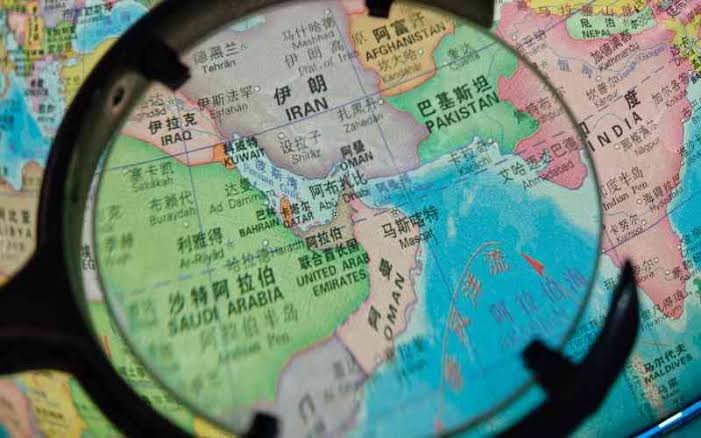
Reinforcing Europe’s presence and protecting both the Strait of Hormuz and Bab el-Mandeb will ensure free maritime movement in the Red Sea and its future.
This is according to a special report presented on November 11 by Med-Or Italian Foundation titled , “The Great Red Sea War: Conflicts, Chokepoints and New Strategic Corridors”.
The report, authored by Umberto Tavolato and Kenyan Chepkorir Sambu, was presented at its headquarters in Rome. The publication builds on Med-Or’s longstanding research on the Red Sea and the Horn of Africa, including its 2024 special report and subsequent research and dialogue initiatives.
The simultaneous crises in the Strait of Hormuz and Bab el-Mandeb brought by Iran war with the US and Israel since October last year have prompte the foundation to update its analysis, in light of the war’s growing implications for the Mediterranean and Italy’s and Europe’s strategic interests.
The report examines links between conflicts on both shores of the Red Sea and the wider crises in the Gulf and the Middle East, focusing on their impact on maritime trade, energy and digital infrastructure.
Particular attention is given to the vulnerability of major shipping routes and the development of new economic corridors connecting Europe, Africa and Asia.
The presentation event explored the geopolitical developments and the economic and strategic implications of the Red Sea crisis for Italy and Europe.
Europe has already established a credible operational presence around the strait through European Union Naval Force (EUNAVFOR) and operations ASPIDES and ATALANTA.
“As risks in the region multiply and shipping demands more protection, that presence must be reinforced, ASPIDES above all,” the report said.
It said Hormuz and the Bab el-Mandeb cannot be secured separately, since protecting one only shifts exposure to the other.
“Europe should contribute to a broader maritime security system with its Gulf partners, Hormuz included. It is in Hormuz that the principle of freedom of navigation has been broken by force, and it is there that it must first be restored. Defend the old routes, join the new ones,” the authors said.
The report says protecting the Red Sea is not enough, adding that as new corridors take shape, Europe can help build them.
“True resilience means new routes, not more pipes and cables along the same exposed lines, backed by rapid repair and support for Djibouti as the Red Sea’s data gate-way, “ it says.
The report says new infrastructure cannot substitute for political stability, nor can navies; escorts protect ships, but only coastal governance and political settlements on both shores can secure the routes.
Stay informed. Subscribe to our newsletter
Also, it says above all, renewed Riyadh–Abu Dhabi co-operation is the starting point for containing the Houthi and managing the Horn’s conflicts, and this would make European security cooperation with the Gulf more effective
According to the authors, conflict has revealed a fundamental contradiction in the emerging political economy of the Red Sea because trade is becoming more interconnected, while the security of the routes on which it depends is increasingly fragmented.
“The simultaneous disruption of Hormuz and Bab el-Mandeb has exposed vulnerabilities that no country, however wealthy or well prepared, can overcome alone,” says the report.
The Gulf monarchies, it says, entered 2026 with considerable financial strength, ambitious diversification programmes and decades of investment in strategic infrastructure.
However, the war with Iran and the subsequent disruption of the region’s maritime gateways have subjected that model to an extraordinary test.
Saudi Arabia and the UAE have demonstrated an impressive capacity to adapt. Alternative pipelines, ports and shipping arrangements have helped restore energy exports.
China’s accumulated reserves and diversified energy supplies offer a parallel example. “Resilience is built before a crisis, through investment, spare capacity and the ability to act quickly,” says the report.
“But infrastructure cannot substitute for political stability. Gulf states have responded effectively as individual economies, while their strategic divisions persist.”
The different approaches of Saudi Arabia and the UAE, particularly in Yemen, it says, have weakened efforts to confront the Houthi threat.
A renewed understanding between Riyadh and Abu Dhabi, the report says, would not settle Yemen’s conflict, but strengthen cooperation against the most immediate threat to Red Sea routes. “Such an understanding must originate with the Gulf leaders themselves; Europe has every reason to encourage it,” says the report.
On the African shore, it says the central danger is the progressive displacement of politics by armed force.
Sudan remains trapped in a devastating war that started in 2023, Somalia faces persistent fragmentation, and renewed confrontation between Ethiopia and Eritrea threatens to widen instability along the Red Sea coast.
“Preventing an Ethiopia–Eritrea war requires a balanced but immediate diplomatic approach,” says the report.
“The international community has made it clear to Ethiopia that its territorial ambitions on the Red Sea cannot justify violating Eritrea’s sovereignty. Equally, Eritrea cannot invoke its own sovereignty while repeatedly interfering in Ethiopia’s internal affairs and supporting armed groups across the border,” the report adds.
International pressure directed at Addis Ababa alone, the report says, risks overlooking Asmara’s contribution to the confrontation.
“Ethiopia’s recent deconfliction steps along the border are a test of this approach. Lasting calm will depend on Asmara taking comparable steps, above all by cutting its links with Ethiopian rebel movements and keeping its forces out of the country’s internal conflicts,” says the report.
It adds that the challenge is to address Ethiopia’s legitimate security concerns without reopening established borders.
“This will be difficult while Eritrea regards the collapse of Ethiopia as a guarantee of its own security. But a strategy built on destabilising a
neighbour while invoking the inviolability of one’s own sovereignty is ultimately self-defeating,” the report says.
“It risks provoking precisely the confrontation with Ethiopia that Eritreaseeks to avoid. Mediation should be coordinated rather than competitive.”
Sudan on the other hand, offers the warning: parallel initiatives led by Saudi Arabia and the United States in Jeddah, the African Union, IGAD and Sudan’s neighbours allowed the warring parties to shop between forums, and helped prolong the war.
Djibouti occupies a particularly exposed position between the conflict in Yemen and the growing confrontation between Ethiopia and Eritrea.
Its ports have suffered from the disruption of Red Sea shipping, even as the country hosts a substantial international military presence.
For its partners, the report says supporting Djibouti’s resilience should mean more than maintaining military facilities.
“Economic diversification, stronger logistics and digital infrastructure, and the development of its role as a data hub connecting Africa, the Middle East and Asia could help turn a position of vulnerability into one of strategic opportunity,” says the report.
“Djibouti could also serve as a constructive economic bridge between the two shores of the Red Sea, provided regional cooperation can be sustained despite the surrounding conflicts.”
According to the report, the crisis has demonstrated that maritime chokepoints cannot be protected in isolation.
It says securing Hormuz while leaving vulnerable el-Mandeb or the reverse merely transfers exposure from one route to another.
The report says new pipelines, ports and corridors may reduce dependence on individual passages, but they cannot eliminate insecurity across the wider trading system.
“The long-term objective must therefore be a collective approach to maritime security, grounded in international law and the protection of freedom of navigation across
interconnected chokepoints,” the report says.
Europe’s credible operational presence around Bab el-Mandeb and the Gulf of Aden through EUNAVFOR ASPIDES and ATALANTA and their experience, therefore provides a foundation for sustained maritime engagement, including against evolving threats to shipping and critical infrastructure.
“Nevertheless, the latest Houthi attacks have increased demand for protection by international shipping and require an immediate increase in the size of its missions, especially
ASPIDES,” the report advises.
The European Union has urged new contributions in this regard. Protecting shipping, it says, also means curbing the capabilities used to attack it.
“Maritime security policy must address targeting data, commercial imagery and dual-use supply chains as well as arms smuggling, and cooperation with Beijing and other partners should include stronger export controls, end-user monitoring and scrutiny of dual-use services.”
The report says Hormuz presents a more difficult challenge.
While Gulf partners regard it as a central security priority, it says European political commitments have yet to be matched by comparable operational capabilities.
“The Franco-British initiative and discussions over a broader European role are important steps, but the gap between ambition and implementation remains significant,” it says.
For Europe, the report says, the question is no longer simply how to protect commercial vessels in the Red Sea but whether it can contribute credibly to a wider system of maritime
security, alongside Gulf and other international partners.
“This is essential not only for regional stability, but also for the rule of law on which global trade depends,”it says.








Subscribe to our newsletter and stay updated on the latest developments and special offers!