×

The Standard e-Paper
Fearless, Trusted News
 The Standard Group Plc is a
multi-media organization with investments in media platforms spanning newspaper
print operations, television, radio broadcasting, digital and online services. The
Standard Group is recognized as a leading multi-media house in Kenya with a key
influence in matters of national and international interest.
The Standard Group Plc is a
multi-media organization with investments in media platforms spanning newspaper
print operations, television, radio broadcasting, digital and online services. The
Standard Group is recognized as a leading multi-media house in Kenya with a key
influence in matters of national and international interest.

Audio By Vocalize
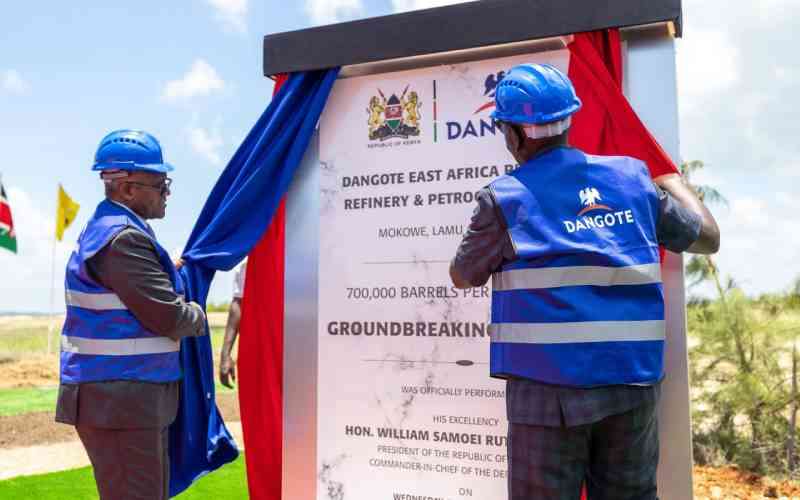
Nigerian businessman Aliko Dangote has pledged to complete the Sh2.2 trillion Lamu oil refinery within 40 months, setting an early 2030 target for the facility.
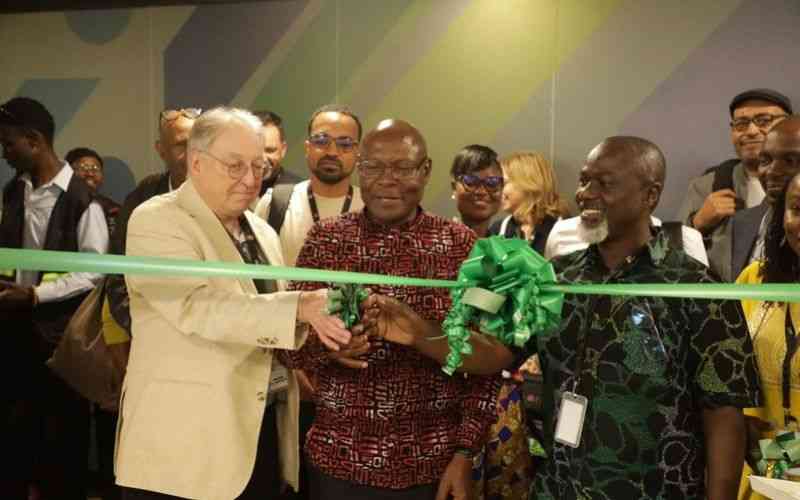
Dangote made the pledge on Wednesday, September 30, during the groundbreaking ceremony at Lamu Port attended by President William Ruto and other African leaders.
“Mr President and our other respected presidents, my brother Prime Minister Abiy, I want to assure you we will come back here and commission this refinery in 40 months from today,” Dangote said.
The refinery will have capacity to process 700,000 barrels of crude oil a day, making it one of the largest planned refining facilities in Africa.
Dangote said the facility will also generate 1,000 megawatts of electricity, produce one million tonnes of polypropylene and manufacture base oil.
“We're not here merely to build tanks, pipelines, processing units and jetties. We're here to help build an industrial ecosystem,” he explained.
He said the project will support industries in energy, petrochemicals, logistics, engineering, marine services, manufacturing and technology.
Dangote also announced plans to establish a training school in Lamu that will train 1,000 people for opportunities created by the project.
“We're coming here to set up a training school that will train 1,000 of your people,” he announced.
The training programme will target people with engineering degrees, diplomas and other relevant qualifications as the project seeks to develop skills locally.
“We want young Kenyans and East Africans to acquire skills here,” Dangote added.
He also urged businesses in Lamu and across the region to position themselves to supply the refinery and benefit from the wider economic activity expected around the facility.
“We want the local businesses to become suppliers. We want the entrepreneurs to emerge around this project,” he noted.
Dangote said the refinery will serve a wider East African market, naming Uganda, Rwanda, Tanzania, Ethiopia, South Sudan, the Democratic Republic of Congo and Mozambique among potential markets.
“The refinery is therefore not simply about one country, it is about a region,” he said.
Stay informed. Subscribe to our newsletter
The facility is designed to reduce the region's reliance on imported refined petroleum products while increasing local processing of crude oil.
Dangote said the project would help Africa retain more value from its natural resources instead of exporting raw materials and importing finished products.
“Africa cannot build lasting prosperity by exporting what it has and importing what it needs,” he argued.
He cited the Dangote Petroleum Refinery in Lagos as an example of what could be achieved through large-scale African investment.
“Lagos proved that it can be done, so Lamu must prove that it can be repeated,” Dangote said.
The businessman said the Lamu project will not simply replicate the Nigerian refinery but will incorporate lessons from the facility while using local skills, regional opportunities and global technology.
He said construction could involve about 60,000 people at its peak, while the wider project would create opportunities across the supply chain.
“This project is run by around 60,000 people who are in the construction,” Dangote said.
The refinery has also attracted attention over its potential environmental and community impact because of Lamu's cultural and historical importance.
Dangote said the company will work with authorities, communities and experts to ensure the project meets safety and environmental requirements.
“Industrialisation and environmental stewardship cannot be treated as competing choices. They must co-exist,” he said.
He said the company wants communities to participate in the opportunities created by the investment rather than simply host the project.
“We have not come merely to build in your community. We want to build with your community,” Dangote told residents.
The businessman said the project's success should ultimately be measured by the economic opportunities it creates rather than the size of the refinery.
“For me, the true vision of this project will not be the height of these towers or the number of barrels it possesses. It will be the difference it makes in the people's lives,” he said.
Dangote also said the refinery will target markets across East Africa and beyond, strengthening the region's energy supply while creating an industrial hub around Lamu Port.
He said his group has earmarked $50 billion for projects across Africa under its investment plan to 2030, covering sectors including infrastructure, minerals, ports, power and chemicals.
“Today we break the ground, but more importantly, we raise our expectations of what Africa can become,” Dangote noted.




Subscribe to our newsletter and stay updated on the latest developments and special offers!