×

The Standard e-Paper
Stay Informed, Even Offline
 The Standard Group Plc is a
multi-media organization with investments in media platforms spanning newspaper
print operations, television, radio broadcasting, digital and online services. The
Standard Group is recognized as a leading multi-media house in Kenya with a key
influence in matters of national and international interest.
The Standard Group Plc is a
multi-media organization with investments in media platforms spanning newspaper
print operations, television, radio broadcasting, digital and online services. The
Standard Group is recognized as a leading multi-media house in Kenya with a key
influence in matters of national and international interest.

Audio By Vocalize
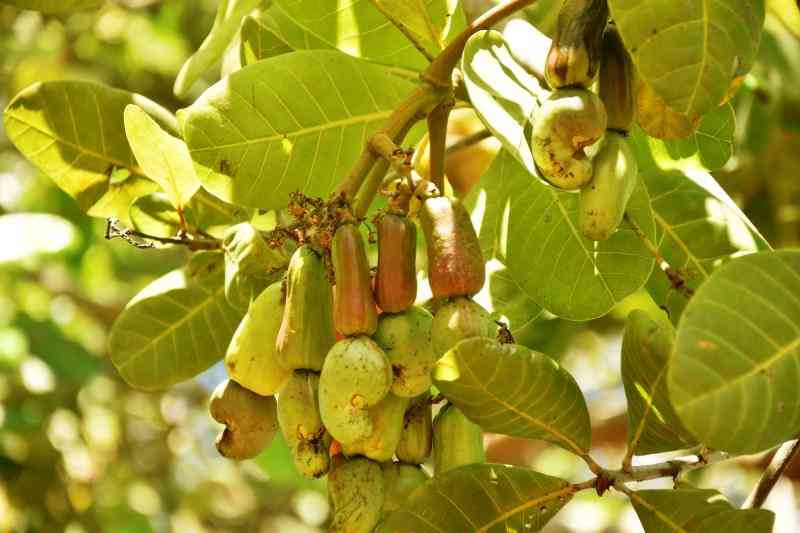
The African Cashew Alliance (ACA) has intensified efforts to unlock the full economic potential of the cashew nut industry in Kenya and nine other countries on the continent.
The latest efforts include equipping actors with practical skills in production, processing, value addition and marketing in a bid to boost competitiveness, create jobs and increase the livelihoods of rural communities.
ACA seeks to strengthen expertise across the cashew value chain from policy, production and processing to marketing through a blend of theoretical and hands-on training targeting key players in the sector so as to revive production of the ‘white gold.’
ACA has partnered with the Market Oriented Value Chains for Jobs and Growth in the ECOWAS Region (MOVE) and the East African Community (EAC) Secretariat with funding from the European Union (EU) and the Organisation of African, Caribbean and Pacific States (OACPS).
They conducted a weeklong second session of the 21st edition of the Master Training Programme (MTP) for cashew value chain promotion in Africa. The programme follows the first session held in Tanzania in June.
During the Mombasa training, 81 participants from Kenya, Burundi, Cameroon, Ghana, Mozambique, Nigeria, Rwanda, Sierra Leone, South Sudan, Uganda and Tanzania underwent intensive training on Good Agricultural Management Practices (GAMP), sustainable cashew processing, gender-responsive approaches and leadership in the cashew sector.
Participants also received practical instruction on harvesting and post-harvest handling, nut quality measurement, cashew apple juice processing, by-products and the economics of processing.
The MTP is a long-running capacity-building initiative designed to develop both established and emerging professionals in the cashew industry. It is designed to create a pool of experts capable of driving the sector's growth and competitiveness across Africa.
Agriculture and Food Authority (AFA) director general Mr Calistus Kundu said the training had equipped participants with practical knowledge and skills that would strengthen efforts to develop Africa's cashew industry.
“The knowledge acquired through this training should not end here. We have a responsibility to transfer these skills to farmers, processors, extension officers and investors among other value chain actors. We can contribute to increased productivity, improved quality, enhanced value addition, greater market competitiveness and improved income for our farmersif we apply what we have learned,” said Kundu.
He noted that Kenya has enormous potential to revive and expand its cashew nut industry, noting that the crop was once referred to as "white gold" because of the wealth it generated for farmers and other industry players at the Coast.
“Through partnerships among government institutions, county governments, the private sector, development partners and research organisations, we can build a vibrant and sustainable cashew value chain that creates employment, supports food and nutritional security, and contributes to economic growth,” he said.
The traditional cashew growing areas are Kilifi, Kwale, Lamu, and Tana River counties, where smallholders typically intercrop trees on small plots but Makueni is emerging as a new growing zone due to the crop’s climate resilience.
National production is around 7,800 to 13,000 metric tonnes annually, which is lower than a peak potential of over 30,000 metric tonnes achieved in the 1970s and 1980s before the closure of the main processing plant in Kilifi county.
The main industry challenges include prevalene of old and diseased trees, particularly the powdery mildew, and a processing gap where capacity stands at 45,000 metric tonnes annually but production capacity is 13,000 metric tonnes or less.
Stay informed. Subscribe to our newsletter
The local cashew industry is reportedly disorganised and heavily relies on middlemen who have weakened cooperative societies and smallholder bargaining power.
ACA managing director Mr Ernest Mintah said the MTP was committed to developing a strong pool of skilled, confident and dedicated professionals capable of driving sustainable growth across Africa's cashew value chain since its inception in 2013.
“Over the years, the programme has expanded its reach and adapted to the changing needs of the industry. Following the successful implementation of the MTP in East Africa last year, which produced 54 new cashew experts, we are proud that this edition marks the second time the programme has been fully implemented in the region,” Mintah said.
He commended participants for their commitment to enhancing their expertise, noting that building local capacity was essential for transforming the cashew industry in producing countries across Africa.
EAC Secretariat principal economist for Investment and Private Sector Promotion, Mr Charles Omusana, said the programme had equipped participants with the knowledge, skills and mindset required to drive sustainable growth and enhance the competitiveness of Africa's cashew industry.
“The cashew MTP develops not only technical experts but also leaders who can inspire change, forge partnerships and contribute meaningfully to the transformation of the industry,” he said.
Omusana added that EAC ministers had identified cashew as one of the region's priority value chains because of its immense potential to generate foreign exchange, improve household incomes, create employment opportunities, enhance food security and stimulate rural industrialisation.
Lydiah Mwenga, deputy director of Industries at the Ministry of Investment, Trade and Industry, said Kenya, through the Bottom-Up Economic Transformation Agenda (BETA), Vision 2030 and other national industrialisation policies, was committed to expanding the cashew sector.
Ms Pauline Mutuyimana, one of the actors, said the training began in Mtwara, Tanzania, where they learnt the fundamentals of cashew production before concluding in Mombasa with comprehensive lessons covering the entire cashew value chain.
“The most important lesson we learned is that quality begins on the farm, while greater value comes through processing, value addition and access to better markets,” she said.






Subscribe to our newsletter and stay updated on the latest developments and special offers!






 join
join