×

The Standard e-Paper
Smart Minds Choose Us
 The Standard Group Plc is a
multi-media organization with investments in media platforms spanning newspaper
print operations, television, radio broadcasting, digital and online services. The
Standard Group is recognized as a leading multi-media house in Kenya with a key
influence in matters of national and international interest.
The Standard Group Plc is a
multi-media organization with investments in media platforms spanning newspaper
print operations, television, radio broadcasting, digital and online services. The
Standard Group is recognized as a leading multi-media house in Kenya with a key
influence in matters of national and international interest.

Audio By Vocalize
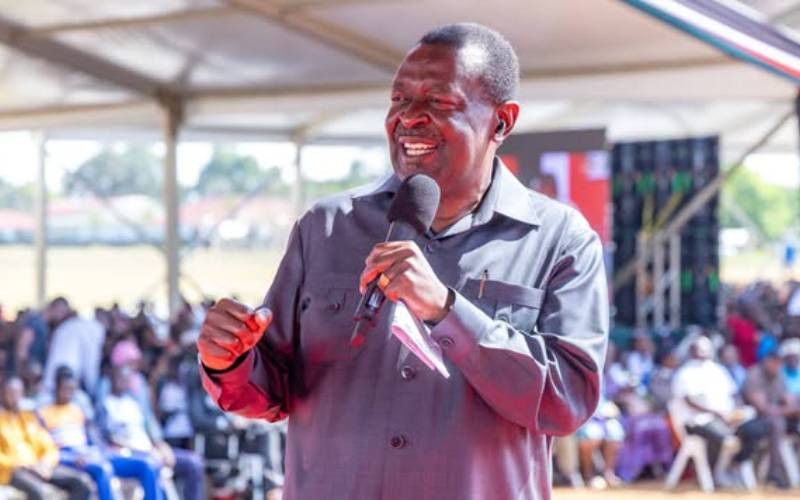
Prime Cabinet Secretary Musalia Mudavadi has praised the Church for its historic role in promoting peace and urged Kenyans to safeguard national unity, warning that conflict and divisive politics come at a heavy economic and social cost.
Speaking when he led Friends church Quakers at State House, Mudavadi said peace remains the foundation of development, stable governance and economic prosperity, drawing inspiration from the Quaker movement, which has long championed non-violence and humanitarian work across the world.
He noted that the Quakers were internationally recognized in 1947 when they received the Nobel Peace Prize for their efforts in assisting victims of war, displaced people and families who had lost loved ones.
"Peace is the hallmark and anchor of Quakerism. It is why we must have a stable government, sound leadership, sound policies, a strong democracy and functioning institutions. That is why we are here to affirm our values and what we stand for," Mudavadi said.
The Prime Cabinet Secretary commended the Church for standing in solidarity with the government in promoting the welfare of millions of Kenyans and called on religious leaders to continue providing moral guidance to society.
Mudavadi challenged Kenyans to reflect on the true cost of conflict, saying wars across the region continue to affect livelihoods far beyond the countries where they are fought.
"We must constantly ask ourselves what is the economic value of peace. What is the economic value of war and conflict?" he posed.
He cited the ongoing conflict in Sudan as one of the region's greatest humanitarian crises, saying nearly 25 million people have been displaced, millions have died, children have been forced out of school and the country's capital has been reduced to rubble.
He also pointed to the conflict in the Middle East, saying although it appears geographically distant, its effects are being felt in Kenyan households through rising fuel prices and increased pressure on the cost of living.
"The President has to figure out, in the middle of the rising costs and challenges, how policies and interventions can mitigate the impact of that war. Fertilizer and fuel are being maintained at managed levels, but the war is not over. They are still fighting and the impact will continue to be felt," he said.
Mudavadi said such global and regional challenges demand thoughtful leadership, careful planning and political stability.
"Leadership is not getting the office. It is deeper. It is not taking the stage and dancing," he said, adding that governing requires patience, humility and the ability to make difficult decisions for the benefit of all citizens.
He further cautioned against entrusting leadership to individuals driven by vengeance, bitterness or vindictiveness, arguing that such traits undermine national cohesion and responsible governance.
"As the Church, it is our responsibility to speak the truth and guide our children. It is dangerous to give leadership and responsibilities to an individual driven by vengefulness, vindictiveness and bitterness. Such a person cannot be trusted with leadership," Mudavadi said.
He urged Kenyans to reject tribal politics, insisting that national leadership should never be reduced to ethnic competition.
Stay informed. Subscribe to our newsletter
"We must not reduce the leadership of this country to an ethnic poll. Leadership is not about tribalism; it is about safeguarding all the 55 million people," he said.




Subscribe to our newsletter and stay updated on the latest developments and special offers!







 join
join