×

The Standard e-Paper
Home To Bold Columnists
 The Standard Group Plc is a
multi-media organization with investments in media platforms spanning newspaper
print operations, television, radio broadcasting, digital and online services. The
Standard Group is recognized as a leading multi-media house in Kenya with a key
influence in matters of national and international interest.
The Standard Group Plc is a
multi-media organization with investments in media platforms spanning newspaper
print operations, television, radio broadcasting, digital and online services. The
Standard Group is recognized as a leading multi-media house in Kenya with a key
influence in matters of national and international interest.

Audio By Vocalize
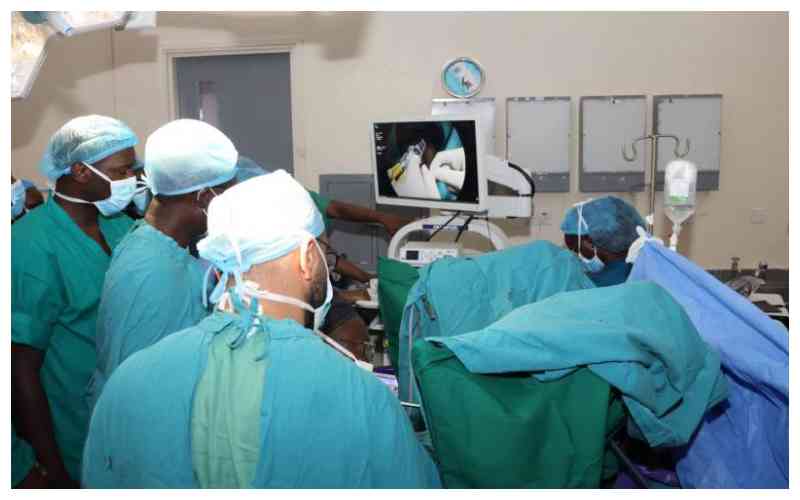
Kenyatta National Hospital has successfully conducted haemorrhoids treatment procedures using the advanced Transanal Hemorrhoidal Dearterialisation (THD) technology, marking a significant milestone in the management of haemorrhoids in Kenya.
The procedures are being undertaken in partnership with Pentaprism Medical Africa as part of a collaborative learning and skills transfer programme aimed at enhancing minimally invasive surgical care at the Hospital.
Two patients were selected and are currently undergoing the procedures as part of the initial implementation and learning process in the facility.
Haemorrhoids are swollen and enlarged veins located in the lower rectum or around the anus, similar to varicose veins.
The condition is common and may occur internally within the rectum or externally under the skin surrounding the anus. Although generally, haemorrhoids can cause significant discomfort and negatively affect quality of life.
Speaking after the surgical exercise, Chief Executive Officer of Pentaprism Medical Africa highlighted that the introduction of THD technology at KNH offers a modern and minimally invasive alternative with several advantages, including: reduced pain following the procedure, faster recovery and return to normal activities, reduced bleeding, minimal surgical wounds, and shorter hospital stays, hence lowering the risk of complications such as infection, anal narrowing, and incontinence.
“It will benefit millions of Kenyans if it's being deployed the right way. So we've been working with this technology. We've been working with THD for the past five years in Dubai, and it's getting a lot of good results over there. And it's basically the main treatment method right now being used in the government hospitals in the UK. So we're trying to bring Kenya forward when it comes to this technology,” he said.
He added that the process is like a revolutionary treatment of haemorrhoids, an issue that many Kenyans have an issue with. Introducing something completely new in terms of the management of pain, because this procedure has not been used in a conventional way of treating patients in Kenya.
He assured the facility on the eligibility of the technology, saying that it has worked and is still doing well in countries like Egypt, Dubai, and the United Kingdom.
On his part, Senior Director of Clinical Services at Kenyatta National Hospital, Joel Lessan, applauded the introduction of technology in the facility, as it will help them manage patients and achieve better outcomes.
Speaking on the development, the Hospital noted that haemorrhoids remain a common condition in Kenya, with many patients requiring surgical intervention.
The adoption of THD technology is expected to improve patient outcomes by reducing hospital stays, accelerating recovery, and enhancing the overall patient experience.
The partnership further underscores KNH’s commitment to embracing innovative technologies and strengthening specialised healthcare services for patients in Kenya and the region.
“Common causes of haemorrhoids include straining during bowel movements, chronic constipation or diarrhoea, prolonged sitting on the toilet, pregnancy, obesity, low-fibre diets, and heavy lifting,” he said.
He added that traditionally, haemorrhoids have been treated through various methods, including open surgery, stapling, banding, laser procedures, injection of sclerosants, or medication-based management.
Stay informed. Subscribe to our newsletter
“The THD procedure uses a Doppler-guided instrument to identify and tie off arteries supplying blood to the haemorrhoids, thereby reducing swelling and symptoms without extensive tissue removal,” he said.








Subscribe to our newsletter and stay updated on the latest developments and special offers!







 join
join