×

The Standard e-Paper
Fearless, Trusted News
 The Standard Group Plc is a
multi-media organization with investments in media platforms spanning newspaper
print operations, television, radio broadcasting, digital and online services. The
Standard Group is recognized as a leading multi-media house in Kenya with a key
influence in matters of national and international interest.
The Standard Group Plc is a
multi-media organization with investments in media platforms spanning newspaper
print operations, television, radio broadcasting, digital and online services. The
Standard Group is recognized as a leading multi-media house in Kenya with a key
influence in matters of national and international interest.

Audio By Vocalize
Cervical cancer remains one of the clearest examples of a disease that modern medicine knows how to prevent, yet too many women continue to die from it. Globally, about 660,000 women were diagnosed with cervical cancer in 2022, and roughly 350,000 died from the disease. The burden is heaviest in low- and middle-income countries, where access to vaccination, screening, diagnosis and treatment is often limited.
Kenya is no exception. Cervical cancer is among the leading cancers affecting women in the country. Recent Ministry of Health figures, citing GLOBOCAN 2022, estimate about 5,845 new cervical cancer cases and 3,591 deaths in Kenya each year. That means thousands of families continue to lose mothers, daughters, sisters, wives, colleagues and friends to a cancer that can often be prevented.
This is why the conversation around the human papillomavirus, better known as HPV, deserves attention. The concern is not merely about a vaccine. It is about preventing cancer before it starts.
HPV is a very common virus, transmitted mainly through sexual contact. Most HPV infections clear naturally and never cause disease. The problem arises when infection with high-risk HPV types persists for years. Over time, this can cause abnormal changes in the cells of the cervix. If those changes are not detected and treated early, they may develop into cervical cancer. Persistent infection with high-risk HPV causes virtually all cervical cancers, with HPV types 16 and 18 responsible for a large share of cases worldwide.
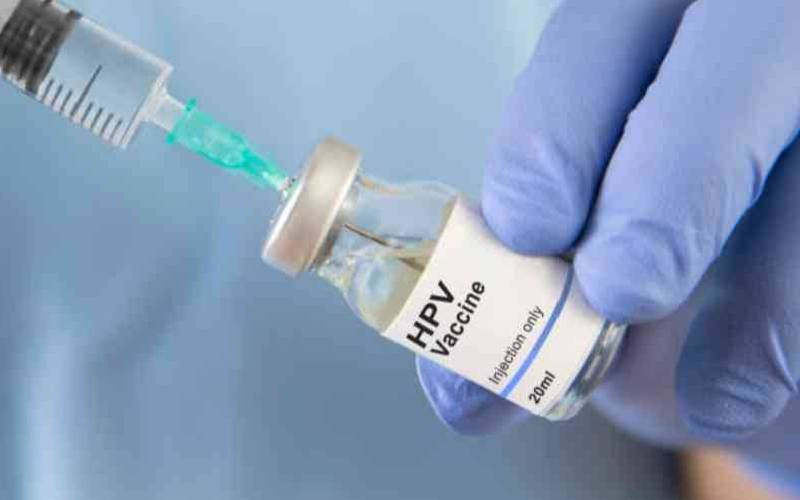
That is where vaccination comes in. The HPV vaccine is designed to protect against the high-risk HPV types that cause most cervical cancers. It also helps prevent some other HPV-related cancers, including cancers of the vulva, vagina, anus and oropharynx. Importantly, the vaccine works best when given before exposure to HPV, which is why health authorities recommend vaccination in early adolescence. WHO identifies girls aged 9 to 14 as the primary target group for HPV vaccination, before they become sexually active.
Kenya introduced HPV vaccination into the national immunisation programme in 2019, initially targeting 10-year-old girls. In November 2025, the country moved from a two-dose to a single-dose HPV vaccination schedule, in line with WHO recommendations and global evidence supporting simplified delivery. This shift is important because it reduces the need for repeat clinic visits and can help reach more girls, especially in communities where distance, transport costs and time away from work or school are real barriers.
Some parents understandably ask: why vaccinate girls so young? The answer is simple. Prevention must come before exposure. We do not wait for children to encounter measles before vaccinating them against measles. In the same way, HPV vaccination is offered early so that girls are protected long before they face the risk of infection.
The vaccine should also not be misunderstood as a replacement for screening. It is one part of a wider cervical cancer prevention strategy. Women who are already sexually active, including those who were not vaccinated as children, still benefit greatly from cervical cancer screening. Screening helps detect HPV infection or precancerous lesions before they become cancer. These early changes are not cancer, and when found in time, they can be treated.
In Kenya, national screening guidelines recommend cervical cancer screening for women aged between 25 and 49. HPV testing is recommended as the primary screening method for women above 30 where available, while visual inspection with acetic acid, visual inspection with Lugol’s iodine and Pap smear testing may be used depending on resources and clinical circumstances.
The good news is that the development of cervical cancer from the time of infection usually takes over 10 years. This is plenty of time to screen women who are sexually active and find out if they are carrying the virus or if they have developed precancerous lesions in the cervix, that can easily be treated, hence preventing cancer in those who have been exposed already.
Screening can be done via a vaginal swab for HPV, obtained by a healthcare provider, or by the woman herself (self-swabbing), or via a gynaecological exam whereby a pap smear is taken to check for precancerous conditions of the cervix, that is, changes to cervical cells that make them more likely to develop into cancer, To do the examination, your doctor, or nurse looks inside your vagina using a device called a speculum. He/she will then use a small brush to collect cells from the cervix that will be examined in the laboratory. Alternative screening can be done via a visual exam of the cervix after applying a stain.
Precancerous conditions are not yet cancer, but there is a higher chance these abnormal changes will become cervical cancer if they aren’t treated. If left untreated, it may take 10 years, or more for precancerous conditions of the cervix to turn into cervical cancer, but sometimes this happens in less time.
This screening test is not painful and provides information that can be life-saving.
Women between the ages of 25 to 64 are advised to have a screening test done every 3-5 years. However, HIV positive women are urged to undergo the procedure every year. Screening is very important even for women who have already received the HPV vaccine. This is because the vaccine does not protect against all types of cervical cancers and regular screening will catch precancerous cells before they become cancer.
This is a call for girls, women, sisters, mothers…to take this seriously! Get vaccinated, get screened, get treated and don’t let this virus kill you. This is also a call to men, husbands, fathers…support your women and girls!
Stay informed. Subscribe to our newsletter
- Prof Temmerman is a Consultant Obstetrician Gynaecologist and East Africa Director, Centre of Excellence in Women and Child Health at Aga Khan University








Subscribe to our newsletter and stay updated on the latest developments and special offers!







 join
join