×

The Standard e-Paper
Kenya’s Boldest Voice
 The Standard Group Plc is a
multi-media organization with investments in media platforms spanning newspaper
print operations, television, radio broadcasting, digital and online services. The
Standard Group is recognized as a leading multi-media house in Kenya with a key
influence in matters of national and international interest.
The Standard Group Plc is a
multi-media organization with investments in media platforms spanning newspaper
print operations, television, radio broadcasting, digital and online services. The
Standard Group is recognized as a leading multi-media house in Kenya with a key
influence in matters of national and international interest.

Audio By Vocalize
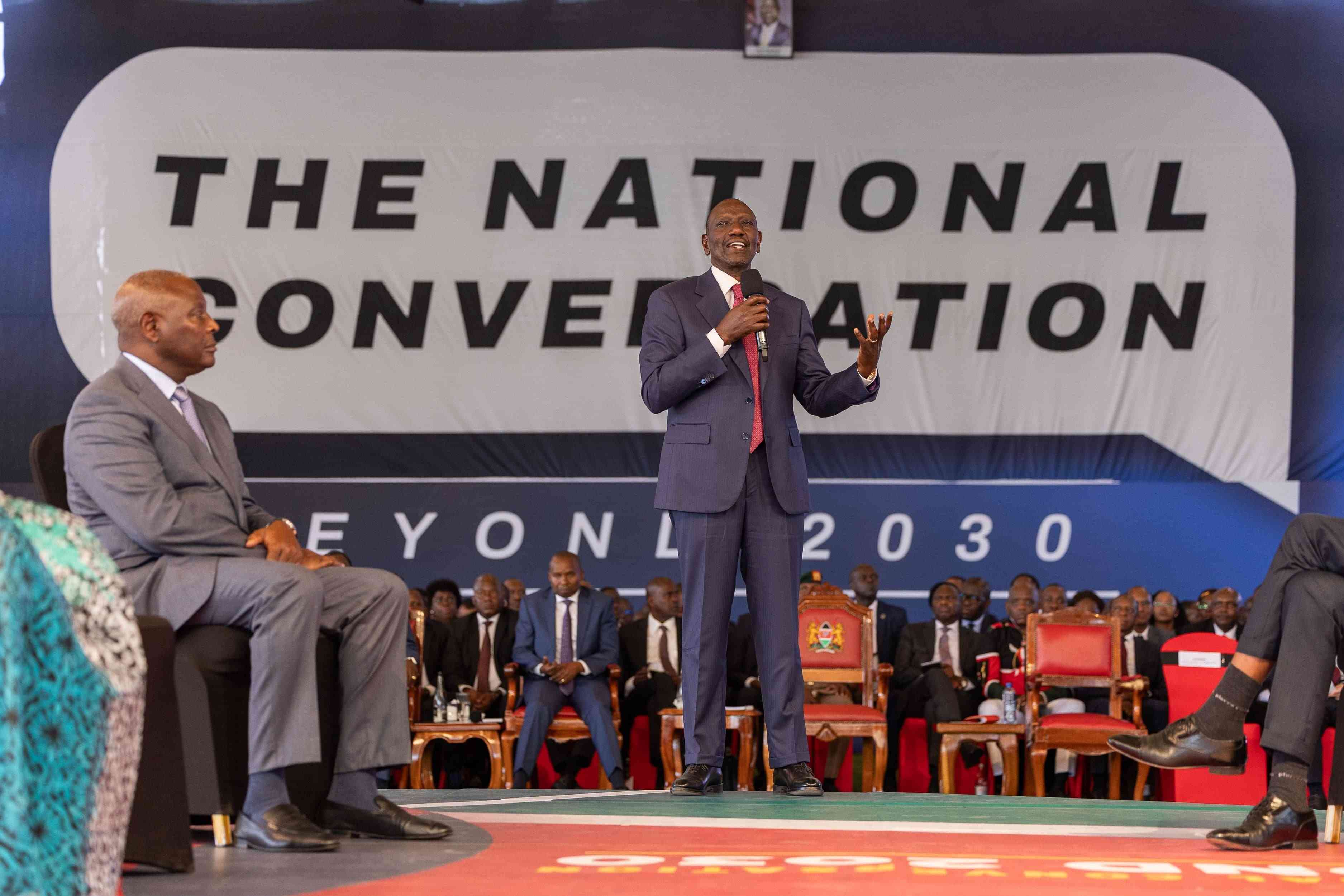
With less than four years left before the expiry of Kenya’s Vision 2030, President William Ruto has launched the process of developing a new long-term national development blueprint that will guide the country beyond 2030.
The President says the proposed Beyond Vision 2030 framework is necessary to ensure Kenya does not enter the next decade without a clear development plan, as the current medium-term planning cycle will extend beyond the lifespan of Vision 2030.
Speaking during the National Conversation on Beyond Vision 2030, Ruto argued that the country needs to begin planning for the period after 2030 before the current blueprint expires.
“Vision 2030 will come to an end in the next three years, [while] Medium Term Plan Four will come to an end in 2027,” he said, adding that the next medium-term plan would overlap with the final years of Vision 2030.
“For us to plan Medium Term Five, it is going to take us from 2027 to 2032, yet Vision 2030 is ending in 2030. We need to have the longer-term vision for us to plan the Medium Term Five,” he said.
But beyond the expiry of Vision 2030, Ruto argued that Kenya itself has changed significantly since the blueprint was developed.
Vision 2030, launched in 2008 as Kenya’s long-term development blueprint, set out ambitions for transforming the country into a newly industrialising, middle-income economy.
Almost two decades later, Ruto says the assumptions that informed the blueprint no longer fully reflect the world Kenya is preparing for.
“When we figured out Vision 2030, the world was much different from what we have today,” he said.
The President pointed to the rapid growth of technology and artificial intelligence, as well as the growing effects of climate change, as some of the major developments that have altered the global environment since the blueprint was formulated.
“Technology had not taken the space it occupies today, AI was not with us and we did not have the serious effects of climate change we have today,” he said.
According to the Head of State, the new process should therefore give Kenyans an opportunity to reconsider the country's long-term development priorities in light of these changes.
“It is important for us to give ourselves another opportunity to think about the long-term development of Kenya in the context of the world we live in today,” he said.
Role of public participation
Further, the President argued that the proposed blueprint comes against a different constitutional backdrop.
Stay informed. Subscribe to our newsletter
According to him, Vision 2030 was developed before the promulgation of the 2010 Constitution, which changed how governance and public participation are structured in Kenya.
“When Vision 2030 was developed, it was developed before the 2010 Constitution. It is important that we engage in this exercise in the context of a new Constitution,” he said, attributing some of the disconnect between Kenyans and Vision 2030 to the absence of extensive public participation during its formulation.
“The reason why people do not relate with 2030, it is because there was no public participation,” Ruto said.
He argued that the next long-term plan should be developed differently, with citizens playing a central role in determining the country's priorities.
“It is therefore important to formulate a long-term plan that is done by the people. We need to give ourselves the opportunity to think about Kenya, long term,” he said.
He added that the process should also look beyond individual political administrations, noting that the country's development should not be determined by the electoral cycle.
“Elections are not a matter of life and death; they are important, yes, but politics is not the future,” said the President.
According to him, some development targets have remained unmet because governments often plan with the next election in mind rather than the country's long-term needs.
However, he acknowledged the political pressure facing leaders when making decisions whose benefits may not be immediately visible to voters.
According to him, in the new blueprint, participants should take a longer view of Kenya's development, noting that Beyond Vision 2030 is an exercise that should outlive individual political leaders and administrations.
“We need to have a plan on how this is going to be attained. Government is not going to lead the talks. It is going to facilitate,” he said.
To him, the new plan means developing a national development framework whose implementation does not depend solely on who occupies State House at any given time.




Subscribe to our newsletter and stay updated on the latest developments and special offers!