×

The Standard e-Paper
Kenya’s Boldest Voice
 The Standard Group Plc is a
multi-media organization with investments in media platforms spanning newspaper
print operations, television, radio broadcasting, digital and online services. The
Standard Group is recognized as a leading multi-media house in Kenya with a key
influence in matters of national and international interest.
The Standard Group Plc is a
multi-media organization with investments in media platforms spanning newspaper
print operations, television, radio broadcasting, digital and online services. The
Standard Group is recognized as a leading multi-media house in Kenya with a key
influence in matters of national and international interest.

Audio By Vocalize
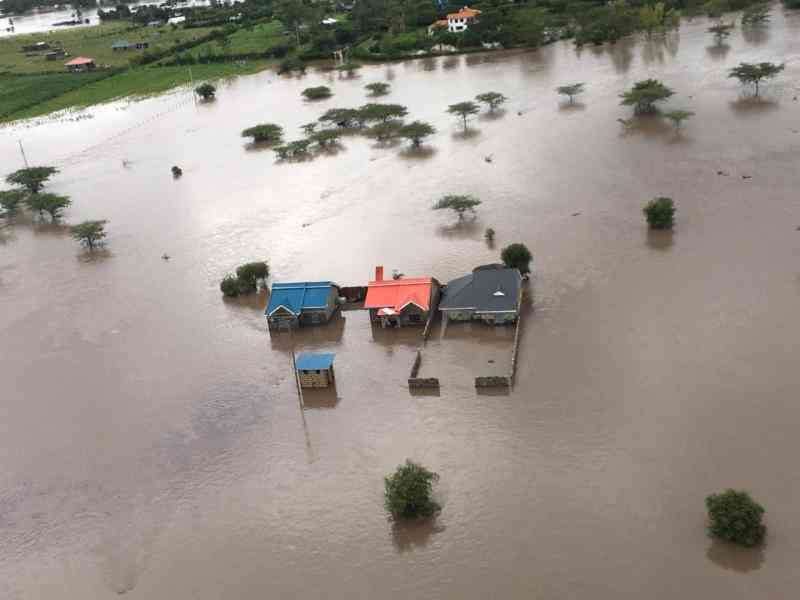
Africa must brace for a powerful El Niño that could bring punishing heat and drought to the south, while triggering excessive rainfall and flooding in parts of the east.
This is a warning by North-West University (NWU) climatologist Dr Henno Havenga.
A severe El Niño could threaten harvests, water supplies, household budgets, public health and electricity generation across Africa.
Drought does not announce itself with a single catastrophic moment.
Dr Havenga warns that its slow progression can catch countries dangerously unprepared.
For subsistence farmers, crop failure can mean losing both the food that sustains a household and the produce that provides its income.
Havenga says governments must repair leaking water infrastructure, prepare food-security programmes and strengthen disaster-response systems before the crisis takes hold.
The latest outlook from the United States’ National Oceanic and Atmospheric Administration (NOAA) indicates that El Niño is strengthening and has a greater than 90 per cent chance of becoming a very strong event during the Northern Hemisphere autumn and winter of 2026-2027.
It places the probability of an event exceeding the strength of any El Niño recorded since 1950 at 69 per cent between October and December.
For Africa, however, the threat will not take a single form. Southern Africa is likely to face a heightened risk of drought and extreme heat, while parts of East Africa could experience excessive rainfall and flooding.
Dr Havenga, who is a senior lecturer in climatology at the NWU’s School of Geo- and Spatial Sciences, says the term “super El Niño” is widely used but is not a formal scientific classification.
“It describes an exceptionally strong El Niño event,” he says.
He adds: “El Niño develops when the central and eastern equatorial Pacific Ocean becomes unusually warm and the atmospheric circulation above it changes. These changes can influence weather patterns far beyond the Pacific through what we call teleconnections.”
The strength of the developing event, Dr Havenga says does not mean that every country or region will experience disaster.
El Niño, he says shifts the odds, but it does not dictate the weather from one district to the next.
Stay informed. Subscribe to our newsletter
“A very strong El Niño does not guarantee extreme conditions everywhere,” says Havenga.
He adds: “Weather variability still plays a major role. It can, however, increase the likelihood or severity of some of the conditions normally associated with El Niño.”
For much of Southern Africa, those conditions include reduced rainfall, drought and unusually high temperatures. The picture is different in parts of East Africa, where El Niño can bring above-normal rainfall. There, the danger may come from flooded settlements, damaged roads and bridges, contaminated water supplies and the displacement of communities.
Even within the same country, rainfall may arrive too late, fall in the wrong places or come in short, destructive bursts rather than the well-timed and evenly distributed rain needed by crops.
“The timing, distribution and intensity of rainfall can either amplify or offset the typical El Niño signal at a local level,” Havenga says.
Agriculture is among the most exposed sectors, but the consequences will extend far beyond the farm gate.
Poor harvests can reduce food availability, weaken rural incomes and push prices higher. The effects can be severe for small-scale and subsistence farmers.
“A commercial producer may have access to insurance, financing, irrigation or alternative markets. A small-scale or subsistence farmer may lose both the food needed by the household and the produce normally sold to generate an income,” he says.
Communities that depend on local harvests and village markets may be hit long before the full economic impact becomes visible in national statistics.
Africa is not powerless in the face of El Niño. Forecasting has improved and governments can draw on their experience of previous droughts and floods.
The danger lies in failing to act before the consequences become unavoidable.
Havenga says farmers should review their planting plans, cultivar choices, water use, production targets and input expenditure in light of the increased risk.
Expanding production on the assumption that good rains will arrive could leave already vulnerable producers dangerously exposed.
Governments and municipalities should repair water infrastructure, prepare food-security programmes and ensure that disaster-response systems can be activated quickly.
Financial assistance, agricultural support and drought-relief mechanisms should be designed before farmers and communities are already in distress.
“The advantage we have is that warning systems have allowed us to talk about this event since May. We should use that warning to reduce our exposure and prepare for the possibility of a difficult season, rather than waiting until the drought is already established,” says the climatologist.



Subscribe to our newsletter and stay updated on the latest developments and special offers!