×

The Standard e-Paper
Stay Informed, Even Offline
 The Standard Group Plc is a
multi-media organization with investments in media platforms spanning newspaper
print operations, television, radio broadcasting, digital and online services. The
Standard Group is recognized as a leading multi-media house in Kenya with a key
influence in matters of national and international interest.

Audio By Vocalize
African universities are seeking better ways to support postgraduate researchers, with a new framework proposing changes to mentorship, supervision and coaching across the continent.
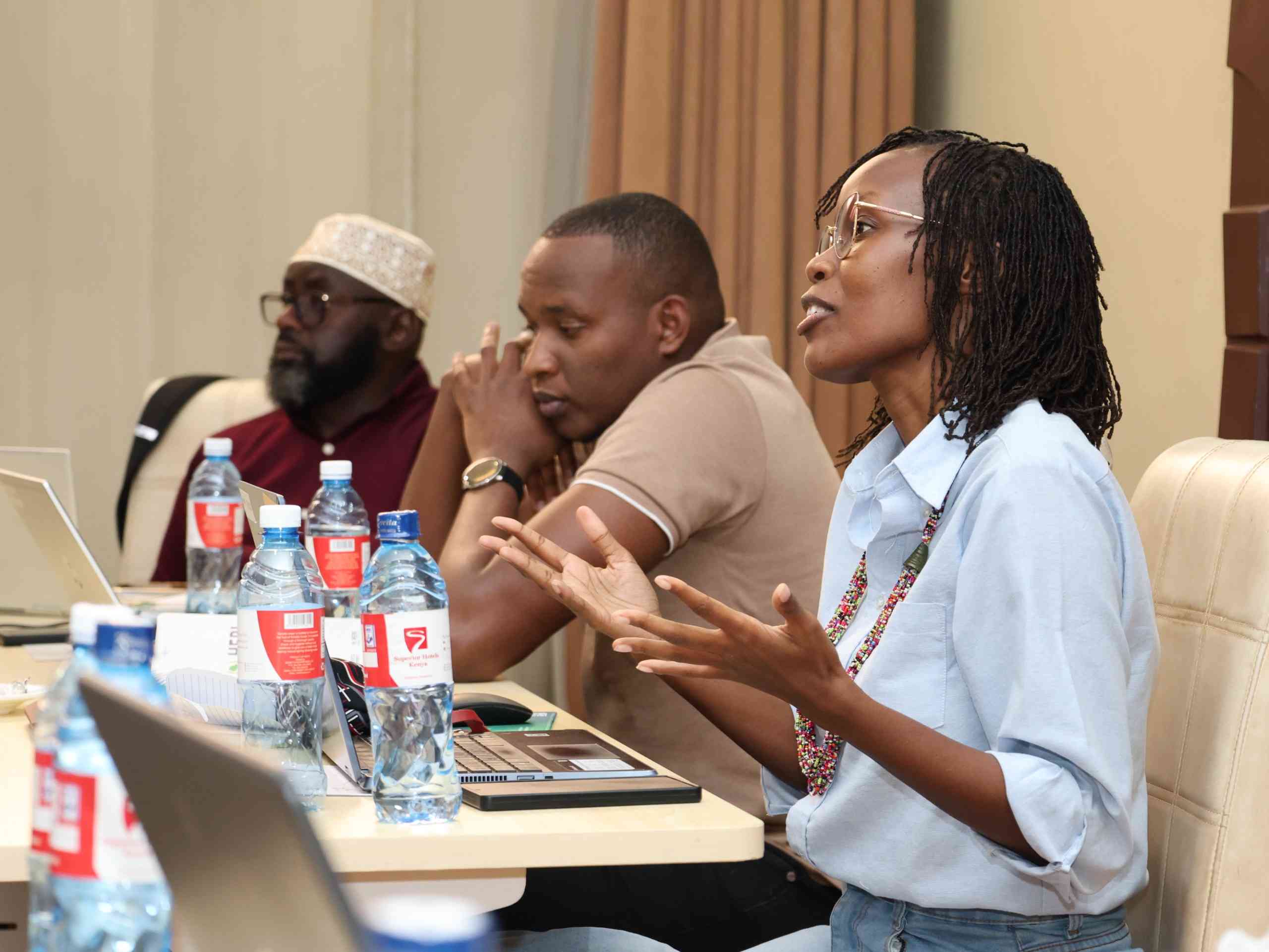
The draft Mentorship, Supervision and Coaching (MSC) Framework was developed under the Harnessing Education Research for Impact in Africa (HERI Africa) initiative following a three-day workshop held in Naivasha from October 26 to 28.
The initiative seeks to address weaknesses in postgraduate supervision, limited mentorship opportunities and inadequate institutional support for early-career researchers.
Participants drawn from universities and research organisations across Africa agreed that developing individual research skills must go hand in hand with building institutions that can sustain mentorship and supervision.
The African Population and Health Research Centre (APHRC), a HERI Africa learning partner, convened the workshop, bringing together representatives from Kenyatta University, Kisii University, the University of Embu, Mawazo Institute, the African Economic Research Consortium, ESSA, Mizizi Elimu Afrika and the HERI Africa Secretariat.
HERI Africa Director Dr Hezron Mogaka explained that the framework responds to the need to strengthen the skills of postgraduate students and the supervisors responsible for guiding their research.
"One of the key goals of HERI Africa is to enhance the capacity of early-career researchers and of the supervisors who will guide them," he said, adding, "This framework sets the boundaries within which their competences and skills will be built, so that supervisors can strengthen their supervision and early-career researchers, who are the future leaders of education research, gain the right skills."
Mogaka cited postgraduate completion rates as evidence of the challenges facing universities, putting PhD completion at around 3 per cent and Master's completion at 7.5 per cent.
He attributed the low rates partly to inadequate supervision and the failure to develop researchers' capacities early enough.
He argued that addressing both challenges would strengthen scientific research within Africa's education ecosystem.
Dr Lucy Wakiaga of APHRC noted that the framework is intended to support graduate students, supervisors and early-career researchers while improving the institutional environments in which education research takes place.
"This is part of HERI Africa's initiative of strengthening individual and institutional capacities and the quality of education research," she said.
"We came together to create this framework, which is meant to support graduate students, their supervisors and early-career researchers, and to contribute to an enabling environment for effective education research."
Evidence from Mawazo Institute also points to the scale of the problem, particularly among women pursuing doctoral studies.
Rowena Ndakwe, Senior Strategy and Impact Lead at the institute, explained that Mawazo supports African women PhD researchers to turn their research into policy, innovation and academic leadership.
Stay informed. Subscribe to our newsletter
"We don't just focus on helping them complete their PhDs; we want to see their research contribute to development in Africa," she noted.
The institute works with a network of 151 women across 66 universities in 28 African countries, offering mentorship, research funding, skills development and peer support.
Ndakwe observed that many women researchers face institutional barriers that affect their ability to complete their doctoral studies and translate their findings into work that benefits society.
"One of the things we have learned from working with these women is that they face deep systemic issues that affect their PhD completion and their ability to turn their research into impactful work, and supervision is one of them," she added.
Mawazo Institute's 2025 Status of African Women in Research report found that 94 per cent of applicants surveyed said a lack of mentorship and career guidance affected their research, while 48 per cent reported that unsupportive supervisors had an impact on their work.
The report drew on 1,445 applicants who completed an academic needs survey.
Ndakwe argued that the findings reinforced the need for institutions to establish clear systems for supporting postgraduate researchers.
"That is why Mawazo sees this mentorship, supervision and coaching framework as critical for the institutions in which scholars operate," she said.
"It can establish a standard operating procedure that guides how mentorship, supervision and coaching are delivered, and we think it will be a significant contributor to supporting scholars in Kenya, in Africa and beyond."
The framework is expected to provide institutions with guidance on improving postgraduate supervision, strengthening relationships between students and supervisors and supporting early-career researchers as they develop their academic careers.
Participants reviewed existing supervision practices, identified institutional gaps and discussed ways of building a more coordinated support system.
The process involved three stages: mapping the current supervisory landscape and its gaps, co-designing the framework and developing plans for implementation, monitoring, evaluation and learning.
Participants also drew on their institutions' experiences to ensure the proposed framework reflects different institutional resources, research settings and academic needs.
Wakiaga explained that the workshop produced a draft that will be shared with participating partners for validation before other state and non-state actors are invited to contribute.
Once validated, the framework will be hosted on APHRC's Virtual Learning Academy through its communities of practice platform.
This will allow supervisors, graduate students, early-career researchers and other interested partners to access and use it.
The HERI Africa Secretariat will also host the document and work with partner institutions to strengthen supervisors' capacities and support the implementation of the framework.
Wakiaga stressed that the document is designed to evolve as new challenges and opportunities emerge in education research.
"This is a living document, subject to change," she said, adding, "New and emerging issues keep arising, such as artificial intelligence, and the framework has room for them."
She added that the framework would also support the implementation of HERI Africa's National Education Research Agenda by helping institutions strengthen the research capacity needed to address its priority areas.
Wakiaga expressed confidence that the framework could be adopted beyond the institutions participating in HERI Africa, extending its reach across Kenya and other African countries.
"HERI Africa is not an initiative for Kenya only; it is an initiative for Africa," she observed, adding that its learning resources are intended to be shared across the continent and beyond.
"The success of this framework will depend on the commitment and goodwill of all partners and all supporters of the initiative."
Mogaka urged participating universities to take responsibility for embedding the framework in their academic structures rather than treating it as a temporary project.
"Participating institutions should take this message back to their faculties, supervisory teams, early-career researchers and students, and explain the value the framework adds," he said.
He emphasised that universities would need to incorporate its principles into their operations to sustain improvements in research supervision and mentorship.
"Let us all work together, let us ensure our capacities are enhanced, and let us communicate the right message to government and to our partners," he noted.



Subscribe to our newsletter and stay updated on the latest developments and special offers!