×

The Standard e-Paper
Stay Informed, Even Offline
 The Standard Group Plc is a
multi-media organization with investments in media platforms spanning newspaper
print operations, television, radio broadcasting, digital and online services. The
Standard Group is recognized as a leading multi-media house in Kenya with a key
influence in matters of national and international interest.
The Standard Group Plc is a
multi-media organization with investments in media platforms spanning newspaper
print operations, television, radio broadcasting, digital and online services. The
Standard Group is recognized as a leading multi-media house in Kenya with a key
influence in matters of national and international interest.

Audio By Vocalize
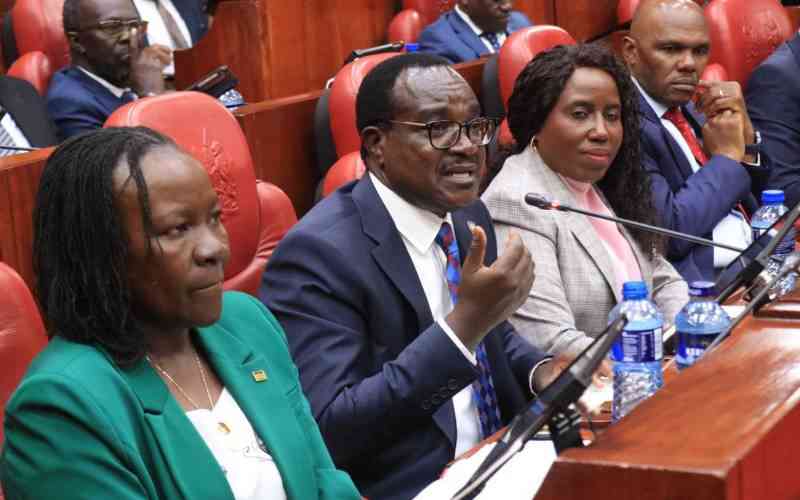
The Ministry of Education has admitted that persistent delays in capitation disbursements and chronic underfunding are pushing learning institutions into financial crisis.
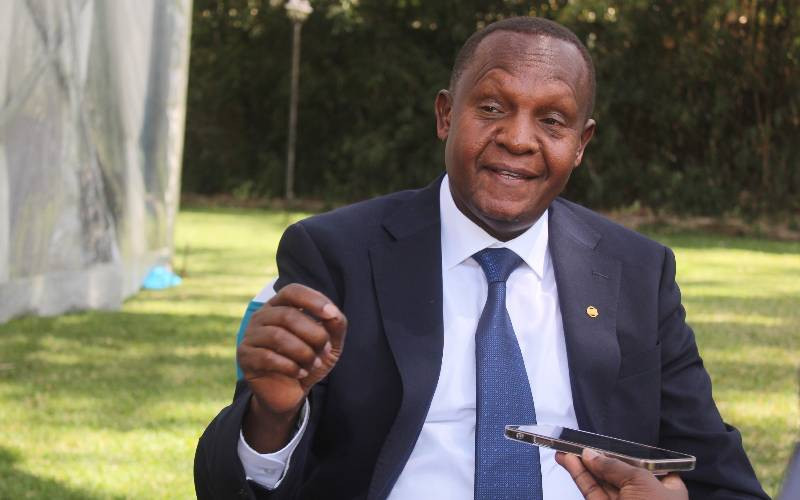
Education Cabinet Secretary Julius Ogamba said public universities, Technical and Vocational Education and Training (TVET) institutions, and teacher training colleges continue realing into financial distress, prompting Members of Parliament to demand urgent reforms.
Appearing before the National Assembly's Public Investments Committee on Governance and Education (PIC-G&E), Ogamba acknowledged that inadequate budget allocations and delayed Exchequer releases from the National Treasury have left institutions struggling to meet their financial obligations.
"The Ministry does not sit on funds. The challenge is that the resources released by the National Treasury fall significantly below the actual requirements, and when Exchequer releases are delayed, institutions inevitably experience cash flow constraints," Ogamba told the committee.
The committee, chaired by Luanda MP Dick Maungu, was reviewing Auditor-General reports covering the 2018/19 to 2024/25 financial years.
The reports highlighted delayed capitation, stalled infrastructure projects, weak financial management, declining TVET enrolment, unaccounted government equipment and growing financial instability across tertiary institutions.
Lawmakers painted a grim picture of colleges and universities struggling to remain operational. Kilome MP Thaddeus Nzambia said enrolment in several TVET institutions had dropped dramatically, with some recording fewer than half the students they previously accommodated.
"The principals consistently point to delayed capitation as the major reason students are dropping out. This was a good programme meant to equip young people with technical skills, but the current trend is worrying," Nzambia said.
Embakasi West MP Mark Mwenje questioned why institutions continued facing funding shortages despite government assurances that capitation had been released.
He noted that universities are grappling with a Sh28.9 billion funding gap, forcing many students to rely heavily on Constituency Development Fund bursaries and Higher Education Loans Board (HELB) loans.
"Students are under immense pressure, especially when examinations approach. Universities require predictable funding instead of leaving students to depend on bursaries that cannot adequately meet tuition costs," Mwenje said.
Ogamba revealed that public universities require Sh70.3 billion in scholarships and grants during the 2025/26 financial year but received only Sh41.2 billion, leaving a funding deficit of Sh28.9 billion.
TVET institutions have also been affected, with government capitation remaining at Sh5.2 billion annually despite rising student enrolment and a cumulative scholarship funding deficit of Sh14.9 billion.
The CS disclosed that 23 public universities were technically insolvent when the Kenya Kwanza administration assumed office, although reforms have reduced the number to 11.
"We found 23 universities in the red. Through reforms and timely funding, we have reduced that number to 11, and we are working towards restoring all universities to financial stability," he said.
Stay informed. Subscribe to our newsletter
To address the crisis, the ministry is preparing the proposed Tertiary Education Funding Bill, 2025, which seeks to establish a sustainable financing framework by consolidating education funding into a single pool for equitable distribution.
The ministry has also barred institutions from launching new projects before completing ongoing ones, prioritising developments that are at least 85 per cent complete while encouraging universities and TVETs to commercialise idle assets and strengthen industry partnerships to generate additional income.



Subscribe to our newsletter and stay updated on the latest developments and special offers!








 join
join