Universities are being urged to accelerate Artificial Intelligence (AI) training and research as technological transformation continues to redefine global education and job markets.
This call comes as Mount Kenya University (MKU) unveiled its first educational humanoid robot an advanced Walker E model designed to strengthen hands-on learning, research,
and innovation.
During the unveiling ceremony, the university’s founder Prof. Simon Gicharu pointed on the importance of aligning higher education with emerging technologies.
He said AI is no longer a futuristic concept but a critical tool that must be integrated into university teaching, research, and operations.
“AI is not something to belabor about but a technology to embrace and invest in to be in tandem with global demands. By embracing advancements in technology, we improve the
teaching and learning experience of our students and enhance operational efficiency at the University,” Prof. Gicharu said.
The Walker E humanoid robot, a first of its kind in the region, is expected to play a vital role in practical training.
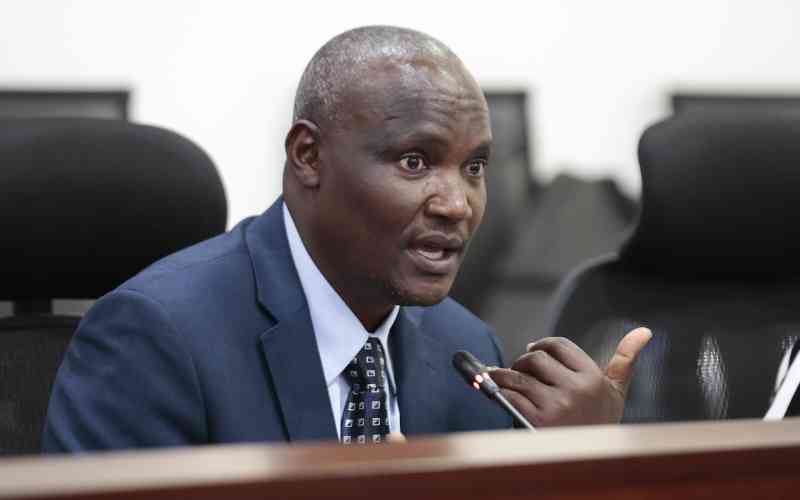
According to Dr. John Kamau, Dean of the School of Computing and Informatics, the robot bridges the gap between theory and practice, allowing students to test new algorithms,
train the robot on new tasks and languages, and engage in research previously limited to advanced tech hubs.
“Students will use it to develop and test new algorithms, understand new tasks, and enhance their research capabilities,” Dr. Kamau said.
He added that the equipment will support undergraduate learning, postgraduate research, capstone projects, technical courses, and innovation-driven programmes.
MKU Vice Chancellor Prof. Deogratius Jaganyi emphasized that the institution has placed AI at the core of its renewed strategic direction.
The university has revamped its academic programmes to reflect emerging technologies, introducing 13 new and revised courses, including flagship programmes in Data Science
and Artificial Intelligence.
Stay informed. Subscribe to our newsletter
“All university curricula will embrace artificial intelligence to enhance pedagogy for increased educational outcomes. We want to impart the requisite knowledge and skills so our
students can effectively and competitively fit in the global job market,” Prof. Jaganyi said.
Prof. Jaganyi added that the robot will transform how students learn by promoting a hands-on, “learning by doing” approach particularly beneficial for Computer Science and Data
Science students who struggle with traditional, lecture-based methods.
He affirmed the university’s commitment to equipping learners with the latest tools.
“The University Board of Management is committed to ensuring students have modern equipment to advance teaching and research,” he stated.
In addition to the robot, the university commissioned new facilities and equipment, including a fully-fledged ambulance, a dental skills lab, engineering tools, and library resources
—investments aimed at strengthening training across disciplines.
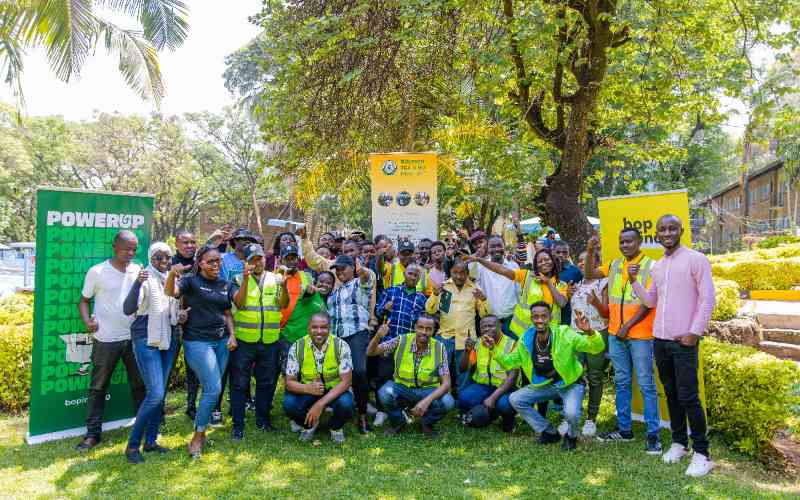
Students welcomed the innovation, noting that such advanced tools will significantly boost their readiness for the job market.
“We will acquire requisite knowledge and skills and expand our expertise in ways that meet industry demands,” said student Clifford Musyoka.
Another student, Joy Watiri, added that the equipment will help them turn innovative ideas into solution-based projects.