×

The Standard e-Paper
Smart Minds Choose Us
 The Standard Group Plc is a
multi-media organization with investments in media platforms spanning newspaper
print operations, television, radio broadcasting, digital and online services. The
Standard Group is recognized as a leading multi-media house in Kenya with a key
influence in matters of national and international interest.
The Standard Group Plc is a
multi-media organization with investments in media platforms spanning newspaper
print operations, television, radio broadcasting, digital and online services. The
Standard Group is recognized as a leading multi-media house in Kenya with a key
influence in matters of national and international interest.

Audio By Vocalize
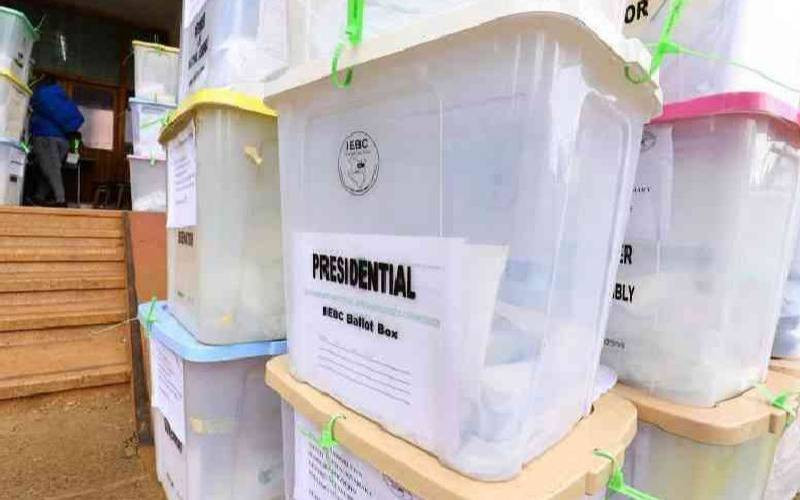
Former President Uhuru Kenyatta has reopened a wound in our national psyche by categorically declaring that Raila Odinga won the 2022 General Election, but his victory was stolen.
Yet, the timing and context of his claim invite questions. If Mr Kenyatta possessed incontrovertible evidence of foul play, why did he withhold it until now? A claim of this magnitude cannot remain political fodder; it must be formally tendered to investigative authorities to protect what remains of our democratic integrity.
Adding a twist of political irony, former Cabinet Secretary Moses Kuria reacted with a tweet claiming that Raila also won the 2007 and 2013 elections, only for the victories to be stolen. The contradiction is glaring: While Uhuru accuses Ruto’s camp of stealing the 2022 election, Kuria’s remarks implicitly point an accusing finger at Uhuru’s own administration for robbing Raila in 2013.
This persistent blame game exposes a crisis of institutional credibility at the Independent Electoral and Boundaries Commission (IEBC). For nearly two decades, successive presidential contests have ended with allegations of systemic rigging, partisan commissioners, and compromised digital networks. The division within the IEBC itself, notably the ‘Cherera Four’ dissenting commissioners who disowned the 2022 presidential results, underscores this deep structural fracture.
The public memory remains haunted by the brutal 2017 murder of Chris Msando—the IEBC’s ICT Director who was killed just nine days before the election in what many suspected was a targeted effort to breach the commission’s servers. When the stewards of our electoral infrastructure are repeatedly accused of bias, public faith in the ballot box crumbles.
A crucial legal boundary was reaffirmed this week when the High Court ruled on a petition filed by Busia Senator Okiya Omtatah. The court affirmed that while the IEBC maintains the constitutional duty to aggregate and verify presidential votes nationally, it cannot alter figures already declared and certified at the constituency level. This ruling reinforces a vital principle: that primary results must remain inviolable, serving as a check against arbitrary alterations at the national tallying centre at Bomas of Kenya.
A question arises: Is the IEBC inherently flawed, or are its individual custodians susceptible to partisan capture? The answer likely lies in both. To escape this cycle, Kenya needs comprehensive electoral reforms. We must audit our voting architecture, secure digital infrastructure against third-party exploitation, and enact strict legal safeguards to ensure absolute independence for electoral officers.
Kenyans deserve leaders chosen by their genuine votes, not leaders imposed through backroom manipulation or what Raila famously dismissed as "vifaranga vya computer." We can no longer afford to tear our country apart every five years over contested polls. Parliament and civil society must address these institutional weak points now, establishing laws and ensuring we have capable and incorruptible people at the helm of IEBC.







Subscribe to our newsletter and stay updated on the latest developments and special offers!







 join
join