×
App Icon
The Standard e-Paper
Join Thousands of Readers
★★★★ - on Play Store
Download Now

Court of Appeal sets date to hear appeals over housing levy

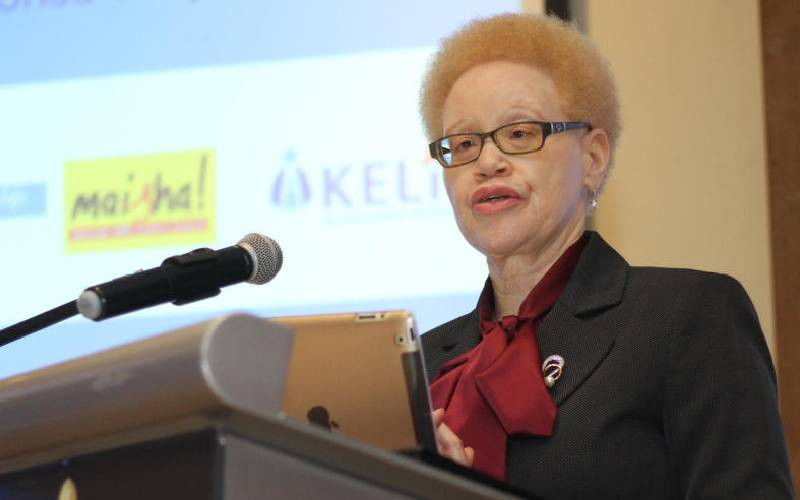
Justices Mumbi Ngugi (pictured), Daniel Musinga, and George Odunga, were scheduled to hear the housing levy appeals on December 10, 2025. [File, Standard]

The appeals by the government and Nakuru-based surgeon Dr Magare Gikenyi, Busia Senator Okiyah Omtatah, and Katiba Institute will to be heard by five Judges on January 20, 2026.

The appeals were scheduled to be heard on Wednesday by Justices Daniel Musinga, Mumbi Ngugi and George Odunga.


However, Musinga said that the bench ought to be expanded as the controversy over the money collected by the government to build affordable housing was settled at the High Court by three Judges.


At the High Court, Justices David Majanja (deceased), Christine Meoli and Lawrence Mugambi said that deducting the money from salaried workers only was discriminatory.

However, the Attorney General Dorcas Oduor argued that the three Judges had failed to consider a holistic picture as all persons, including those who are self-employed or non-salaried, ought to contribute.

AG’s representatives Prof Githu Muigai, Mahat Somane and Kiragu Kimani unanimously argued that the High Court erred in making adverse findings against the government.

“Parliament in its wisdom has enacted a new law out of abundant caution without conceding that the finding of the superior court was correct. We believe that the court will adopt our submissions for future and clarity of the law,” argued Githu.

On the controversial levy, the AG argued that the salaried Kenyans were not discriminated. The court heard that Kenya Kwanza decided to go for those who are salaried first and would later get those who are in the informal sector on board.

 According to the AG, the process of singling out those who are on payroll to bankroll Ruto’s pet project was differentiation and not discrimination.

“Housing levy was a policy choice. Taxes generally can be discriminatory to certain groups of people. Therefore, almost everyone could make an argument against tax legislation. By their nature, taxes differentiate between parties. To tax those who are salaried and leave out non-salaried ones is a choice left to the policy maker to decide,” argued Somane.

On the other hand, Azimio La Umoja One Kenya Coalition took a divergent view on the appeal.

The opposition party was of the view that the appeals by the National Assembly and the AG had collapsed as the latter had complied with the orders of the High Court. 

Azimio lawyer Ochieng Oginga was of the view that the government was engaging the court in an academic exercise. He said that this was a dangerous precedent as parties could engage the court in endless cases while they have complied with the orders.

Busia Senator, Katiba Institute, and Dr Fred Ogola, on the other hand, urged the three judges to find that failure to subject amendments done on the floor of the house without public participation was illegal.

Okiya insisted that the entire Finance Act, 2023 was unconstitutional as there were no budget estimates that had been presented before Parliament for approval.

He stated that the High Court never considered his argument that there was budgeted corruption.

Lawyer Dudley Ochiel who argued on behalf of Katiba faulted the High Court for failing to find that the National Assembly ought to have sought concurrence from the Senate on the money bill and could not introduce new issues after public participation.

Dr Ogola on the other hand, said that MPs had illegally introduced new sections in the Finance Act, 2023 on the floor of the House.