×

The Standard e-Paper
Home To Bold Columnists
 The Standard Group Plc is a
multi-media organization with investments in media platforms spanning newspaper
print operations, television, radio broadcasting, digital and online services. The
Standard Group is recognized as a leading multi-media house in Kenya with a key
influence in matters of national and international interest.
The Standard Group Plc is a
multi-media organization with investments in media platforms spanning newspaper
print operations, television, radio broadcasting, digital and online services. The
Standard Group is recognized as a leading multi-media house in Kenya with a key
influence in matters of national and international interest.

Audio By Vocalize
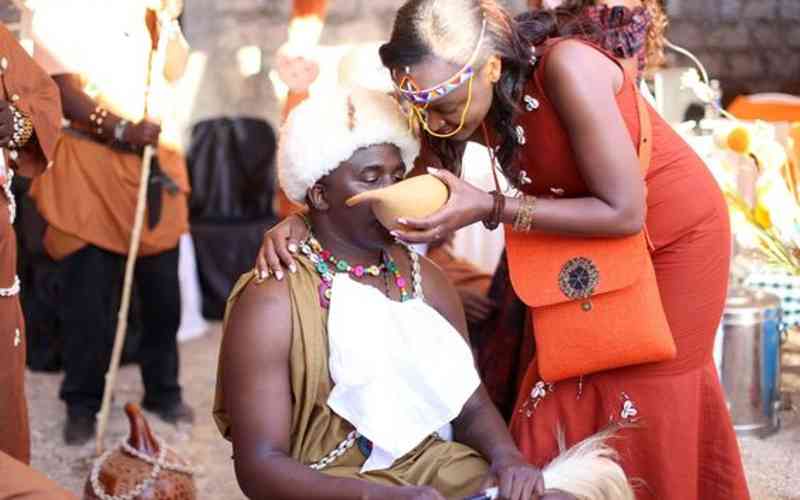
You should have seen me last weekend, dragging three sheep with special names and one stubborn goat on a long trip to my Athoni, my daughter-in-law's place. This was a special mission, and these were not ordinary animals.
In Maragoli, where I was born, the parents of a daughter or a son-in-law are called Vasanji, while my relatives in Kisii call them Korera. These are not just relatives, but people connected to you by marriage. Marriage does not simply link two individuals. No. It unites families, histories, obligations, and even futures.
The animals I was taking were therefore not mere livestock but messengers of culture. Each one had meaning. Ngoima is a live, mature ram. Mwati is a live young female sheep. Harika is a live female goat. Gatongoria is a small sheep that accompanies the rest. Each of these animals speaks a cultural language. Overall, each one communicates gratitude and commitment. They signal the desire for a lasting relationship between the two families.
I also had to fulfill other cultural imperatives for the good of our relationship. It was a special mission and, in many ways, a meeting of three cultures: Maragoli and Kikuyu culture blended by Christian values. The ceremony was ruracio, a traditional wedding where dowry is also settled. More importantly, relationships are affirmed and blessed by both the living and the ancestors.
The first thing was to deliver these animals a day before the ruracio. With a special guide, I went all the way to Kiserian for them. I had to get it right in terms of gender and even the colour of the animals. Then came the crucial time of negotiation. I sat watching the negotiations and listening to the elders speak in proverbs and metaphors. Culture demands that I do not speak.
I realised that what was taking place was not just a family ceremony. It was many things. For me, it was a classroom and a court of law. At one time, it sounded like a parliament. I think it was also a library. Knowledge was being produced and transmitted. The elders were not just talking. They were teaching philosophy, law, ethics, economics, and diplomacy without calling them by those big English names. That is when it struck me again that we scholars do not direct enough research into folklore.
Many people, especially those who imagine they are civilised and speak English more than their mother tongue, may think some of us are crazy to indulge in these rituals. No, we are not crazy. What we are doing is preserving knowledge systems that have guided our communities for centuries. Until we study our folklore, we will never be able to understand ourselves. We will never fully understand how our communities organised marriage, resolved conflicts, raised children, managed land, treated diseases, and even governed themselves.
We have already lost a lot and we cannot continue losing. I sometimes laugh when I hear people say our children should only learn STEM subjects and have nothing to do with our cultures. I agree that education is important and science is important, but people who abandon their culture lose their memory. So technically, we are blind.
Some politicians are even on record suggesting that subjects like anthropology should be scrapped from universities. What a joke. That is how nations become empty shells. We want to build a nation full of borrowed ideas but with no soul of its own! What we teach in school as oral literature is just the tip of the iceberg.
We teach a few folktales, songs, riddles, and we imagine we have taught culture. No. Folklore is much bigger than that. Folklore includes rituals, ceremonies, naming systems, marriage negotiations, conflict resolution mechanisms, agricultural practices, rainmaking ceremonies, healing practices, food preservation, storytelling, initiation ceremonies, and even the way elders sit and speak in meetings.
If there is anything we need to study seriously, it is folklore. Thanks to the late Prof. Muigai wa Gachanja, who encouraged me to study folklore for my second degree. Look! Countries that have gone through serious crises have sometimes gone back to their cultures to find solutions.
A good example is Rwanda. After the 1994 genocide in Rwanda, the country faced thousands of cases that the formal courts could not handle. The country looked into its culture and revived the Gacaca courts to deal with community justice. These were traditional community courts where people confessed, were forgiven, punished and reconciled. This marked the beginning of healing. That was folklore in practice. I may say that it was indigenous knowledge being used to solve a modern problem.
There are many things in our society that we can solve if we dip into our folklore. We can learn conflict resolution from our elders. We can learn environmental conservation from our traditional respect for forests, rivers, and sacred places. Significantly, we can learn medicine from traditional herbal knowledge that is slowly disappearing. We can learn community responsibility from communal labour systems that built houses and raised children collectively.
We Africans must call ourselves to order and go back to our ways, but not in a primitive way. We cannot continue to be copycats in everything. Development does not mean abandoning who we are. In fact, modernity does not mean forgetting where we come from. There is nothing special in losing our authenticity. Let us go back to folklore. It is our memory and our philosophy.
If we do not study folklore more seriously and research it in our universities, we will wake up one day and realise that we are strangers in our own land. Already some of us are. They live borrowed lives! That is why we must direct more research into folklore. For now, the people of Murang’a are my relatives, and Nyambura, the girl I was after, has become a Maragoli wife!
Stay informed. Subscribe to our newsletter
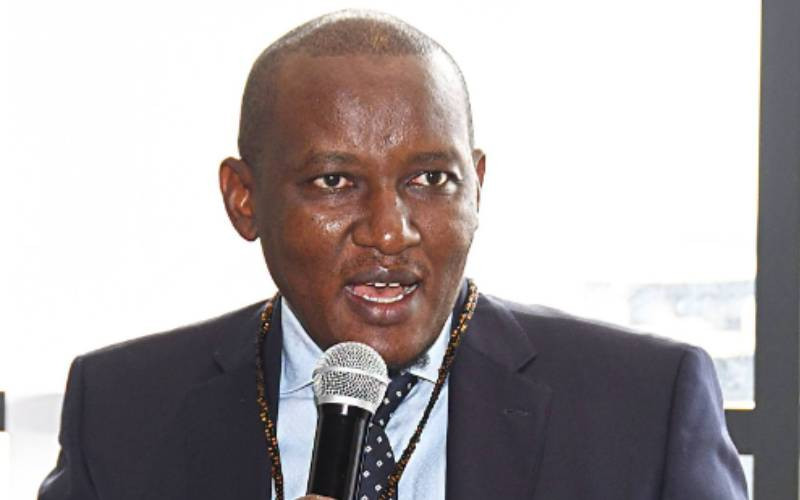
Prof Egara Kabaji is a writer, educationist, and researcher based at Masinde Muliro University. He is also the Vice President of the Pan African Writers Association (PAWA) and the Chancellor of Mt Kigali University, Rwanda.




Subscribe to our newsletter and stay updated on the latest developments and special offers!







 join
join