×

The Standard e-Paper
Smart Minds Choose Us
 The Standard Group Plc is a
multi-media organization with investments in media platforms spanning newspaper
print operations, television, radio broadcasting, digital and online services. The
Standard Group is recognized as a leading multi-media house in Kenya with a key
influence in matters of national and international interest.
The Standard Group Plc is a
multi-media organization with investments in media platforms spanning newspaper
print operations, television, radio broadcasting, digital and online services. The
Standard Group is recognized as a leading multi-media house in Kenya with a key
influence in matters of national and international interest.

Audio By Vocalize
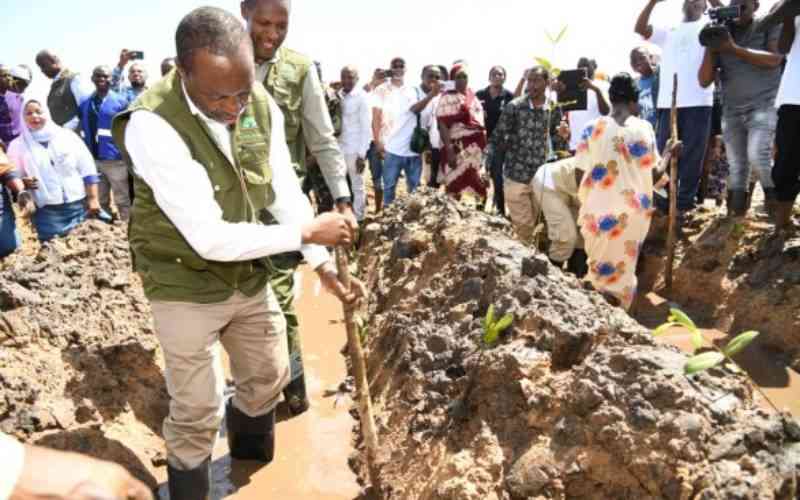
Kenya is shifting its mangrove conservation strategy to put coastal communities at the centre of protection efforts as illegal logging, pollution and climate change continue to threaten the country's coastal ecosystems.
The move emerged during the two-day National Mangrove Stakeholder Forum in Lamu, where government officials, researchers, conservation groups, county governments, Community Forest Associations and private sector representatives reviewed the National Mangrove Ecosystem Management Plan (2017-2027) and discussed a new approach to conservation.
The forum is examining why previous conservation efforts fell short, with discussions pointing to weak community involvement, fragmented governance and poor coordination among institutions.
The meeting, convened by the State Department for Forestry is focusing on ways to improve governance, restore degraded forests and promote sustainable use of mangrove resources.
Kenya's mangrove forests cover about 61,271 hectares along the coastline and support biodiversity, fisheries, shoreline protection, climate change mitigation and the livelihoods of thousands of coastal residents.
The forests, however, face growing pressure from illegal wood harvesting, encroachment, pollution, coastal development, sedimentation, climate change and reduced freshwater flows caused by upstream river damming.
The degradation has affected marine ecosystems, reduced fisheries production and contributed to the loss of seagrass beds and coral reefs.
Stakeholders are also discussing community-led conservation, research, innovation, stronger enforcement, private sector investment and financing models to expand restoration programmes.
The forum is expected to produce a review of the current management plan, recommendations to strengthen mangrove governance and a framework for closer collaboration among conservation partners.
The discussions also support Kenya's wider environmental goals, including the 15 Billion Trees Programme by 2032, biodiversity conservation, ecosystem restoration, climate action and the blue economy agenda.





Subscribe to our newsletter and stay updated on the latest developments and special offers!







 join
join