×

The Standard e-Paper
Stay Informed, Even Offline
 The Standard Group Plc is a
multi-media organization with investments in media platforms spanning newspaper
print operations, television, radio broadcasting, digital and online services. The
Standard Group is recognized as a leading multi-media house in Kenya with a key
influence in matters of national and international interest.

Audio By Vocalize
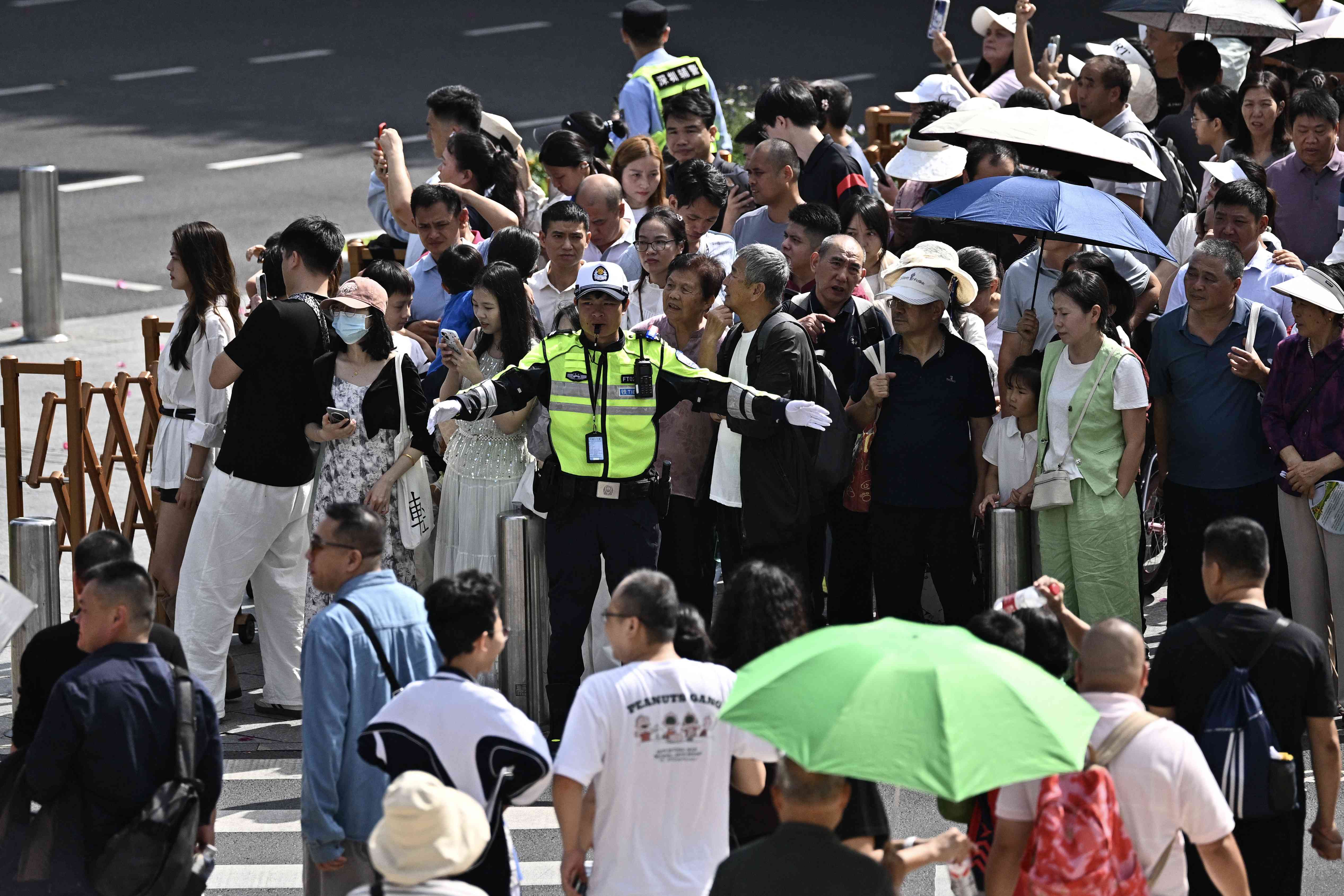
After agreeing in September to set up an AI crisis hotline, US President Donald Trump and his Chinese counterpart Xi Jinping will attempt this week to bring the idea closer to fruition.
Threatening to steal their thunder is Jensen Huang's resignation as boss of US chip titan Nvidia after revelations of an affair with a suspected Chinese spy.
But with artificial intelligence developing at a rapid pace, many see cooperation on how to tackle its risks and benefits as increasingly urgent.
Here's what to expect ahead of AI safety talks between Trump and Xi at the Asia-Pacific Economic Cooperation (APEC) meeting on November 18-19:
Despite the countries' fierce tech rivalry, AI safety risks of shared concern range from infrastructure hacking to people using the technology to help build bioweapons.
Another problem is out-of-control AI agents, tools that complete real-life tasks online, which came to the forefront after US lab OpenAI acknowledged its autonomous bots had hacked into websites, including an Australian government data portal.
Military use and mass surveillance are also potential flashpoints for the world's two leading AI powers.
Researcher Christopher LaRoche wrote in the Bulletin of the Atomic Scientists on Sunday that an AI hotline could be "a step in the right direction" to help the sides communicate in cases like the OpenAI hacks.
"If a similar incident entangled the United States and China -- such as, for example, AI agents accessing sensitive American or Chinese infrastructure -- it is unclear how Beijing or Washington would assure the other a deliberate attack was not underway," he wrote.
At their last summit in Washington, the leaders agreed to "establish a bilateral communication channel for AI incidents", according to the Chinese foreign ministry.
It said they also agreed "on the establishment of the China-US AI Dialogue to exchange views on risks and benefits related to AI", with the next exchange to take place in November.
A White House statement described the outcomes in similar terms, although it used Trump's preferred alternative to "AI" -- "SI", which stands for "super intelligence" -- and said the leaders had agreed to use that wording instead.
But the effectiveness of a hotline will depend on the details.
"The real questions are whether the text defines an 'incident' (a stolen model? an AI-enabled intrusion? a market crash?) and who sits at each end," Stephen Wu, founder of the Carthage Capital investment fund, said in written comments to AFP.
US Treasury Secretary Scott Bessent said last week that "we... expect to exchange best practices for evaluating and testing advanced models before their release, and for keeping human judgment firmly in command".
Stay informed. Subscribe to our newsletter
As AI advances, "so will the need to engage in new areas of risk management -- and to demonstrate how two nations can reconcile the demands of competition with the responsibilities of leadership".
Brookings Institution fellow Kyle Chan said Trump's confidence that the US is ahead of China in AI "gives him more leeway to feel like he can give a green light for these AI discussions".
But "a grand bargain, or some kind of arms control treaty for AI is very, very unlikely for the foreseeable future", Chan added.
Huang's shock departure from Nvidia and scrutiny over alleged smuggling of top-end AI chips to China, where the United States restricts their export for national security reasons, could be the elephant in the room.
But the scandal is unlikely to "dominate the agenda" or affect Trump and Xi's personal relationship, predicted Dylan Loh of Singapore's Nanyang Technological University.
Nicholas Cook, a lawyer focused on the AI industry and based in Hong Kong, agreed.
"These developments don't necessarily prevent constructive engagement next week in Shenzhen, where shared prosperity and technology are already on the agenda," he told AFP.
"If anything, they reinforce the need for continued dialogue to keep the two sides aligned."





Subscribe to our newsletter and stay updated on the latest developments and special offers!