Kenya is turning to Sweden’s agricultural and bioeconomy expertise in a bold plan to curb Kenya's Sh72 billion losses from post-harvest waste.
The move follows the launch of a new Kenya–Sweden collaborative initiative aimed at improving food utilisation, boosting farmer incomes, and creating thousands of green jobs for the country’s growing youth population.
Investment, Trade and Industry Principal Secretary (PS) Juma Mukhwana said the partnership marks a shift from Kenya’s long-standing cycle of food surplus during rainy seasons and crippling shortages during dry spells.
“We are an agricultural economy with diverse crops and ecosystems, but utilisation of these products remains low. Right now, we harvest and consume — meaning our entire food system depends on the weather. When it rains, we have plenty; when it doesn’t, we face scarcity and high post-harvest losses,” said Mukhwana.
Losses for produce such as tomatoes and fruits reach up to 50 per cent, while grains record lower but still worrying waste levels.
A study by the World Resources Institute (WRI) Africa shows Kenya loses between 20 and 36 per cent of its maize harvest in storage alone, even as the country spends billions importing grain to plug deficits.
The consequences are stark: 15 million Kenyans, nearly 28 per cent of the population, face food insecurity every day.
Mukhwana said the Kenya–Sweden initiative will accelerate value addition and modern processing, which is key to reducing losses and making agricultural ventures more profitable.
“This partnership will not just conserve the environment, it will ensure farmers earn more from their produce. It also opens new and existing markets in East Africa, Europe and beyond,” he added.
The collaboration will further equip farmers and agro-processors with technology and knowledge to convert perishable produce into higher-value products, stabilising incomes and reducing waste.
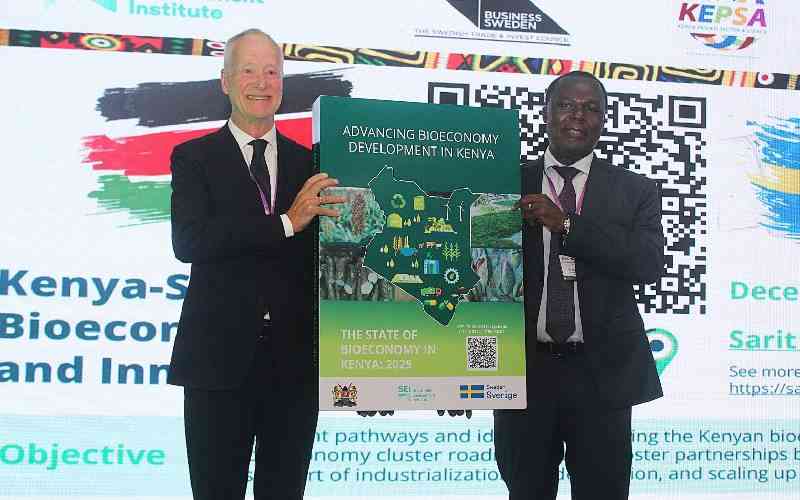
Swedish Ambassador to Kenya Håkan Åkesson said the initiative builds on six decades of cooperation between the two countries.
“Sweden and Kenya have worked together for more than 60 years, particularly in agriculture. Now we are deepening our collaboration in the bioeconomy, which is the future,” Åkesson said.
He noted that the partnership directly tackles some of the most pressing global challenges: Climate change, food insecurity and youth unemployment.
“Working together, we are fighting climate change, increasing food security and creating jobs. Kenya and Sweden both have very entrepreneurial people, and by bringing them together, we can achieve great things — for the climate and for the youth,” he said.
A new report by the Stockholm Environment Institute (SEI) identifies gaps in Kenya’s post-harvest handling and points to areas where Sweden’s experience can accelerate innovation and investment.
SEI’s Engagement and Impact Director Annica Markovic said Kenya is well-positioned to lead the region in sustainable, biotechnology-driven growth.
Stay informed. Subscribe to our newsletter
“When you walk around, it’s so impressive how the bioeconomy is becoming a reality and how many opportunities there are,” she said.
Markovic said the ongoing Bioeconomy Fair in Nairobi already showcases companies commercialising innovative, nature-based technologies — proof that the sector is gaining momentum.
The initiative is expected to catalyse new ventures in processing, storage, packaging, and biotechnology, creating opportunities for startups and SMEs while cutting losses across the agricultural value chain.
If successful, the partnership could help Kenya reclaim a significant portion of the $578 million (Sh74.7 billion) lost every year, strengthen its food systems, and establish the country as a regional hub for sustainable bio-innovation.